5,000 Years of Chinese Monetary History Can They Adapt?
Bitcoin reunites transactions with settlements and challenges both global monetary systems.
China would have the hardest time of all the countries that would have difficulty adapting to a Bitcoin standard. Although! With 5000 years of changes to finance, it would not be the first time China went through large-scale changes like this. But why Change? A reaction to Trump’s amateur attempt to redesign the Global Order?
The Telegraph’s Hidden Impact on Finance Centralization
When we discuss the origins of modern financial systems, we often overlook a critical technological shift that fundamentally altered the nature of money itself. In the 1830s, the invention of the telegraph created something unprecedented in human history: a separation between transactions and settlements. For the first time, information about financial exchanges could travel at the speed of light, while the actual settlement of those transactions remained constrained by physical limitations.
This gap between nearly instant communication and slow settlement created a vacuum that needed filling. Central authorities positioned themselves within this gap as trust intermediaries, gradually accumulating extraordinary powers over monetary systems worldwide. What began as a solution to a technological problem transformed into the centralized banking system that now dominates global finance.
Reuniting What Telegraph Separated
Through this historical lens, Bitcoin’s revolutionary potential becomes clearer. Rather than merely offering an alternative currency, Bitcoin fundamentally repairs the separation between transactions and settlements that has existed for nearly two centuries.

In a Bitcoin-based system, transactions and settlements occur simultaneously. When you send Bitcoin, the transaction is the settlement. There is no gap requiring trusted intermediaries to verify, coordinate, or guarantee the exchange, and there is no opportunity for corruption. This design elegantly solves a structural problem that has persisted since the telegraph era.
This reunification makes central banking authorities largely unnecessary for the core function of facilitating and settling transactions. Just as digital photography eliminated film processing intermediaries, Bitcoin eliminates settlement intermediaries in finance. Global Financial bankers and finance ministers all know this and are hoping that they will not be the next Kodak.
The Global Implications of a Bitcoin Standard
For the United States
The United States has experienced benefits and burdens from its position as issuer of the global reserve currency. The “exorbitant privilege” allowed America to accumulate unprecedented debt while maintaining relatively low interest rates. However, this came with significant costs:
- Persistent trade imbalances that contributed to manufacturing decline
- The military burden of defending the dollar-based system globally
- Increasing debt levels required to provide liquidity to world markets
Triffin Dilemma. In international finance, the Triffin Dilemma (sometimes the Triffin paradox) is the conflict of economic interests between short-term domestic and long-term international objectives for any country whose currency serves as a global reserve currency.
“Exorbitant privilege” refers to the benefits the US enjoys due to the dollar’s reserve status. Since the Bretton Woods Agreement, the US has been able to run large deficits and borrow cheaply. These benefits align with the short-term domestic objectives mentioned in the Triffin dilemma.
Significant costs: The highlighted points (trade imbalances, military burden, increasing debt) are the long-term international consequences. These costs arise from the need to supply enough dollars to meet global demand, which can lead to imbalances and instability. This aligns with the long-term international objectives aspect of the Triffin Dilemma.
A Bitcoin standard would allow America to transition away from these imbalances without the catastrophic collapse that might accompany a tariff-driven, disorderly abandonment of the dollar system. The US could maintain economic strength based on productivity and innovation rather than monetary privilege.
China’s 5,000-Year Monetary Experiments
While all nations face adaptation challenges in a Bitcoin world, China’s situation is particularly fascinating due to its unparalleled monetary history. As the inventor of paper money and the architect of some of history’s most sophisticated monetary systems, China has faced and overcome numerous monetary control challenges over its 5,000-year history.
During the Yuan Dynasty (1260–1368), China experienced a complete cycle of monetary control experimentation. The Mongol rulers established the world’s first silver-backed paper money standard, creating a unified currency system for their vast empire. However, persistent fiscal pressures from warfare eventually forced them to abandon silver convertibility entirely and switch to a fiat standard leading to the inflation and economic instability that contributed to the dynasty’s collapse.
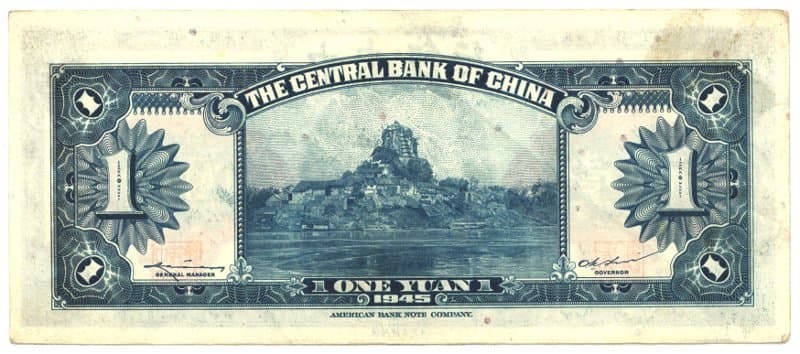
China also witnessed periods where the central government lost control of the money supply. During the commercial revolution of the Qing Dynasty period (1644–1911), private merchant enterprises printed their own paper notes to meet local commerce needs because the government couldn’t provide sufficient currency. Foreign currencies, particularly Spanish and Mexican silver dollars, penetrated China’s economy deeply, comprising approximately 25% of China’s total currency stock by the early 1900s.
Throughout these challenges, China demonstrated remarkable adaptability, always eventually reasserting monetary sovereignty through innovation and reform. This history suggests China might have more capacity to adapt to monetary revolutions than Western observers typically assume.
The Unique Bitcoin Challenge for China
Despite this adaptability, Bitcoin presents qualitatively different challenges to Chinese monetary control:
- Unlike previous foreign currencies or private notes, Bitcoin operates entirely outside the physical realm where traditional enforcement occurs
- Bitcoin’s borderless nature means it can’t be excluded through conventional trade or capital controls
- Bitcoin’s fixed supply eliminates the ability to use monetary policy as an economic management tool
- Bitcoin’s censorship resistance fundamentally conflicts with China’s surveillance-based governance model
These factors make Bitcoin more than just a regulatory challenge for China, it represents an ideological challenge to their entire approach to governance and social organization. The core principles of Bitcoin (decentralization, censorship resistance, fixed monetary rules) directly contradict the CCP’s governance philosophy centered on centralized control.
Could China Adapt? The Historical Perspective
While these contradictions are profound, China’s history suggests potential adaptation pathways. Throughout its long history, China has demonstrated remarkable ability to pivot dramatically when circumstances require it, all while maintaining cultural continuity.
To adapt to a Bitcoin standard, China would need several fundamental shifts:
- Redefined Surveillance Strategy: Rather than preventing transactions, focus on monitoring wealth through Bitcoin’s transparent ledger while implementing control mechanisms elsewhere
- Reformed Economic Tools: Greater reliance on fiscal policy, state ownership, and regulation rather than monetary policy
- Reimagined Capital Controls: Creating incentive structures for domestic investment rather than complex barriers to capital outflow
- Enhanced Social Control Compensations: Strengthening ideological, informational, and physical space controls to offset lost financial control
Looking at Chinese history, such an adaptation isn’t unprecedented. China has undergone multiple radical economic transformations while maintaining political continuity:
- Abandoning the command economy after Mao’s death
- Opening to foreign investment in the 1980s
- Embracing “socialism with Chinese characteristics”
- Tolerating significant private enterprise and wealth accumulation
Each represented dramatic ideological shifts framed as consistent with Chinese tradition. Bitcoin adoption could theoretically be positioned similarly to China embracing technological leadership while maintaining “Chinese characteristics” in implementation.
Global Implications of China’s Bitcoin Dilemma
China’s response to Bitcoin holds significant implications for the global monetary future. If China ultimately resists Bitcoin adoption while Western nations embrace it, we could see a deepening of financial system fragmentation along geopolitical lines. Conversely, if China adapts and participates in a Bitcoin standard, it could accelerate global adoption dramatically.
This is especially interesting because despite Bitcoin’s philosophical incongruence with Chinese governance, China’s centralized decision-making could potentially enable faster adaptation than Western democracies mired in legislative processes and interest group politics. While Western nations debate regulations through slow democratic processes, China could theoretically pivot rapidly if leadership decided Bitcoin adoption served national interests.
This creates a fascinating paradox: the nation whose ideology seems most at odds with Bitcoin might be better positioned structurally to adapt to it than liberal democracies, should they choose to do so.
Calling Trump’s Bluff: The Tariff Threat
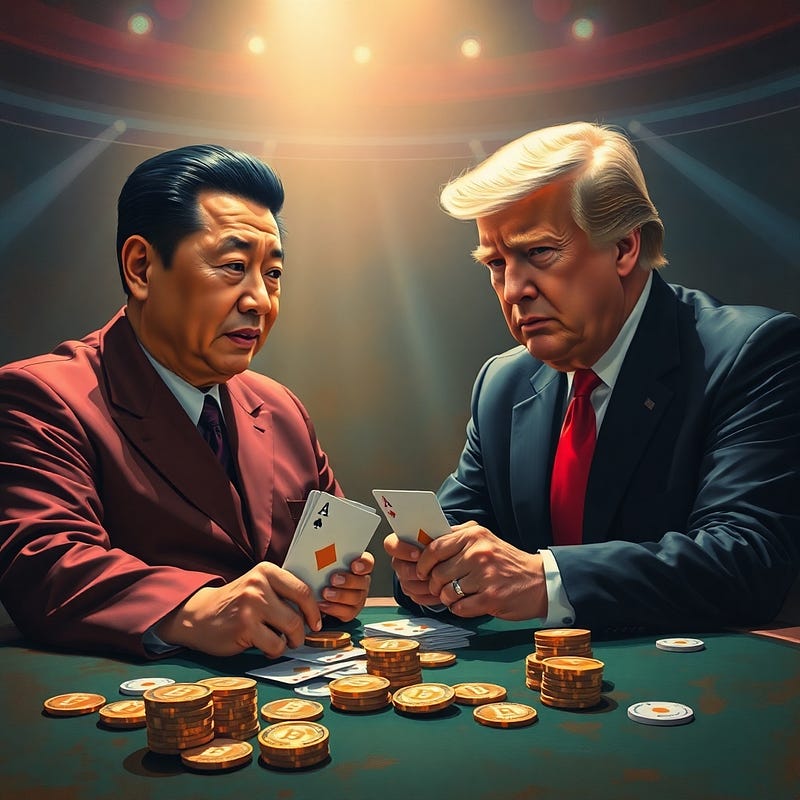
This dynamic creates intriguing possibilities in current geopolitical tensions. President Trump has threatened 100% tariffs on BRICS nations if they move away from the dollar. However, his recent backing down from tariff threats after bond market turmoil demonstrates the limits of using tariffs as economic leverage.
A coordinated shift toward Bitcoin adoption would be much harder to counter with traditional tools of economic statecraft. Bitcoin offers nations a third path beyond either creating competing fiat currencies (vulnerable to US pressure) or remaining in the dollar system. This option becomes especially attractive as US debt levels raise questions about long-term dollar stability.
From Technological Problem to Technological Solution
The most powerful insight from this analysis is recognizing that banking wasn’t just an arbitrary development in financial history; it was a specific solution to a technological problem. When communication technology outpaced settlement technology, centralized intermediaries became necessary.
Bitcoin’s core innovation is solving that technological problem directly, making the centralized solution unnecessary. This isn’t just a new financial instrument; it’s the resolution of a fundamental misalignment in our monetary system.
Understanding this history helps explain why Bitcoin adoption may accelerate more rapidly than conventional analysis suggests. It’s not just a speculative bubble or a marginal improvement; it’s the restoration of money to its natural state, where transactions and settlements are unified and trust in intermediaries becomes optional rather than mandatory.
As nations grapple with this shift, those who adapt most effectively, regardless of their current political systems, will likely gain significant advantages in the emerging economic order.
The question isn’t whether Bitcoin will challenge existing monetary systems but which governance models will prove most adaptable to the inevitable reunification of transactions and settlements in an increasingly digital world.