A War is a War is a War
Or - How I Learned to Stop Worrying about Tariffs and Love the BitBond
The Echoes of History — Bretton Woods and Today’s Economic Tensions
In July 1944, as World War II drew close, 730 delegates from 44 allied nations gathered at the Mount Washington Hotel in Bretton Woods, New Hampshire. Their task was monumental — to design a new international monetary system to prevent the economic chaos that had contributed to the war. The Bretton Woods system established the US dollar as the world’s reserve currency, pegged to gold at $35 per ounce, with other currencies fixed to the dollar. Nothing says “stable international relations” quite like giving one country’s currency a starring role in the global economy.

Today, we stand at a similar inflection point; however, instead of world wars, we have Twitter and tariff wars (which, honestly, might be worse). The economic conflicts of the 21st century, manifested in trade wars, tariffs, and currency competitions, have created global instability reminiscent of the pre-Bretton Woods era. President Trump’s recent implementation and subsequent 90-day pause of extensive tariffs gives new meaning to the phrase “economic whiplash.” Nothing calms global markets quite like dramatic policy reversals announced via social media! Just as military conflicts gave way to economic reconstruction in 1944, today’s economic tensions may be paving the way for a new monetary paradigm, preferably one that doesn’t depend on a president’s reality TV flexing.
BitBonds — A Modern Solution to Historical Problems
Because Nothing Says “Modern” Like a 13-Year-Old Digital Asset
Enter BitBonds, an innovative concept that leverages Bitcoin’s unique properties to address sovereign debt challenges while potentially reshaping the global monetary landscape. The proposal is elegantly simple yet revolutionary — government bonds that allocate 90% of proceeds to traditional functions while directing 10% to Bitcoin acquisition. It’s like your investment portfolio if your financial advisor was both a bow tie-wearing economist AND a Reddit crypto enthusiast.
This approach addresses several pressing issues -
- Debt Sustainability — By offering a lower interest rate (1% vs. traditional 4.5%) in exchange for potential Bitcoin appreciation, BitBonds could save governments billions in interest payments while providing investors an asymmetric upside. Imagine telling your grandparents their Treasury bonds might 10x! The heart palpitations alone would keep cardiologists employed for decades.
- Monetary Evolution — Just as Bretton Woods represented a transition from the rigid gold standard to a more flexible dollar-based system, BitBonds offer a bridge from pure fiat currencies to a system partially anchored by a digital asset with fixed supply. It’s the monetary equivalent of switching from dial-up to fiber-optic, except Congress is still convinced the internet is just a fad.
- Economic Stability — The original Bretton Woods system provided nearly three decades of relative monetary stability. BitBonds could create a new foundation for predictable economic relations. Because if there’s one thing Bitcoin is known for, it’s stability! (Just kidding, but the volatility is a feature, not a bug, when structured correctly in this system.)
Beyond Conferences — Organic Monetary Evolution (No Name Tags Required)
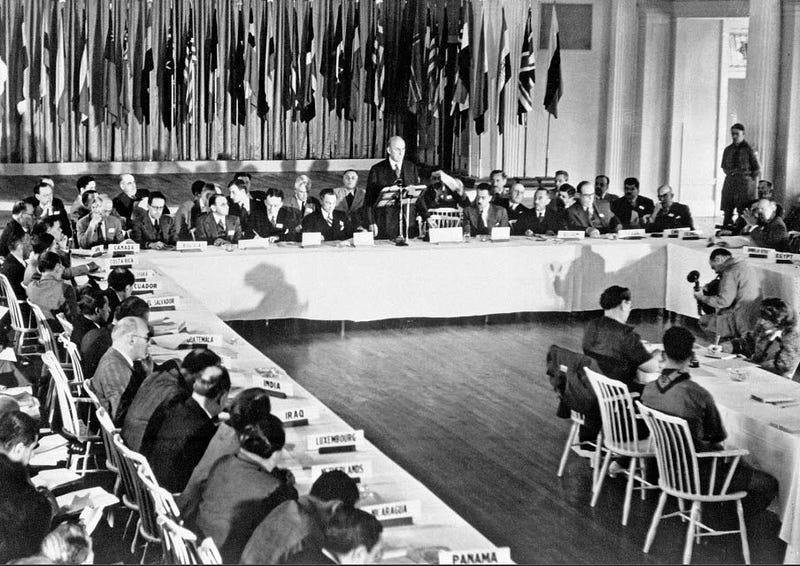
Unlike the original Bretton Woods agreement, which required formal international coordination and probably insufferable hotel buffets, BitBonds represent a pathway to monetary evolution that doesn’t necessarily require a global conference. In fact, there are compelling reasons why a more organic adoption might be preferable -
Bitcoin’s decentralized nature is fundamentally at odds with the top-down approach of traditional monetary conferences. Excessive governmental coordination would compromise its core value proposition, resistance to centralized control. Imagine Satoshi Nakamoto sitting through committee meetings and filling out expense reports. That’s not exactly the cypherpunk dream.
The United States, as the world’s largest economy and issuer of the global reserve currency, could unilaterally implement BitBonds with significant international impact. If the system demonstrated effectiveness, market forces would drive adoption rather than diplomatic agreements. There would be no need for 700+ diplomats arguing over the lunch menu or which country gets to chair which subcommittee. The market’s invisible hand works faster than the visible hands of bureaucrats trying to decide on font sizes for the official communiqué.
The End of Monetary Hegemony
Spoiler Alert — The Dollar Isn’t Thrilled
Perhaps the most profound implication of BitBonds is their acknowledgment of a changing global reality — the era of single-currency dominance is ending. The increasingly multicurrency world, accelerated by digital technologies, is creating a monetary landscape where no single government can maintain complete control. The US dollar, after enjoying decades as the popular prom king of global finance, might have to get used to sharing the spotlight.
For the United States, this represents both a challenge and an opportunity. While it may mean the gradual diminishment of the “exorbitant privilege” that comes with issuing the world’s reserve currency (goodbye, money printer that goes brrr), it also offers a chance to lead the transition to a new monetary paradigm rather than having change forced upon it. Better to be the DJ changing the song than the last person doing the Macarena when everyone else has moved on.
For nations with autocratic monetary policies, particularly China, the implications are more concerning. Bitcoin-backed bonds would strengthen a monetary asset that inherently resists capital controls, currency manipulation, and centralized surveillance, all tools currently employed by the Chinese government to maintain economic control. It’s like training carrier pigeons while the rest of the world launches communication satellites.. Awkward.
Redefining Security — From Military to Monetary
Tanks vs. Banks
WWII taught us that military security and economic security are inseparable. The Bretton Woods system emerged from this understanding, creating financial stability and contributing to decades of relative peace among major powers. Though “peace” might be a generous term for what was essentially a very expensive global staring contest called the Cold War. But the USSR died because of the very things that Bitcoin makes impossible — political fingers in the government cookie jar.
In the 21st century, monetary policy is clearly replacing military policy as the primary arena of global competition. While aircraft carriers and nuclear arsenals remain important (nothing says “take me seriously” quite like a nuclear submarine), the ability to design and implement sustainable monetary systems could become the defining element of national power. The pen might be mightier than the sword, but the blockchain might be mightier than both.
BitBonds recognize this shift and acknowledge that in a world where economic warfare has largely replaced military confrontation among major powers, new tools are needed to maintain stability and prosperity. After all, why invade a country when you can simply devalue its currency? It’s so much cleaner, and you don’t even have to leave your ergonomic chair at the central bank.
Conclusion — A Practical Path Forward
No Time Machines Required
The parallels between the post-World War II era and today’s economic tensions suggest we may be approaching a “Bretton Woods moment” — a time when fundamental reconsideration of the global monetary system becomes necessary. Though preferably without the world war part this time around, thank you very much.
BitBonds offer a practical path forward that acknowledges changed technological realities while preserving elements of the existing system. Rather than requiring a dramatic overnight transformation (which would surely lead to countless CNBC specials and anxiety-induced Wall Street heart attacks), they provide a mechanism for gradual evolution toward a more sustainable and equitable monetary order.
Just as the original Bretton Woods agreement helped end one era of conflict and usher in a new period of cooperation, BitBonds could help resolve today’s economic tensions while creating a foundation for 21st-century prosperity. The question is not whether the global monetary system will change it already is, but whether we will shape that change deliberately or simply react to it. And let’s be honest, humanity’s track record for “reacting” to major changes isn’t exactly stellar.
In an era where military solutions to global challenges have proven increasingly limited (it turns out you can’t bomb the debt or shoot a recession), monetary innovation may offer the most promising path to stability and peace. The transition from military policy to monetary policy as the central organizing principle of international relations could define the coming decades and BitBonds may be the first step in this historic shift. Who knew that nerds arguing about blockchain could save the world? Not the action movie we expected, but perhaps the one we deserve.
A Message to Congress
To our distinguished lawmakers on Capitol Hill. Acceptance of the reality of market forces is way better than trying to live in denial about the levers of monetary control. Bitcoin isn’t asking for your permission to exist; it already has. The question isn’t whether this new monetary technology will impact global finance but whether the United States will lead that transformation or be dragged along reluctantly.
BitBonds represent an opportunity to harness these market forces rather than fight them. They offer a path to reduce debt burdens without austerity, promote innovation without disruption, and maintain American leadership without depending on outdated military/monetary tools. The countries that recognize and adapt to this new reality first will have a profound advantage in shaping the economic landscape of the coming decades.
The choice is simple. Continue conjuring policies for a monetary system that’s already broken and beyond your control, or help build the boats that will navigate the rising tide of decentralized finance. History doesn’t reward those who cling to the past it remembers those who had the courage to embrace the future.
Pass a BitBond bill ASAP