Disintermediation of the Nation-State
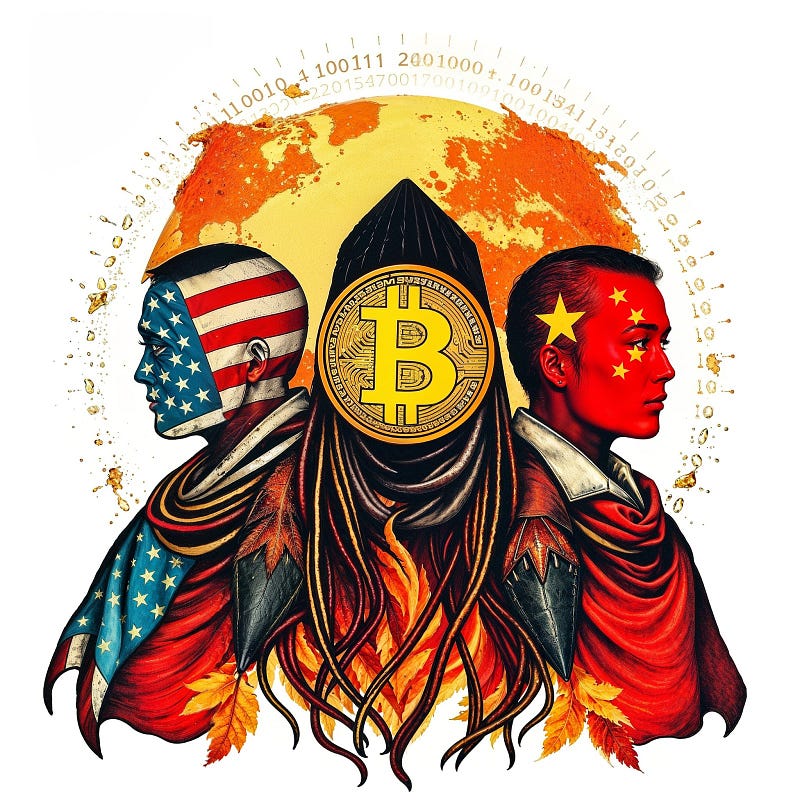
If you’re new to Bitcoin, this may be a strange read until you understand the concept of “Change the Money, Change the World.” The money system we have today is called “Fiat” money. All things, even money, have characteristics. One of the specific characteristics of fiat money that has shaped our world is debt. If you want to know more about how debt shapes the money system, I recommend David Graber’s excellent book Debt: The Last 5000 Years.
But this is a story about Bitcoin, and like fiat, Bitcoin has specific characteristics that shape the world of people who use it. One of those characteristics is that you don’t need to depend on a third party to manage your money. You can keep your money in an exchange and rely on the third party, but it’s not a requirement to use Bitcoin. This characteristic is sovereignty. To understand how sovereignty is broken in your system of money and the history behind this, I recommend Lynn Alden’s book “Broken Money”.
Some Technical History
A military project designed to ward off communications failures during a nuclear attack spawned what we call the internet today. To learn more, check out the history of DARPA concerning the internet, an interesting story. So, a product of this project was what we nerdy types call a protocol. In international relations, there are protocols and rules for communicating with a king or diplomat. There are protocols in networked communications; the primary difference is that networked protocols are fixed in computer code.
TC/PIP is the Internet protocol. Anyone who wanted to use the Internet would use the protocol whether they realized it or not. As a result, TC/PIP covered the earth quickly, and hardly anyone noticed. It was free, open to inspection, and did not require permission for anyone to participate. A whole world has been built on top of this protocol; it only seems natural that a new world needs new money.
Bitcoin is a new form of money, conceived initially as digital cash. Like the Internet, it carries with it a protocol, and if you use Bitcoin, you use the underlying protocol. A critical part of that protocol is freedom.
Exporting Freedom …. Sink or Swim
With the announcement of this Bitcoin strategic reserve and a proposal for Bit Bonds, every significant financial manager in every country and company is on notice: You can no longer dismiss this. Bitcoin is real, and the race to acquire Bitcoin is your challenge. What are you going to do?
Well, you will, first and foremost, not show your hand in this international poker game because the stakes are very high. It seems the nation-state’s acquisition of Bitcoin has gone underground. It only makes sense if you announce a huge Bitcoin purchase. That announcement impacts the price of Bitcoin, making it more difficult to buy more Bitcoin. That’s a race nobody wants to run.
So if you have a couple of million or billions burning a hole in your pocket for Bitcoin, you can go to an over-the-counter trading desk, a secret broker-dealer for the big boys. Or you could just buy on exchanges with a multiple of small anonymous accounts that are hard to track. And then, finally, there’s mining. Just crank up those mining rigs, I like Bhutan, and enjoy the benefits of Bitcoin. Or you could just accept payment in Bitcoin, although if the objective is to acquire Bitcoin, it probably will not be as easy as the previously mentioned modes.
If you’re one of these tortured souls (financial managers), you’re probably not thinking about the underlying protocol and whether or not you’re importing freedom into your country. However, if you read the book I mentioned previously or found your way through the Bitcoin rabbit hole, you understand that the character of money influences what we do.
History Rhymes

I have always liked studying history. A history teacher in high school would give the entire 45-minute class in a voice similar to WC Fields’. Even without the gimmick of WC Fields’ voice, I could easily listen to the story and imagine myself as an early settler, a Roman citizen, or a rebellious Frenchman. Let’s look at how people adopted freedom through the American lens.
Change the money, change the world.
Exporting Freedom to the rest of the world
Chaos theory goes like this: Flapping a butterfly’s wings in China will impact the weather in NYC, Boston, or even LA! Bitcoin’s influence is a bit stronger than the butterfly breeze, and it is impacting world affairs. Bitcoin is not just a financial asset but a strategic competitive advantage that plays to America’s strengths. Freedom: something that early Americans felt strongly enough to take up arms against the most substantial military power of their time (England).
Freedom has been part of the American ethos as early settlers came to America to avoid persecution in their home countries. Freedom is why people still want to go to this country. I am sure thousands of other stories parallel America’s fight for freedom, but let’s see how Bitcoin parallels man’s journey toward freedom.
Physical Exodus vs. Digital Exit
Early American settlers physically relocated across an ocean to escape various forms of oppression and seek new freedoms. Similarly, Bitcoin adopters make a “digital exit” from traditional fiat financial systems without physically relocating. Both represent deliberate choices to opt out of existing systems perceived as constraining. Both forms of exit are powerful because they’re not merely symbolic protests; they create viable alternative systems that can grow parallel to the existing order.
Just as the American colonies established governance structures that eventually rivaled European powers, Bitcoin has created a parallel financial infrastructure that operates according to principles different from traditional banking or national systems.
The key distinction is that while American settlers ultimately sought to establish their territorial sovereignty (requiring the oppression and displacement of indigenous peoples), Bitcoin creates a non-territorial form of sovereignty that doesn’t require physical control of land or people or the establishment of a new nation-state to function.
Colonial Self-Governance
The early colonies established governance models, from the Mayflower Compact to various colonial assemblies. Bitcoin’s protocol embodies a form of self governance through code transparent rules that operate without central authority and can only be changed through broad consensus.
The early American colonies developed several innovative governance models that represented a significant departure from European monarchical traditions:
- The Mayflower Compact (1620): This was a social contract, signed by 41 male Pilgrims aboard the Mayflower, establishing self-governance based on majority rule for the Plymouth Colony. It was revolutionary in creating governance through mutual agreement rather than royal decree.
- Town Meetings: New England colonies established direct democratic systems where male property owners could collectively gather to make local decisions.
- Colonial Assemblies: Bodies like the Virginia House of Burgesses (established 1619) created representative governance, with elected officials making decisions on behalf of their communities.
- Colonial Charters: Documents like the Connecticut Charter of 1662 established principles of self-governance while maintaining nominal allegiance to the Crown.
These systems shared key characteristics:
- They were based on written documents with explicit rules
- They derived authority from the consent of the governed
- They distributed power among participants rather than concentrating it
- They established transparent processes for decision-making
Bitcoin’s Protocol Governance
Bitcoin’s governance system parallels these early colonial innovations in several ways:
- The Bitcoin Whitepaper: Similar to founding documents like the Mayflower Compact, Satoshi Nakamoto’s 2008 whitepaper laid out the philosophical and technical foundation for the system.
- Consensus Rules: Bitcoin operates through explicit rules encoded in software that all participants agree to follow, similar to how colonial compacts established agreed-upon rules.
- Decentralized Decision-Making: Bitcoin development decisions require broad consensus among diverse stakeholders:
- Core developers who propose code changes
- Node operators who choose which software version to run
- Miners who allocate computing resources to validate transactions
- Users and businesses who decide whether to use the network
- Transparent Processes: All Bitcoin code is open source, all transactions are publicly visible on the blockchain, and technical discussions happen in open forums, similar to colonial town meetings conducted business in the open.
- Fork Capability: When irreconcilable differences emerge in Bitcoin governance, the community can “fork” the code, creating separate systems that follow different rules, similar to how colonists could establish new settlements with varying governance models when disagreements arose. You are free to follow your path.
Both systems represent attempts to create governance without relying on traditional central authority figures. The early colonies experimented with democratic principles that challenged monarchical rule, while Bitcoin challenges centralized monetary authority through algorithmic governance and distributed consensus. AKA “Rules without Rulers”
The key difference is that colonial governance eventually evolved into more formalized governmental structures with elected officials and enforcement mechanisms. At the same time, Bitcoin aims to maintain governance primarily through code, economic incentives, and voluntary participation rather than through human representatives or coercive enforcement.
Property Rights Revolution
Land vs. Digital Assets
Settlers sought land ownership free from aristocratic systems and feudal arrangements. When adequately secured, Bitcoin offers absolute digital property rights assets that cannot be confiscated, frozen, or diluted through inflation. Cryptograph Energy, which secures the Bitcoin network, provides this guarantee.
Colonial Property Rights Transformation
For early American settlers, land ownership represented a revolutionary break from European feudal systems:
- Escape from Feudalism: In feudal Europe, land was concentrated among nobility and often unavailable to common people. Peasants worked land owned by lords with limited rights and high obligations.
- Headright System: Colonial systems like Virginia’s headright granted 50 acres to anyone who paid their own passage to America, democratizing land ownership.
- Property as Freedom: For many settlers, owning land represented not just economic opportunity but personal liberty — the ability to build, grow, and live according to one’s own decisions.
- Legal Recognition: Colonial legal systems developed to recognize and protect these property claims through deeds, land registries, and courts.
- Limitations: These systems excluded indigenous peoples’ existing claims and often women and enslaved people from property ownership.
Bitcoin’s Digital Property Innovation
Bitcoin creates a parallel revolution in property rights for the digital age:
- True Digital Ownership: Unlike bank accounts or even digital purchases (which can be disabled by the provider), Bitcoin holdings represent absolute ownership when private keys are properly secured.
- Censorship Resistance: No central authority can prevent transactions or freeze assets as often happens in traditional banking with political dissidents or during financial crises.
- Inflation Protection: Bitcoin’s fixed supply (21 million) prevents the dilution of value through money printing that erodes savings in fiat currencies — similar to how land’s fixed supply provides inflation protection.
- Borderless Recognition: Bitcoin property rights are recognized universally across the network regardless of location, nationality, or political status.
- Self-Verification: Just as settlers could physically occupy and defend their land claims, Bitcoin holders can verify their ownership through cryptographic proofs without relying on third-party validation.
- Frictionless Transfer: Unlike land, which required complex legal processes to transfer, Bitcoin can be sent globally in minutes with minimal friction.
Both revolutions represent the democratization of property rights, providing forms of ownership that were previously unavailable to ordinary people. However, Bitcoin’s innovation moves beyond physical limitations that constrain land ownership, creating a form of property that can be perfectly secured, infinitely divided, instantly transferred, and impossible to confiscate when responsibly secured.
Freedom from Persecution
From Religious to Financial Liberty
Many settlers (Puritans, Quakers, Catholics) sought religious freedom from persecution. Bitcoin provides financial refuge for those facing political persecution through asset freezes or those in countries with collapsed currencies or predatory financial systems.
Religious Refugees in Early America
Religious persecution drove many early settlers to the American colonies:
- Puritans: Fled England in the 1630s, seeking to practice their strict Protestant faith without conforming to the Church of England. The Massachusetts Bay Colony became their haven to build what Governor John Winthrop called “a city upon a hill.”
- Quakers: Faced imprisonment, torture, and execution in England for their beliefs. Pennsylvania was established by William Penn specifically as a “Holy Experiment” offering Quakers religious freedom.
- Catholics: Maryland was founded partly as a refuge for Catholics facing severe discrimination in Protestant England. The 1649 Act of Religious Toleration was one of the first laws protecting religious diversity.
- Jewish settlers Sought escape from European persecution, and early communities formed in places like Newport, Rhode Island, where the Touro Synagogue stands as America’s oldest synagogue.
- Huguenots: French Protestants escaped Catholic persecution, establishing communities like New Rochelle, New York.
These settlers were essentially financial and social refugees, willing to risk everything to escape systems that threatened their ability to worship and live according to their beliefs.
Bitcoin as Financial Refuge
Bitcoin similarly provides refuge from various forms of financial persecution:
- Political dissidents: Activists in authoritarian regimes often face asset freezes and account closures. Bitcoin provides a way to receive and store funds beyond government reach, as seen with organizations supporting democratic movements.
- Victims of hyperinflation: Citizens in countries like Venezuela, Zimbabwe, and Lebanon have turned to Bitcoin when their national currencies collapsed, preserving their savings from being wiped out.
- Unbanked populations: Over 1.7 billion people globally lack access to basic banking services. Bitcoin provides financial inclusion without requiring permission from traditional gatekeepers.
- Remittance senders: Migrant workers sending money home face excessive fees (often 5–10%). Bitcoin enables near-zero cost transfers across borders.
- Victims of financial censorship: Organizations from Wikileaks to political campaigns have used Bitcoin when cut off from traditional payment systems.
In both historical examples, people seek refuge from systems that deny them fundamental freedoms, whether to worship as they choose or to control their economic resources. Both represent responses to authorities overreaching into personal domains, and both created alternative systems that operated according to different principles than those they left behind.
The key parallel is that religious and financial freedom represent core aspects of personal autonomy that, when threatened, motivate people to seek radical alternatives even at significant personal risk.

Community Building through Shared Values
American colonies formed communities of like-minded individuals with shared values. Bitcoin has similarly created global communities united by shared philosophical beliefs about money, governance, and liberty.
Colonial Communities of Conviction
The early American colonies formed distinct communities united by shared values and beliefs:
- Plymouth Colony: The Pilgrims who arrived on the Mayflower were a tight-knit religious community that had already lived together in exile in Holland before making the journey to America.
- Massachusetts Bay Colony: Unlike the small Plymouth settlement, this larger Puritan migration involved thousands who shared a vision of creating a godly commonwealth with strict moral codes and religious governance.
- Pennsylvania: The Quakers established communities that differed markedly from other colonies based on principles of religious tolerance, pacifism, and equality.
- Rhode Island: Founded by Roger Williams after being expelled from Massachusetts, it attracted religious dissenters, becoming a haven for those seeking religious liberty.
These communities were bound together not just by proximity but by shared philosophical commitments, religious beliefs, and social values. They often developed distinct identities and institutions that reflected their founding principles.
Bitcoin’s Global Communities
Bitcoin has similarly spawned diverse communities united by shared beliefs:
- Cypherpunks and Privacy Advocates: Early Bitcoin adopters were often linked to the cypherpunk movement, which believed that privacy through cryptography was essential to freedom in the digital age.
- Austrian Economics Adherents: Many Bitcoiners subscribe to economic theories emphasizing sound money, minimal government intervention, and free markets.
- Developer Communities: Technical groups focused on Bitcoin’s code base, protocol improvements, and related technologies form tight-knit communities with shared technical values.
- National Communities: Countries with currency instability or high Bitcoin adoption (like El Salvador or Nigeria) have developed distinct Bitcoin communities addressing local needs.
- Education and Outreach Groups: Communities focused on educating new users and promoting adoption based on shared belief in Bitcoin’s social benefits.
What’s fascinating is that Bitcoin communities, while global and digital rather than local and physical, share similar bonding elements with colonial communities:
- Strong ideological commitment to founding principles
- Development of specialized language and cultural norms
- Regular rituals and gatherings (colonial church meetings vs. Bitcoin conferences)
- Creation of educational institutions to propagate shared values
- Internal governance mechanisms for resolving disputes
The key difference is that Bitcoin’s communities exist in parallel to, rather than separate from, existing social structures. Bitcoiners don’t physically relocate to be with like-minded individuals (though some have moved to “Bitcoin-friendly” jurisdictions), but rather form overlapping communities of interest and conviction within the digital realm.

Pioneers and Risk Takers
Facing the Unknown
Early settlers faced enormous physical risks and hardships, dangerous ocean voyages, harsh winters, and conflict. Early Bitcoin adopters faced different risks: technological uncertainty, market volatility, regulatory hostility, and social ridicule.
The Physical Perils of Colonial Settlement
Early American settlers faced life-threatening challenges:
- Deadly Ocean Voyages: The Atlantic crossing was perilous — the Mayflower journey lasted over two months in cramped, unsanitary conditions. Many ships never reached the colonies, with passengers lost to storms, disease, and starvation.
- Harsh Environmental Conditions: The “Starving Time” in Jamestown (1609–1610) saw 80% of colonists perish from famine. The first Plymouth winter claimed half the Mayflower passengers.
- Limited Resources: Settlers often arrived unprepared for self-sufficiency, lacking proper tools, seeds, or knowledge of local agriculture.
- Conflict: Tensions with indigenous peoples sometimes erupted into violence, as seen in King Philip’s War (1675–1678), which had the highest per-capita casualty rate of any American conflict.
- Disease: Epidemics regularly swept through settlements, with limited medical knowledge or supplies to combat them.
- Isolation: Once settled, colonists were effectively cut off from their homeland, with letters taking months to cross the Atlantic.
Bitcoin’s Pioneer Hazards
Early Bitcoin adopters faced different but similarly significant risks:
- Technical Failures: Early wallets and exchanges were rudimentary, with numerous security vulnerabilities. The Mt. Gox collapse in 2014 saw 850,000 bitcoin stolen or lost (worth over $40 billion today).
- Financial Volatility: Bitcoin’s price swings have been extreme — including a 94% drop between 2013–2015 and an 83% drop in 2018, wiping out life savings of many early believers.
- Regulatory Uncertainty: Early adopters risked legal consequences in an unclear regulatory environment. Some countries criminalize cryptocurrency ownership entirely.
- Social Ostracism: Early advocates were often dismissed as fringe theorists, conspiracy believers, or participants in illegal markets, facing professional and personal ridicule.
- Technical Barriers: Using Bitcoin required specialized knowledge, with early interfaces being notoriously difficult and unforgiving of mistakes.
- Irreversible Errors: Lost private keys or sending to incorrect addresses meant permanent loss of assets, with no recourse or recovery options.
Both groups were pioneers venturing into uncharted territory with limited guidance or safety nets. They both required:
- Exceptional self-reliance
- Firm conviction in their principles
- Willingness to endure severe hardship for potential future reward
- Ability to adapt to rapidly changing circumstances
- Community cooperation to overcome challenges
This pioneering spirit connects early colonial settlers and Bitcoin’s early adopters across centuries, the willingness to venture into the unknown, accepting significant personal risk for the possibility of building something new and potentially transformative.
New Frontier Mentality
Exploring Uncharted Territory
Both movements share a “frontier” mentality, venturing into uncharted territory with the promise of greater freedom despite significant unknown factors. Both required self-reliance and innovative solutions to new problems.
The American Frontier Experience
The American frontier represented more than just geographic expansion — it embodied a particular mindset and approach to life:
- Self-Reliance: Frontier settlers couldn’t depend on established infrastructure or institutions. They needed to build shelters, find food, and create solutions with limited resources. As Ralph Waldo Emerson later wrote, the frontier fostered “the sturdy lad, who in turn can fight the Indians and fell the forests.”
- Innovation Through Necessity: Pioneers developed new agricultural techniques, building methods, and social arrangements adapted to frontier conditions. The Kentucky long rifle, the log cabin, and community barn-raising all emerged from frontier innovation.
- Code Development: Frontier communities established their own codes of conduct and dispute resolution mechanisms in the absence of formal legal structures. These ranged from handshake agreements to vigilante justice to informal community courts.
- Knowledge Sharing: Survival knowledge was precious and widely shared. Experienced settlers taught newcomers essential skills, and innovations spread rapidly through informal networks.
- Risk Management: Frontier settlers developed strategies to mitigate risks — traveling in groups, building defensive settlements, forming mutual aid societies, and diversifying food sources.
Bitcoin’s Digital Frontier
Bitcoin represents a similar frontier mentality in the digital realm:
- Self-Sovereign Solutions: Early Bitcoin users developed their own security practices, building hardware wallets, creating air-gapped computers, and developing personal key management systems when no commercial solutions existed.
- Technical Innovation: The Bitcoin ecosystem has produced remarkable innovations addressing unique challenges, from Lightning Network for scaling to multi-signature security to new consensus mechanisms.
- Community Governance: Without formal regulatory frameworks, the Bitcoin community established norms, best practices, and consensus building mechanisms for resolving disputes and determining direction.
- Open Source Knowledge: Bitcoin’s development culture emphasizes open-source code and public knowledge sharing, with experienced developers mentoring newcomers and innovations freely available to all.
- Risk Mitigation Strategies: Bitcoin users developed sophisticated risk management approaches from cold storage to seed phrase backups to inheritance planning — to address the unique risks of digital assets.
Both frontiers share a familiar trajectory:
- Initial phase of excitement and speculation (Gold Rush/Bitcoin price surges)
- Period of disillusionment when reality proves harsher than expected
- Gradual building of infrastructure and sustainable systems
- Development of specialized expertise and frontier professions
- Evolution from lawless territory to more structured environment
In both cases, the frontier mentality combines idealism about freedom with practical problem-solving and community building in the face of unprecedented challenges. Both movements attracted those willing to accept greater risk for the promise of greater freedom and opportunity in uncharted territory.
Bitcoin Creating Alternative Systems
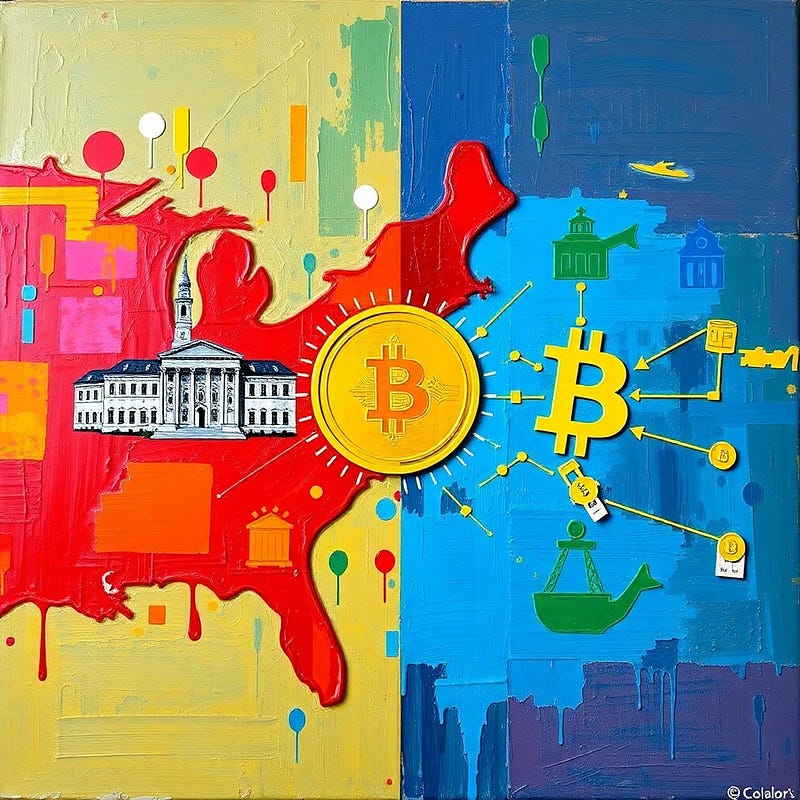
Colonists eventually built parallel systems to those they left behind: universities, legal systems, and trade networks. Bitcoin has spawned an entire ecosystem of financial services that mirror traditional banking but operate under different principles. The relationship with authority was transformed. Early settlers maintained complex relationships with the crown and European powers. Bitcoin exists in a similar tension with existing authorities, sometimes tolerated, sometimes embraced, persecuted, depending on the jurisdiction. As we have witnessed over the past 16 years, a gradual legitimization took hold as early colonial settlements evolved from precarious outposts to established societies. Bitcoin has followed a similar path from fringe technology to an increasingly mainstream asset class recognized by institutions and governments.
From Nation-States to Digital Networks
While American settlers eventually formed a nation-state with its own sovereignty and borders, Bitcoin remains borderless and stateless. It represents a fundamentally different conception of sovereignty that exists alongside, rather than replacing, territorial sovereignty. Bitcoin is the best way to export American freedom and individual sovereignty values. In a world where autocracy gives way to freedom, people will be better off than they were yesterday.
The American Nation-State Evolution
The American colonial experience followed a familiar historical pattern:. Colonies eventually unified into a single political entity with defined borders. Power was gradually consolidated in federal institutions, which had monopolistic control over currency, defense, and law. “American” became a unified national identity, with citizens pledging primary allegiance to the nation. American sovereignty was ultimately secured and maintained through military power and the ability to enforce laws within its territory. America goes on to spread its values through a combination of diplomacy, economic incentives, military interventions, and cultural influence.
Bitcoin’s Network-Based Evolution
Bitcoin represents a fundamentally different sovereignty model. Bitcoin exists everywhere and nowhere simultaneously, operating across borders without claiming physical territory. Power remains distributed among thousands of network participants, with no central point of control. Users opt into the system based on personal choice rather than accident of birth or territorial residence. Bitcoin’s rules are enforced through mathematical consensus rather than physical force. Bitcoin spreads its embedded values through voluntary individual adoption rather than state-level decisions.
Bitcoin as a Vehicle for American Values
While Bitcoin is neutral technology, it embodies and can help spread several core American values. Bitcoin enables financial freedom regardless of local political conditions, similar to how America historically represented personal liberty in an age of monarchies. Bitcoin’s absolute digital property rights mirror America’s historical emphasis on strong property protections as fundamental to freedom. Bitcoin’s transparent, equally applied rules reflect America’s ideal of government by laws rather than rulers. Bitcoin creates open markets resistant to corruption or favoritism, embodying American free-market ideals. Bitcoin’s open protocol fosters permissionless innovation, reflecting America’s entrepreneurial spirit.
By supporting Bitcoin, America is exporting these fundamental values without the problematic aspects of previous freedom promotion efforts:
- No military intervention required (Canada can stay Canada)
- No imposition of cultural values unrelated to economic freedom (The Gulf of Whatever)
- No dependency relationships created (Greenland can stay Greenland)
- No governmental change requirements (Play or Don’t Play Freedom is Choice)
- Respects and promotes individual choice and sovereignty
In a world where autocracy increasingly competes with democracy, Bitcoin offers a subtle but powerful vehicle for spreading the core values of individual freedom, property rights, and the rule of law that underpin American conceptions of liberty. It allows these principles to take root alongside existing systems rather than requiring wholesale replacement.
We sent our manufacturing to Asia because it made financial sense. Today, a large part of the US Domestic Product is financial. Instead of returning to the good old days, let’s go forward with our strength and lead financially, bringing a new form of money and freedom to the world.

This represents a new paradigm for how freedoms can spread globally through the voluntary adoption of technologies that inherently embody and enable those freedoms rather than through traditional aggressive interventions.
This suggests that rather than fighting an inevitable technological shift, forward-thinking nations (like the U.S.) could embrace Bitcoin as a way to project influence and values in a world where traditional financial sovereignty is already eroding.