From Newark to Fox News
What I Learned About Society’s Treatment of the Vulnerable
In 1974, I worked as a social worker in Newark, New Jersey, during one of the darkest chapters in American health care. Recently, Fox News host Brian Kilmeade suggested that mentally ill homeless people should receive “involuntary lethal injection” and “just kill ‘em.” His subsequent apology called it an “extremely callous remark.” Still, for someone who lived through the reality of caring for society’s most vulnerable, his words reveal something far more disturbing about how far we’ve fallen. It’s helpful to remember.
The Human Face of Policy Failure
Newark in the 1970s was ground zero for what experts now call “Greyhound therapy,” southern states shipping their homeless and mentally ill north with one-way bus tickets. I witnessed this firsthand, watching as our already overwhelmed system tried to absorb people abandoned by other jurisdictions who simply didn’t want to deal with the cost.
One of my clients was Matthew (not his real name), 6'6" with broad shoulders, always wearing multiple coats even in summer. His “place” in the weeds by the Passaic River was visible from my office window at the community mental health center. Most mornings around 10 AM, he’d appear at the bread line across the street.
I made it a point to sit with Matthew and others during breakfast. Matt was generally a well-natured individual, constantly intoxicated but smiling. After all, Matthew was on my client list, so I was responsible for supervising his treatment. But I wanted to know the people, not just case numbers. What I learned is that his underlying condition was a state of unimaginable torture; he drank to shut down the anguish and was most approachable as a drunk rather than a crazy person.
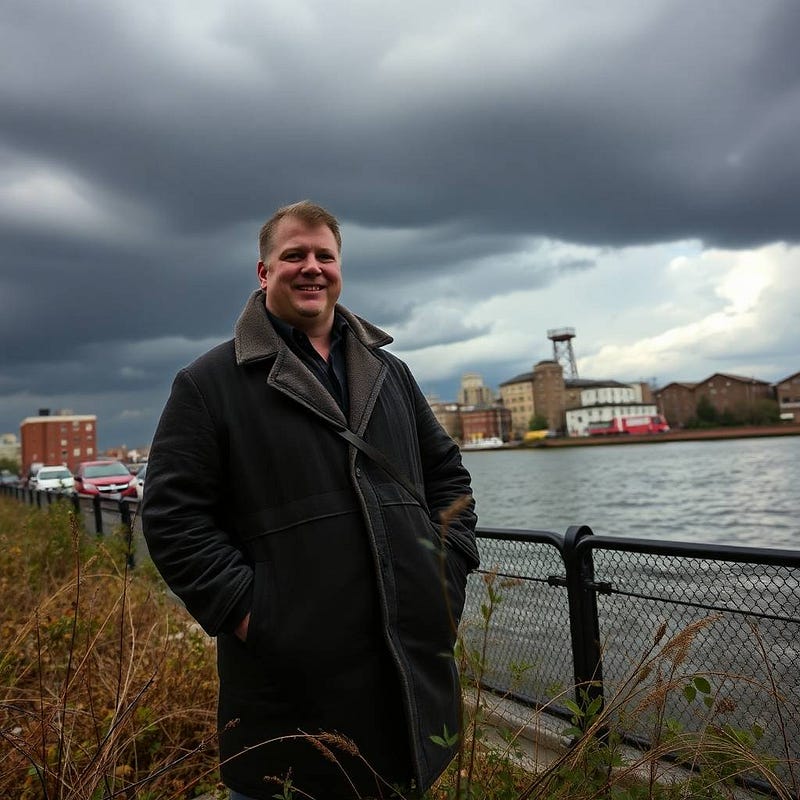
His reality was brutal. When Matthew once barricaded himself in our first-floor bathroom, claiming it as his new home, while compassionate the Newark police refused to help. They knew his history; he was a local from a few towns away: he could toss grown officers around like toys and had bent steel bars in his jail cell. I worked with a psychiatrist to calculate medication dosages that would safely incapacitate him, then coordinated with the ambulance service, emergency room, and police to get him to City Hospital and have his stomach pumped.
Matt was turned away from many emergency room visits because, while he understood he was crazy as a badger, he was also, to his own dismay, uncontrollable and aggressive. He chose to stay drunk and homeless because there was no place in any community for uncontrollable, violent anger
The Mathematics of a Broken System
After a year and a half in that field, working with countless individuals like Matthew, I was aware of precisely one person who had completely recovered. One. The toll on workers was inevitable. Vietnam was winding down, and many who served were coming home with new letters, PTSD I was cultivating the domestic version. I took to heavy drinking, trying to cope with the daily trauma. Eventually, I left social work entirely after a divorce and several years of bouncing around in menial labor work, and I managed to connect with recovery.
The burnout was predictable. You start stepping over bodies without any sense of empathy, not because you’re callous, but because your mind shuts down to protect itself from processing more suffering than any human should bear.
When the Body in the River Wasn’t Matthew
One of the most haunting memories came when police found a 6'6" body floating in the Passaic River. The flesh had been eaten and turned black in many places. Five days of marinating in toxic Passaic River (that once caught fire) will do that.
They called me, knowing my relationship with Matthew, I was often the one asking them to arrest him on snowy nights because sleeping in the weeds would have killed him. The police were actually understanding and cooperative about this; they understood what I was trying save a life.
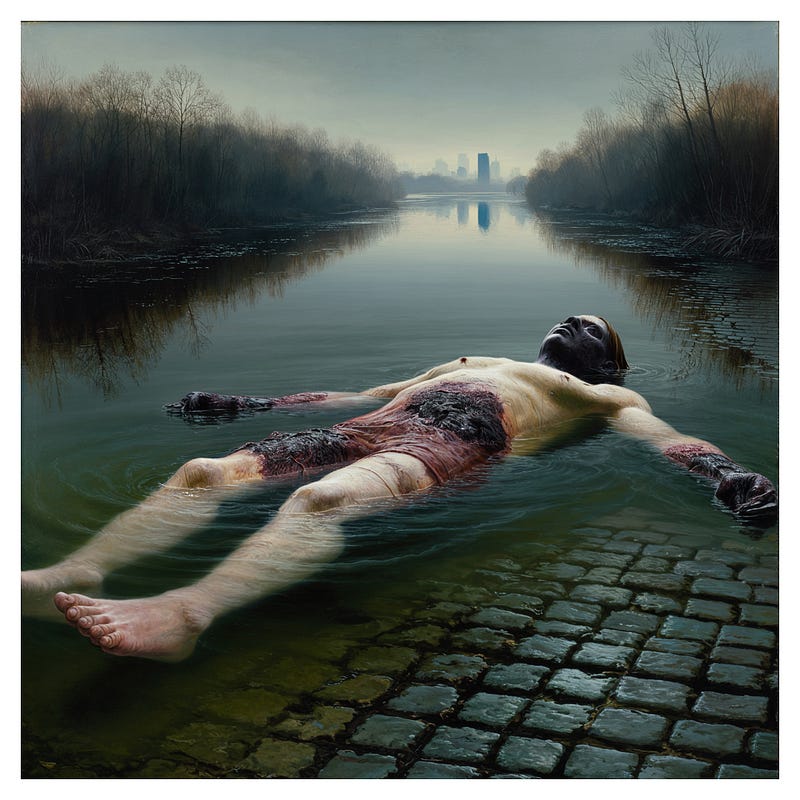
The body wasn’t Matthew. It was just another nameless victim of Greyhound therapy, someone shipped from a Southern state to die anonymously in Newark’s river.
The Real Difference Between Then and Now
Here’s what distinguishes the system I worked in from Brian Kilmeade’s approach: we were charged not to make money, but to make a difference.
Our system was broken, chronically underfunded, and often failed the people we were trying to help. Deinstitutionalization had closed mental hospitals without creating adequate community alternatives, not for humanitarian reasons, but because states wanted to slash budgets. But even within this failing system, we maintained the fundamental premise that these were human lives worth saving.
I sat with Matthew during breakfast. I knew him. I figured out how to keep him from freezing. When someone recovered, it mattered, even when it was only one person out of hundreds.
Kilmeade’s “just kill ‘em” comment represents something qualitatively different: the complete abandonment of any pretense that these lives have value. It’s the logical endpoint of viewing everything through pure economic calculation, if helping costs money and the people can’t pay, eliminate them.
The Brutal Truth About Politics and Profit
Nearly fifty years later, I’ve learned this: politicians will not do what’s right. They will do what’s profitable. Businesses support that, and the average voter doesn’t have a clue about the connections between policy decisions and human consequences.
When states were shipping mentally ill people to Newark with bus tickets, it was profitable for the originating states, invisible to most voters, and devastating for the victims and the people dealing with that reality. Voters might support “helping the homeless” in principle, but they don’t understand how cutting mental health funding, closing institutions without alternatives, and criminalizing mental illness creates the very problems they complain about.
That sort of system almost guarantees failure. Private prisons profit from incarceration, healthcare companies profit from emergency interventions we have traded “healthcare” for profit, from pushing problems into other neighborhoods. Everyone benefits from keeping the public disconnected from understanding how these pieces fit together.
From Abandonment to Elimination
Both my experience in Newark and Kilmeade’s comment represent forms of societal abandonment, but there’s a crucial difference. Our system failed to assist people like Matthew adequately, but it was built on the recognition that they deserved dignity and effort. Kilmeade’s approach eliminates even that basic acknowledgment of humanity.
This isn’t just about one host’s inflammatory comment. It’s about a culture that increasingly views vulnerable populations as disposable problems rather than people. When someone can casually suggest killing mentally ill homeless people on national television, even with a subsequent apology, it reveals how far we’ve traveled from seeing these individuals as fellow human beings deserving of care.
Matthew and the countless others I worked with weren’t abstract policy problems. They were people, complicated, complex, sometimes dangerous, but fundamentally human; they were not disturbed by the notion that they would go to hell for their sins, they were already there. The one person who completely recovered in my year and a half proved that human redemption was possible, even if rare; there was hope of a better life.
So the purpose of this story is not to chastise anyone; the past cannot be changed, but we can learn from it. Can we afford not to care for society’s most vulnerable? for our survival as humans I believe we need to find a way to do both financially and morally. Because the alternative isn’t just failing to help. As Kilmeade’s comment shows, it’s moving us all into a place much darker than a Nazi concentration camp.
The bodies floating in rivers have names. They had stories. And in true community, they would have had a chance.
The author worked as a social worker in Newark, New Jersey, from 1974 to 1975, during the height of deinstitutionalization and interstate patient dumping practices.