Gradually then Suddenly
A Tale of Financial Revolutions / Evolution
Sarah, a 35-year-old middle manager, notices her grocery bill has doubled in the past year. Her savings account interest rate is a measly 0.1%, while inflation soars at 15%. She overhears colleagues discussing “Bitcoin as a hedge” and decides to invest a small amount, just in case.
She talks out her CashApp, where she notices a section to buy Bitcoin, though she has just paid a little attention to it. With a sense of uncertainty about the stability of the current financial system, she allocates a small amount toward the purchase of Bitcoin.
The Cracks Widen
One year later, Tom, Sarah’s neighbor and a bank teller for 20 years, is laid off as his branch closes. The bank cites “digital transformation,” but whispers of Bitcoin’s growing influence circulate. Tom, initially skeptical, starts learning about cryptocurrency out of necessity.
Sarah tells Tom that the volatility of her Bitcoin hedge was disturbing at first, but she noticed it was steadily moving upward. Industry indicators showed Bitcoin’s annual rate of return on investment, beating all other assets available.
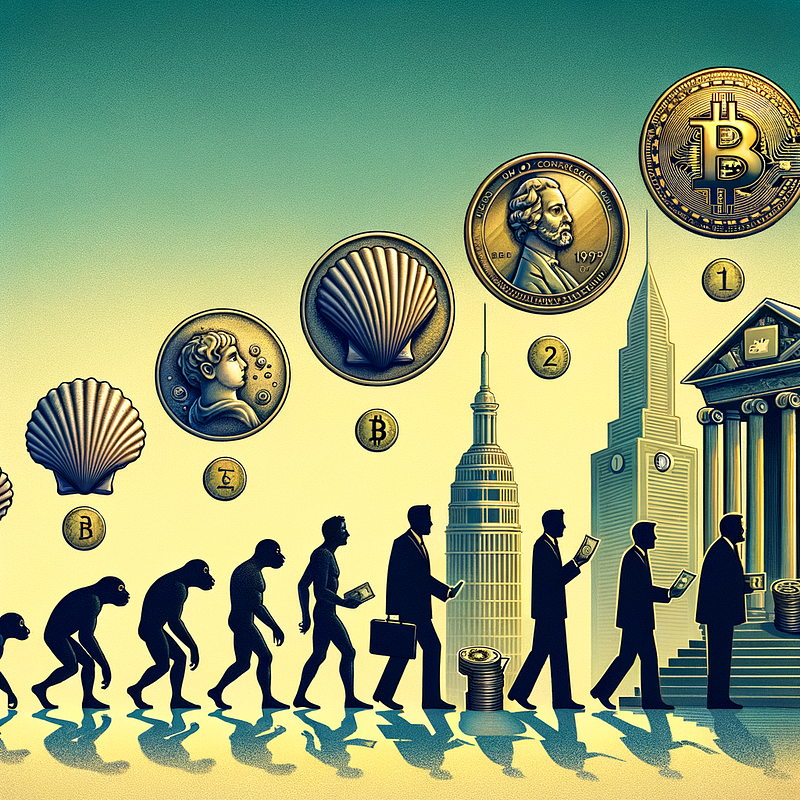
From his research, Tom reveals that Bitcoin represents much more than an investment that appreciates rapidly. It is a fundamental change in money technology, an evolution from shells, coins, paper money, and credit/debt to digital property. Tom explains how property rights are central to any developed society. Bitcoin property means that no nation or bank can confiscate Bitcoin property. This is a profound and monumental shift in the global economic picture.
However, even with his newfound knowledge, Tom does not invest money in Bitcoin. His research was not sufficient to overcome his indoctrination from his banking background.
The Storm Gathers
Merely a year later, global tensions rose as several countries announced plans to conduct international trade in Bitcoin, sidestepping US dollar sanctions. Sarah’s Bitcoin investment has grown by a factor of 10, while her dollar savings have effectively halved in purchasing power.
The Flood Gates Open
Grocery stores announced they will price all goods in Bitcoin, with dollar prices fluctuating daily. Other industries quickly follow suit. Sarah’s company starts offering partial salary payments in Bitcoin. Now working as a rideshare driver, Tom finds most of his tips in Bitcoin.
The Old Guard Falters
Several small banks collapse as depositors withdraw en masse, converting to Bitcoin. Larger banks and governments scramble to adapt, launching their own digital currencies, but public trust is low. Sarah’s parents call her, worried about their pensions.
The New Reality Sets In
Bitcoin ATMs are as common as traditional ones. Sarah’s daughter gets her first “piggy bank” — a hardware wallet. Tom’s rideshare app now defaults to Bitcoin payments. News headlines debate the role of central banks in this new, decentralized world.
The Phoenix Rises
A new global trade system emerges, with Bitcoin as the primary unit of account. Sarah’s company now operates entirely on a Bitcoin standard. Tom has transitioned to teaching blockchain technology at a community college. Their neighborhood has changed: some families have newfound wealth, while others struggle to adapt.
The World Adjusts
It has only been five years since Sarah’s introduction to Bitcoin, and the initial chaos has settled into a new normal. The government is shrinking as services are streamlined through blockchain, and faith in the elections has been restored due to the transparency and reliability that are part of the blockchain system. Food, clothing, and things like appliances become cheaper and more abundant. At the same time, bitcoin paychecks don’t see the rate of increase the dollar system did. International trade flows more freely. Sarah marvels at how quickly the world changed, grateful she paid attention early on.
This story of Sarah and Tom represents millions. Some, like Sarah, adapted quickly and prospered. Others, like Tom, faced challenges but found new opportunities. Many were caught off guard, facing a steep learning curve.
The transition wasn’t smooth — there were protests, political upheavals, and a painful restructuring of the global economy. But as the dust settled, a more transparent, efficient, and inclusive financial system emerged.
The lesson? Stay informed, be adaptable, and understand that knowledge and, more importantly, early action can make all the difference in times of significant change.
Then, on the other hand!
Day 1: The Trigger
9:00 AM EST: A major U.S. bank announces unexpected exposure to failing crypto ventures, sparking panic.
11:30 AM: Stock markets plummet; circuit breakers trigger repeatedly.
2:00 PM: Reports surface of BRICS nations’ emergency meeting to discuss “de-dollarization acceleration.”
4:30 PM: Federal Reserve announces emergency liquidity measures; markets barely react.
8:00 PM: Social media explodes with unconfirmed reports of bank runs across Asia and Europe.
Day 2: The Unraveling
5:00 AM EST: Asian markets open to chaos. Japanese yen and Chinese yuan surge against the dollar.
7:30 AM: European Central Bank cannot stem the euro’s freefall; talks of emergency Eurozone summit.
9:00 AM: Wall Street opens to unprecedented volatility. Gold price skyrockets.
11:00 AM: Major corporations announce an immediate shift to Bitcoin for international transactions, citing “currency instability.”
1:00 PM: U.S. Treasury and Federal Reserve call a joint press conference, but it’s overshadowed by a tweet from Michael Saylor: “The future is now. Bitcoin is the only lifeboat.”
3:00 PM: Bitcoin price goes parabolic, and exchanges struggle to meet demand.
7:00 PM: Unconfirmed reports of U.S. government emergency meetings about potential capital controls.
Day 3: The New Dawn
4:00 AM EST: Asian markets open with multiple currencies in freefall against Bitcoin.
6:00 AM: European Union officials unofficially signal openness to Bitcoin as a “stabilizing force.”
8:00 AM: Major Wall Street banks announce Bitcoin integration services for institutional clients.
10:00 AM: U.S. stock market opens, immediately halted as Dow plummets 20% in minutes.
Noon: Federal Reserve announces “all options on the table,” including potential Bitcoin reserves.
2:00 PM: Fortune 500 companies announce that they will adopt Bitcoin as their primary treasury reserve asset.
4:00 PM: Global Bitcoin adoption hits tipping point; traditional forex markets in disarray.
6:00 PM: G7 emergency broadcast: “New economic order is upon us. Bitcoin standard discussions underway.”
The next weeks will see rapid global restructuring. Banks will transform or collapse. New Bitcoin-native financial services will explode. Wealth gaps will widen and fluctuate wildly. Governments will scramble to adopt policies. A new, uncertain, yet potentially more transparent financial era will begin.
Not a matter of If
The Bitcoin revolution, gradual or sudden, has the potential to reshape the world in ways a few forward thinkers could imagine. It is not just a change in currency but a fundamental shift in how society views money, value, and trust. Those who recognize the signs early and take action will find themselves at the forefront of a new economic paradigm. Others scramble to catch up, learning harsh lessons about the importance of financial adaptability and technological awareness.
Fast or gradual, people will look back and reflect on the tumultuous journey as the dust settles on the new Bitcoin standard. The transition will bare the old system’s fragilities and the potential of decentralized technologies. It is a stark reminder that in an era of rapid technological change, staying informed and being willing to challenge long-held assumptions could mean the difference between thriving and merely surviving. The Bitcoin revolution isn’t just about a new form of money-it was a call to reevaluate our relationship with value and remain vigilant in an ever-evolving and increasingly fragile financial landscape.
Originally published at http://www.brianconnelly.com