Ian Bremmer — Geopolitics and the Digital Domain.
I like Ian; he is thought-provoking, direct, not apologetic, and knowledgeable. I was surprised when his recent Ted Talk and other spots on the geopolitical digital domain neglected titanic trends that most definitively have digital geopolitical implications.
Open Source
Open Source refers to a collaborative approach to software development where the source code of a program is made freely available, allowing users to view, modify, and distribute it. Inception: Open Source emerged in the late 1990s as a response to the proprietary software model characteristic of Microsoft, IBM, and other tech giants. The term “Open Source” was coined in 1998 during a meeting of software developers who sought to promote freely sharing software code and allowing others to modify it.
This movement created an alternative to proprietary software and the rules and power that came with it. One of Open Source’s most notable early successes was developing the Linux operating system. Initiated by Linus Torvalds in 1991, Linux gained popularity among developers and enthusiasts due to its open and collaborative nature. It became a symbol of the Open Source movement and demonstrated the viability of community-driven software development.
Over the years, numerous Open Source projects have emerged across various domains, ranging from operating systems (e.g., Linux, FreeBSD) to web servers (e.g., Apache) to programming languages (e.g., Python, Ruby). These projects have thrived due to the collaborative efforts of developers worldwide, who contribute code, report bugs, and offer support.
The growth of Open Source has transformed the software industry, fostering collaboration, driving innovation, and providing alternative models for software development and distribution. It has democratized access to technology and empowered individuals and organizations to build and customize software solutions based on their specific needs.
Recently this movement has been under attack by the likes of Amazon, Google, and others who look to monetize the work of thousands worldwide who have contributed code, debugging, and support to build the movement.
Blockchain
In 2009 Bitcoin blockchain was introduced as an Open Source project and has been in the headlines primarily for its USD price rises and falls; however, like Open Source blockchain introduced another revolutionary attribute to the digital domain. Uniqueness: essentially, a ledger technology blockchain could document immutable ownership. While digital cash was the first implementation, many could see how this same digital tech could be applied to real estate, voting, provenance, and much more. Today some social media platforms look to leverage this immutable, censorship-resistant, globally distributed ledger model. This essentially disintermediates centralized for-profit organizations like Google & Meta, and before you quip “Fat Chance,” remember even the mighty Microsoft was unable to destroy Linux with one of the most concerted competitive efforts of the late 90s.
Bitcoin
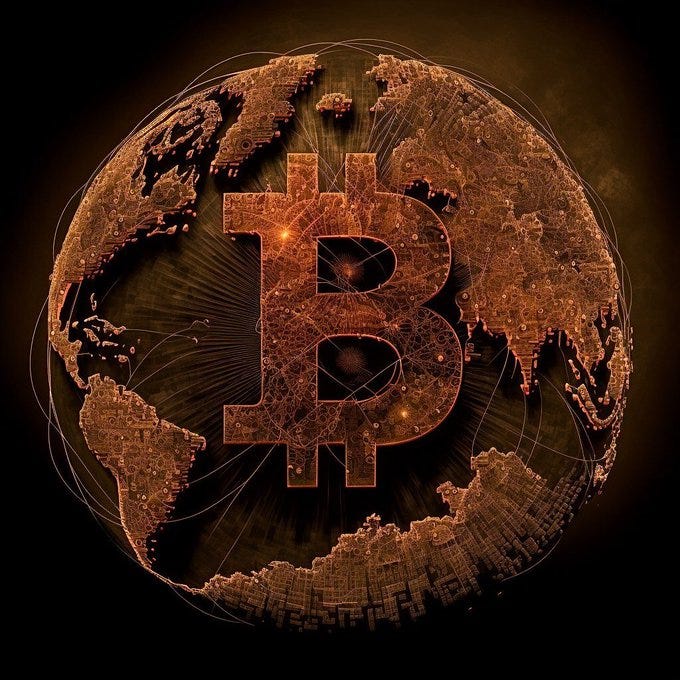
As mentioned above, Bitcoin grew out of the Open Source movement. Leveraging a security model that makes the military envious. Nation States have tied to destroy, hack, and regulate it out of existence. Still, transactions have been reliably processing approximately every ten minutes for the last 13 years. Wannabe imitations have come and gone with no significant impact, and in the previous 2- 3 years, businesses have become aware this is here to stay, and we need to get on the right side of this.
But what is the right side of Bitcoin?
This is where most folks who haven’t taken the time to understand the technology write off the implications as wishful thinking. Understanding Bitcoin is not easy; it requires an open mind and a baseline of technical knowledge, but it is not beyond the capability of anyone with the patience to wade through.
Understanding Bitcoin technology is the first step that causes one to ask questions about the origin and nature of money and its role in society. This is where it gets dark and scary. Our current system is severely broken by comparison to what Bitcoin brings to the table. The BRICS countries could accomplish a release from USD control overnight by adopting Bitcoin as a standard. But the critical magic that makes Bitcoin work is not something governments like.
Loss of control.
The right side of Bitcoin means purring humans back in control; rather than a central bank or some government agency setting the rules about money (which sets the rules about society), the global consensus is driven by math and assured by immutable code. The whole “don’t trust but verify” security thing is built in. Therefore the need to trust (not the option) is mitigated, and thus the need for blood-sucking rent-seeking third parties that exist only for profit.
Disintermediation centralized for-profit bloodsuckers - Both Open Source and Bitcoin operate decentralized, with no single controlling entity. In Open Source, software development is distributed among a global community, while in Bitcoin, the blockchain is maintained by a network of nodes spread across the world.
No Bullshit - Both Open Source and Bitcoin emphasize transparency. Open Source software allows users to view and modify the source code, ensuring transparency in how the software functions. Similarly, the Bitcoin blockchain provides a transparent ledger of all transactions visible to anyone.
People working together with people for people - Open Source projects thrive on collaboration and community involvement, with developers contributing their expertise to enhance the software. Bitcoin relies on network participants collaborating to validate transactions and secure the blockchain.
People first - Open Source empowers users by giving them control over their software, allowing customization and modification. Bitcoin empowers users by allowing them direct ownership and control over their funds without relying on intermediaries.
They are not anticompetitive mergers or acquisitions to stifle innovation and competition and maintain monopolies. Both Open Source and Bitcoin have fostered innovation. Open Source encourages developers to build upon existing projects, leading to rapid innovation and the creation of new software solutions. Bitcoin has spurred innovation in the realm of decentralized digital currency and blockchain technology.
Community-Driven Governance - Open Source projects often have community-driven governance structures, where decisions are made collectively. Similarly, Bitcoin relies on consensus mechanisms and community participation to determine protocol changes and network upgrades.
Resistance to Censorship - Both Open Source and Bitcoin aim to resist censorship and control. Open Source software can be freely distributed, preventing any single entity from controlling its availability. Bitcoin’s decentralized nature and encryption make it resistant to censorship and interference by governments or centralized authorities.
Borderless Nature - Open Source transcends geographical boundaries, with developers collaborating worldwide. Bitcoin operates globally, allowing for borderless transactions without the need for traditional financial intermediaries.
Trust and Security - Open Source software undergoes scrutiny from a large community, enhancing security and trustworthiness. Similarly, Bitcoin’s blockchain is secured through cryptographic principles, providing a trustless system for financial transactions.
Democratization - Both Open Source and Bitcoin promote the democratization of technology. Open Source software makes powerful tools accessible to all, while Bitcoin allows individuals to participate in the global financial system without relying on traditional banking structures.
“Rules without rulers.”
Bitcoiners like to quip “Rules without rulers,” they are implying that we could see a future with far fewer rent-seeking cogs in the wheels of commerce and trade. Trade and commerce are one of the factors contributing to global conflicts. These technologies have been around for a while now, and it’s clear they have shaped society globally; we should embrace them and their promise. This story has not been finished there is much to happen on the technology front and we need to stay open about the potential.
This is just the opinion of one wannabe writer with a strong background in technology and a curious, open mind. If this is the least bit interesting for you, Google it, or better yet, try https://www.perplexity.ai and ask questions about the link between technology and geopolitics.