Iran’s Collapse and America’s Mirror
When Systems Fail, They Fail Everywhere *** January 2026
On December 28, 2025, shopkeepers in Tehran’s Grand Bazaar closed their shutters. The same bazaar. The same merchants who financed the 1979 revolution that brought the ayatollahs to power.
Within days, protests had spread to 17 of Iran’s 31 provinces. Government buildings were stormed. Security forces fled crowds in multiple cities. And the President of the Islamic Republic stood before cameras and admitted what everyone already knew: the state had run out of money.
I watched the Shah fall in 1979. The pattern is unmistakable. History doesn’t repeat, but it rhymes with devastating precision.
The Iranian rial started 2025 trading at 817,500 to the dollar. By late December, it hit 1.42 million, a 74% collapse in twelve months. When Central Bank Governor Mohammad Reza Farzin took office in 2022, the rate was 430,000. When he resigned on December 29, 2025, it had more than tripled.
But currency collapse is just the symptom. The disease is systemic failure. According to Iran’s State Statistics Center, overall inflation reached 42.2%. Food prices rose 72%. Medical costs jumped 50%. Critics see these numbers as signs of approaching hyperinflation.
Then President Masoud Pezeshkian did something remarkable. He told the truth.
“Anyone who received the 28,500-toman dollar pocketed it, so we will not give it out anymore.”
This wasn’t economic reform. It was a confession. The subsidized exchange rate system, designed to support imports of basic goods, had become a corruption machine. The connected got cheap dollars; ordinary Iranians got inflation.
Pezeshkian went further: “When people are struggling with livelihoods, you cannot govern.” And in a statement that would have been unthinkable from his predecessors: “There is no need to look for America to blame.”
That last sentence is the tell. When a regime stops blaming external enemies, it has begun to collapse internally.
The Shah fell because the implicit social contract broke. Modernization and oil wealth were supposed to deliver prosperity and dignity. Instead, people saw a disconnected elite, SAVAK repression, and benefits flowing to cronies rather than citizens. The religious opposition offered an alternative narrative of legitimacy.
Now, forty-seven years later, theocracy faces its mirror image:
The Shah promised modernization; delivered corruption. The Islamic Republic pledged to divine justice, but delivered corruption. The Shah had SAVAK and tanks. The mullahs have the IRGC and Basij. The Shah’s bazaar withdrew support. This regime’s bazaar just withdrew support.
The regime that overthrew the Shah has become the Shah.
The protestors now chant for Reza Pahlavi, the exiled son of the man the 1979 revolution deposed. The historical irony is complete. The revolution is consuming itself by invoking the ghost it overthrew.
Totalitarianism was designed for the industrial age. Information could be centralized. Populations could be atomized. Economies could be commanded.
The information age breaks all three.
Smartphones defeat censorship. Despite internet blackouts, Iranians coordinate, share videos, and watch their countrymen resist in real time. The regime cannot control the narrative when everyone has a camera and a connection.
Networks defeat atomization. The protests spread from the bazaar to the universities to the provinces in days. Solidarity emerges faster than suppression can respond. The wall of fear, once breached, cannot be rebuilt.
Command economies cannot deliver. Modern economies are too complex for central planning. You cannot command innovation. You cannot decree prosperity. And when you try to manage currency through multiple exchange rates, you create arbitrage opportunities that enrich the connected at everyone else’s expense, which is precisely what happened.
Iran’s theocracy is a 1979 solution to a 1979 problem. It is now 2026, and the mismatch is fatal.
Into this volatile moment stepped American foreign policy, with all the subtlety of a sledgehammer.
At 3 AM on January 2, 2026, President Trump posted to Truth Social: “If Iran shoots and violently kills peaceful protesters, which is their custom, the United States of America will come to their rescue. We are locked and loaded and ready to go.”
The response from his own party was immediate and scathing.
Representative Marjorie Taylor Greene, yes, that Marjorie Taylor Greene, fired back: “President Trump threatening war and sending in troops to Iran is everything we voted against in ‘24.”
Representative Thomas Massie was more direct:
“1) We have problems at home and shouldn’t be wasting military resources on another country’s internal affairs.
2) Military strikes on Iran require Congressional authorization.
3) This threat isn’t about freedom of speech in Iran; it’s about the dollar, oil, and Israel.”
When Marjorie Taylor Greene becomes the voice of restraint, something has inverted completely.
History rhymes. I remember in April 1980, President Carter, facing re-election and desperate to resolve the Iranian hostage crisis, authorized Operation Eagle Claw. The rescue mission ended in catastrophe when a helicopter collided with a transport aircraft in the Iranian desert, killing eight American servicemen. Carter later blamed his election loss primarily on that failure.
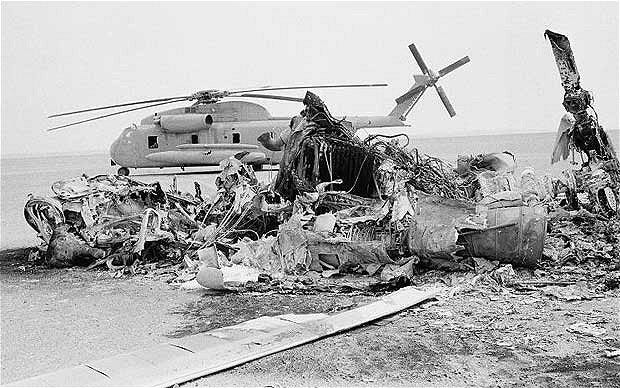
Forty-seven years later, Trump tweets about military intervention at 3 AM. But who would execute such an operation?
Defense Secretary Pete Hegseth, whose operational security makes Carter’s 1980 debacle look disciplined.
In March 2025, it was revealed that Hegseth shared operational details of U.S. strikes on Yemen in a Signal group chat. The chat included 18 senior officials, Vice President Vance, National Security Adviser Waltz, the CIA Director, and the Secretary of State. It also included Jeffrey Goldberg, editor-in-chief of The Atlantic, whom Waltz accidentally added.
As Goldberg later testified: “He was texting war plans. He was texting attack plans. When targets were going to be targeted, how they were going to be targeted; who was at the targets; when the next sequence of attacks was happening.”
But it gets worse. Hegseth also shared the same operational information in a separate Signal chat with his wife, brother, and personal lawyer.
The Pentagon Inspector General concluded that Hegseth’s actions “could have resulted in failed U.S. mission objectives and potential harm to U.S. pilots.” The information matched a classified CENTCOM email marked “SECRET//NOFORN, not releasable to foreign nations.
The bitter irony: In 2016, Hegseth himself criticized Hillary Clinton’s email practices, saying: “The people we rely on to do dangerous and difficult things for us rely on one thing from us: that we will not be reckless with the dangerous things they’re doing for us. That’s the national security implications of a private Domino Blackberry server.”
Signal is not a private server. It’s worse, it’s a commercial app that accidentally included a journalist.
The comfortable assumption goes like this: “Iran is different. It’s a theocratic dictatorship under sanctions. Of course, it’s unstable. Our systems are fundamentally different.”
Are they different in kind, or merely in degree?
Consider the structural parallels:
Legitimacy built on economic delivery? Every modern government depends on this. The implicit bargain everywhere is: we manage the economy, you accept our authority. What happens when delivery falters?
Currency as a control mechanism? Every central bank operates this lever. Iran’s multi-tier exchange rate was more explicit, but the principle that monetary policy is political power is universal.
Information management or Mismanagement as governance? Every institution attempts this. The difference is one of degree and sophistication.
Elites capturing systems meant to serve the public? Pezeshkian admitted that everyone who got cheap dollars “pocketed them.” This is not unique to Tehran.
Greene’s criticism of Trump cuts to this: “Trump voters spent the week threatening a tax revolt because they are so furious about the never-ending waste, fraud, and abuse of their hard-earned money going to foreigners and foreign wars.”
The Iranian regime collapses because it cannot deliver basic economic security, food, water, a stable currency, or functioning infrastructure.
Meanwhile, the American President tweets about military intervention abroad. At the same time, his tariffs function as a consumer tax, his Defense Secretary shares war plans with family members on unclassified apps, and his own base threatens revolt over spending priorities.
The regime that can’t feed its people faces lectures from the regime that can’t secure its communications.
When people lose faith in institutions, they seek exits.
Smartphones are an exit from information control. The internet, an exit from atomization. And in Iran, cryptocurrency became a means of escaping monetary manipulation.
The Iranian regime tried to use Bitcoin as a tool of state power, converting sanctioned oil into electricity, then into cryptocurrency that could bypass the dollar system. At one point, Iran was the fifth-largest Bitcoin mining nation in the world. The IRGC became a crypto cartel, consuming electricity meant for citizens.
But Bitcoin doesn’t care about intentions. The same properties that let the regime evade sanctions also let citizens evade the regime. Capital flight from Iran increased 450% since 2018. Crypto outflows hit $4.18 billion in 2024. An estimated 22% of Iranians now own cryptocurrency.
The regime wanted Bitcoin’s utility without its philosophy. You cannot separate them. The US should take note.
This isn’t to claim that Bitcoin caused the revolution. Most Iranians are struggling with poverty, not managing crypto portfolios. But the existence of exits, financial, informational, and social, changes the calculus for everyone. It makes systems more fragile by making alternatives more accessible.
Russia watches Tehran burn while bleeding in Ukraine. China watches as it manages property crises and demographic collapse. The “autocratic alliance”, Moscow, Beijing, Tehran, was never built on shared values. Only shared fear.
The domino effect is real: when one falls, the others feel the tremor. But there are no lifeboats. Russia has no mercenaries to spare for Tehran. China won’t invest in a sinking ship. The brotherhood of autocrats is revealed as transactional, and transactions require resources none of them have.
For Putin, Iran’s collapse means losing his most extensive logistical base in the Middle East. For Xi, it means watching a model of sanctions resistance fail spectacularly, while his own economy strains under similar pressures.
The pattern that should concern everyone: legitimacy failures cascade. They are contagious not because of ideology but because they reveal the fragility that was always there.
Every system that falls was once considered permanent. The Soviet Union. The Shah. Apartheid South Africa. The inevitability was an illusion maintained by the absence of alternatives.
What Iran demonstrates:
Legitimacy is always conditional. Economic failure is not survivable, regardless of ideology. The information age has changed the physics of power. When people have exits, they use them.
The status quo feels stable because we’re inside it. The Iranians chanting in the streets felt the same way about their system, until suddenly they didn’t.
Don’t ask yourself whether your system is different from Iran’s. Think about whether you’ve examined the conditions under which it maintains legitimacy, and what happens when those conditions change.
Because these things don’t come apart overnight, the seeds are planted years before, in water shortages, in currency manipulation, in corruption tolerated, in promises broken. The harvest comes suddenly. But the planting was visible to anyone willing to look all along.
I watched the Shah fall forty-seven years ago. The wall of fear, once torn down, cannot be rebuilt.
The same lesson applies everywhere, including here.
Sources: Economic data from Iran’s State Statistics Center (via PBS, CNN). Currency figures from Central Bank of Iran, Al Jazeera, Wikipedia. Pezeshkian quotes from Iran International, verified against IRNA. Protest timeline from NPR, Al Jazeera, CNN, Washington Post. Hegseth/Signal reporting from Pentagon Inspector General report, The Atlantic, CBS News. Greene and Massie statements from their verified social media accounts.