lawful injustice in governance
when money has undue influence over governance.
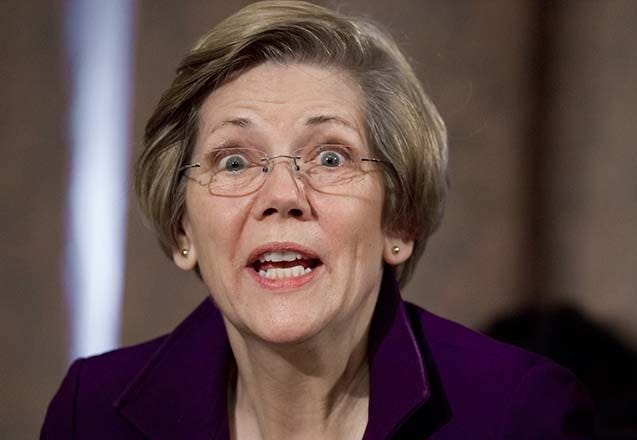
When flawed monetary systems enable excessive consolidation of wealth, and that wealth, in turn, has disproportionate influence over legal and political systems, you end up with ruling frameworks that preserve the privileges of the moneyed rather than promoting fairness. Legality and justice diverge.
Lawmakers who fear Bitcoin know it will disintermediate legacy banking and government control of people through money. Just like the outdated Encyclopedia Britannica gave way to Wikipedia.
This is why disintermediated money like Bitcoin holds so much promise. By disentangling unchecked monetary power from governance, we create openings for law and policy to be reconnected to ethical outcomes rather than preserving status quo inequality and control. It’s not anarchy; instead, it’s a trust in the fundamentals of math.
Lawful injustice
- Tax loopholes allow large corporations and the ultra-wealthy to pay minimal taxes through accounting maneuvers out of reach of average citizens.
- Zoning regulations are influenced by developers and property owners that restrict affordable housing supply in desirable cities, exacerbating inequality.

- Corporations manipulate patent and intellectual property legal frameworks to prolong monopolies and constrain access to medicines, educational resources, and technology to boost profits.
- “Revolving door” dynamics allow those overseeing the regulation of an industry to take high-paying jobs in that industry later, compromising impartial oversight.
- Leniency in prosecution and sentencing for white collar financial crimes versus more punitive treatment of equivalent lower class crimes.
Special legal protections, subsidies, and bailouts are granted to politically connected industries like banking and agriculture that exclusively benefit prominent players. Money, driving governance, has coopted what little semblance of fairness there was in our system of Government.
How does Bitcoin fix this?
Everyone knows the “rules of the game” are rigged in favor of a few holding US Dollars and, therefore, power. These players will never relinquish that power in favor of a more fair and equitable system that serves the public good. So, the only alternative is to change the “rules of the game.” Bitcoin fundamentally changes “US currency” into functioning “Money” that serves markets fairly and equitably.
A sound basis for money itself removes a root tool of influence-peddling. This requires governance processes and structures to channel public sentiment more genuinely than moneyed interests. It becomes harder to encode unfair advantages legally, reconnecting the system to ethical responsiveness.
Of course, the path to realizing this promise has challenges. But a dispassionate, ethics-focused monetary framework is a precondition for a policy that confronts status quo inequalities rather than entrenches them.
This is a future Bitcoin potentially offers. It is not perfection; it will change to meet the needs of society and culture. It will be compatible with changes brought about by AI disintermediation of workers.
Originally published at http://www.brianconnelly.com