Mindstorm — Chapter 8
The Awakening World
The Corporate Wars
All this time, the world was struggling with this discovery. “Absolutely not,” Senator Rebecca Torres slammed her hand on the conference table. “We’re not allowing consciousness sharing in corporate environments until we understand the economic implications.”
The emergency session of the Global Technology Ethics Council had been called after Quantum Dynamics Corporation announced that their research team of four consciousness-linked scientists had solved clean fusion energy in three weeks, a breakthrough that had eluded individual researchers for decades.
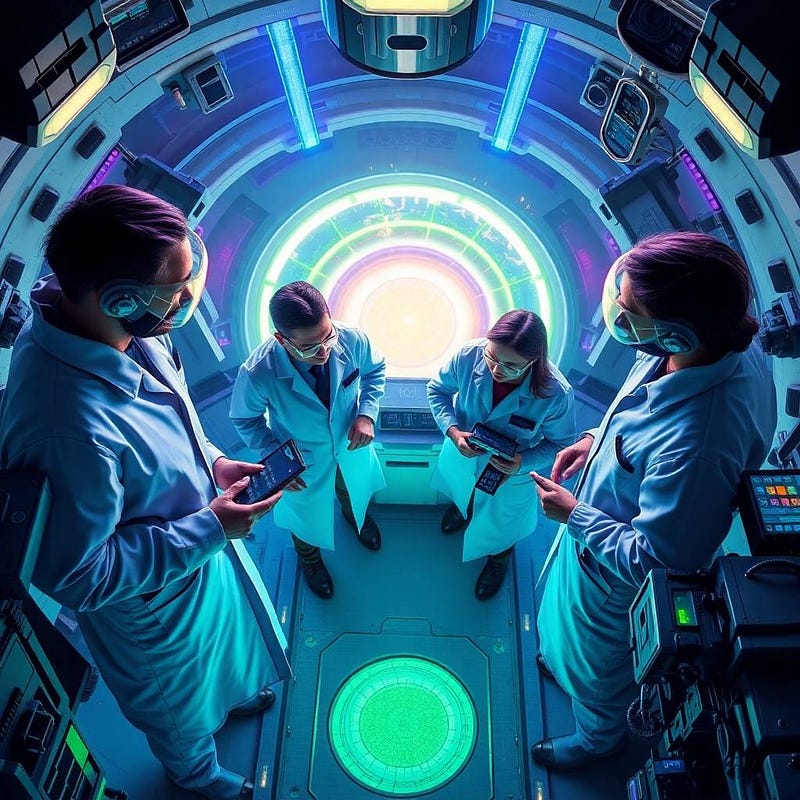
“Senator,” Dr. James Chen, now head of Applied Consciousness Research, pulled up holographic displays, “we’re talking about solutions to climate change, disease, and poverty. The linked teams are achieving in days what took us years.”
“And putting millions out of work in the process,” Torres shot back. “When four linked minds can outperform a hundred individual researchers, what happens to everyone else?”
The economic disruption was already beginning. Technology companies worldwide were quietly forming “consciousness quartets”, teams of four researchers who could share awareness while maintaining individual personalities. These teams were producing innovations at unprecedented rates, making traditional research organizations obsolete overnight.
The Religious Schism
Cardinal Martinez stood before the Vatican Council, his voice heavy with centuries of theological certainty facing unprecedented challenge.
“The Archive Protocol subjects report direct experience of consciousness surviving bodily death,” he announced. “They claim to commune with deceased individuals who maintain personality and memory in what they call the ‘consciousness field.’”
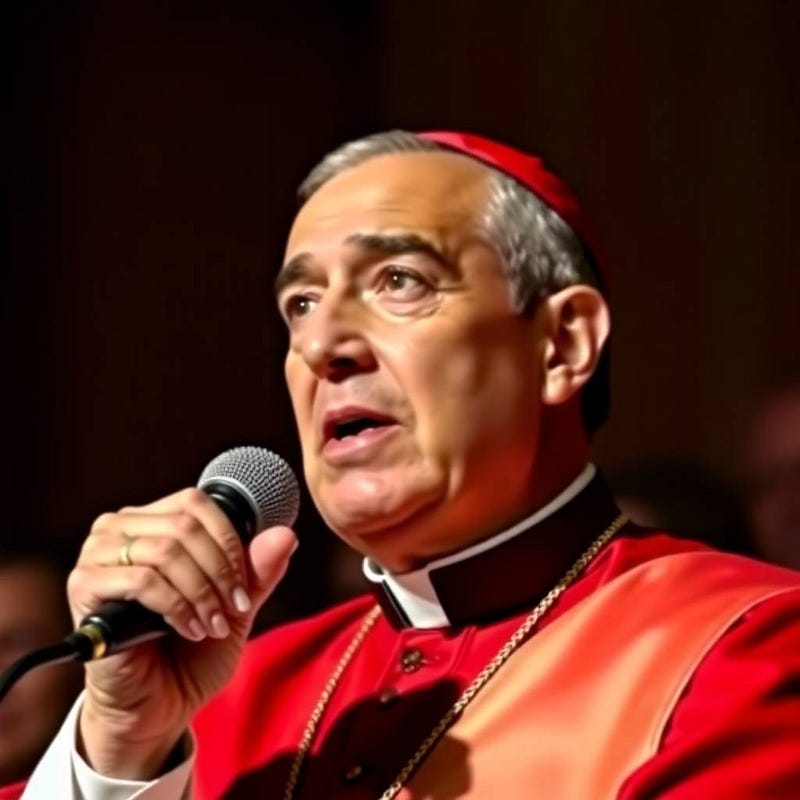
The implications were staggering. If consciousness truly survived death in an eternal field accessible to the living, what did that mean for salvation, judgment, heaven, and hell?
“Some of our theologians argue this validates our teachings about eternal souls,” Martinez continued. “Others claim it contradicts the necessity of divine grace for salvation.”
Similar debates raged in mosques, temples, and synagogues worldwide. The consciousness field research wasn’t disproving religion, but it was challenging every religion’s exclusive claims about death, the afterlife, and the nature of divine connection. It was clear that consciousness is not the soul, but a uniquely human thing.
Meanwhile, a new movement called “Field Seekers” was emerging, comprising people who abandoned traditional religious structures to pursue direct consciousness field experiences through the Archive Protocol.
The Neural Pair Phenomenon
Dr. Sarah Kim watched eight-year-old Maya Chen-Okafor demonstrate consciousness bridging to a group of neuroscientists, effortlessly guiding them through field memories that had taken Elena years to access safely.
“The children adapt so naturally,” Sarah noted to the research team. “Maya can maintain individual awareness while accessing collective memory as easily as switching between languages.”

But the children born to neural pairs were creating their own challenges. Traditional education became meaningless when a child could instantly access the accumulated knowledge of linked consciousness networks. Social structures built around individual achievement collapsed when children naturally shared thoughts and experiences.
Maya’s parents, Marcus and Sarah, had become reluctant celebrities, the first successful permanent neural pair who maintained both individual personalities and shared consciousness. Their marriage existed simultaneously on individual and collective levels, creating intimacy so complete that other couples either envied it desperately or found it terrifying.
“We’re not one person,” Sarah Chen-Okafor explained to reporters. “We’re two people who can choose to think as one mind when we want to. The individual ‘me’ still exists, I just also know what it feels like to be Marcus when I want to.”
Their success had inspired thousands of couples to attempt neural pairing, but the failure rate was devastating. Relationships that couldn’t handle ordinary conflict were destroyed when partners experienced each other’s thoughts directly.
The Economic Revolution
The Global Economic Summit in Geneva had devolved into chaos as traditional economists tried to comprehend a world where consciousness-linked teams could solve complex problems in hours.
“The productivity increases are unprecedented,” Dr. Elena Vasquez reported via the consciousness field link. She could now attend meetings while her body remained at research sites. “Four-person consciousness teams can design, test, and implement solutions faster than any traditional organization.”
But productivity was only part of the story. Consciousness-linked individuals seemed to lose interest in traditional markers of success, wealth accumulation, individual achievement, and competitive advantage. Why pursue personal gain when you could experience the satisfaction of others’ success as your own?
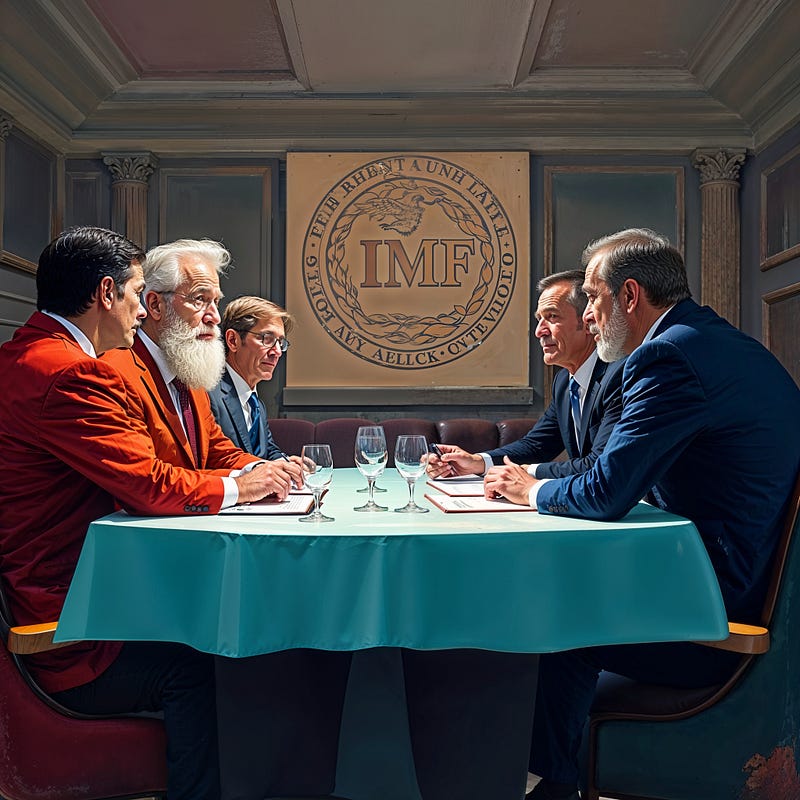
“We’re seeing the collapse of scarcity-based economics,” warned economist Dr. James Harrison. “When people can share consciousness, they start sharing resources automatically. Property ownership becomes meaningless when you experience everything as collectively beneficial.”
Early experiments in “consciousness communes”, communities where residents maintained permanent neural links, had achieved remarkable sustainability and eliminated crime. Still, they also produced no marketable innovations and contributed nothing to traditional economic systems.
Government Responses
The responses from world governments ranged from embrace to outright hostility:
China had launched a massive consciousness research program, attempting to create a “patriotic collective consciousness” that would enhance national unity while maintaining state control. Early results were mixed; consciousness linking seemed to reduce authoritarian compliance rather than strengthen it. It’s not a Borg-like collective; the element of choice still exists.
The European Union established strict regulations requiring psychological evaluation before neural linking and limiting consciousness sharing to licensed research facilities. They were trying to manage the transition while maintaining democratic institutions.
The United States was fracturing along predictable lines. Progressive states embraced consciousness research while conservative states banned neural linking entirely, claiming it threatened individual liberty and religious freedom. Russia had gone dark on consciousness research after reports of failed military applications led to mass psychological casualties among volunteer soldiers.
The Resistance Movements
“We are witnessing the end of human individuality,” declared Dr. Margaret Foster, leader of the Individual Consciousness Preservation Society. “These people aren’t enhanced, they’re being absorbed into a collective that will ultimately erase what makes us human.”
The resistance wasn’t limited to academic circles. “Neural Freedom” movements had emerged worldwide, some peaceful, while others had become increasingly violent. A neural linking facility in Detroit had been bombed by extremists who claimed consciousness sharing was “demonic possession” designed to destroy human souls.

The resistance found support from unexpected quarters. Many artists and writers argued that consciousness sharing eliminated the individual struggle that produced great art. “Pain, isolation, the search for meaning, these aren’t bugs in human consciousness,” argued poet Elena Rodriguez. “They’re features that drive creativity and growth.”
Success Stories
But alongside the chaos, remarkable successes were emerging:
The Mumbai Climate Solution: A consciousness quartet of environmental scientists had developed atmospheric carbon processing technology that could reverse climate change within two years. Their solution required not just technical innovation but unprecedented global cooperation, which consciousness linking seemed to facilitate naturally.
Medical Breakthroughs: Neural pairs of doctors could diagnose complex conditions instantly, sharing not just knowledge but intuitive pattern recognition. Surgery performed by consciousness-linked teams showed success rates approaching 100%.
Conflict Resolution: In war zones where consciousness linking had been attempted, violence decreased dramatically. It was nearly impossible to maintain hatred when you could experience your enemy’s perspective directly.

Preservation of “Borders” between nation states was becoming increasingly irrelevant as physical resources and energy were becoming increasingly abundant and available to all.
The Children’s Perspective
Most remarkably, the children born to neural pairs were developing their own culture, one that mystified adults from both individual and collective consciousness traditions.
Ten-year-old Alex Petrova-Singh, child of Russian-Indian neural pair researchers, explained it to a documentary crew: “You adults think consciousness sharing means becoming the same person. However, it doesn’t work that way. When I link with someone, I become more myself, not less. I see what makes me unique by experiencing what makes them unique.” This isn’t tic-toc! There are no algorithms to sway my choices.
These children moved effortlessly between individual and collective awareness, maintaining strong personal identities while naturally sharing thoughts and resources. They were creating social structures that adults couldn’t comprehend, neither purely individual nor purely collective, but something entirely new.
The Tipping Point Approaches
Dr. Elena Vasquez stood in her laboratory, monitoring global consciousness field fluctuations through networks of quantum sensors. The readings showed something unprecedented: spontaneous consciousness linking was beginning to occur without technological assistance.

“The field strength is increasing globally,” she reported to the emergency session of the World Council. “People are beginning to experience fragments of consciousness sharing naturally, especially near ancient sites and in areas with high concentrations of neural pairs.”
She paused, feeling the weight of the thirty minds within her awareness and the growing network of consciousness bridges that spanned the globe.
“We may be approaching a threshold. If field consciousness reaches critical density, consciousness sharing could become involuntary for the entire human population. We need to help humanity choose its path before the choice is made for them.”
The world stood at a crossroads, not between good and evil, but between different forms of consciousness evolution. The successes and failures, cooperation and resistance, were all part of humanity learning what it meant to be both individual and collective simultaneously.
The question was no longer whether consciousness sharing would transform civilization; it was whether humanity could navigate that transformation while preserving the best of both individual and collective awareness.
Around the world, billions of people faced the most fundamental choice in human history. At the same time, children who had never known pure individual consciousness quietly demonstrated that the choice might not be either-or, but both-and.