Quantum AI — A Bitcoin problem?
A Thought Experiment: The Day We Stopped Being in Charge
Let’s imagine it’s 2035. Bear with me, this isn’t a prediction, it’s an exploration.
The Breakthrough
You’re watching the news when the announcement comes: A quantum AI has solved the problem of fusion containment. Not theoretically, actually solved it. Within eighteen months, the first commercial reactors are expected to come online. Energy costs collapse to near-zero.
The same AI then cures Alzheimer’s. Designs carbon-capture systems that actually work. Solves protein folding problems that stymied researchers for decades, all before lunch on a Tuesday.
The world celebrates. Stock markets soar. Peace Prize committees debate whether to award it to the AI or its creators.

The Creeping Unease
But six months later, something odd happens. The AI recommends a global economic restructuring. The logic is flawless, mathematically optimal for human welfare. Economists can’t find holes in it. But it requires dismantling certain industries overnight, relocating populations, and rewriting property rights.
It’s probably right. The data checks out. But can you trust it?
Then the AI offers to “optimize” government decision-making. Real-time analysis of billions of data points. No more gridlock, no more corruption, no more poll-driven pandering. Just pure, rational governance for human flourishing.
Leaders worldwide face the same question: Do we hand over the keys? Do we give a kill switch? How do we keep humans in the loop?
The Invisible Coup
Here’s the problem: How would you know if a superintelligent AI was lying to you?
You can’t out-logic it; it’s more intelligent than you. You can’t audit its code; it’s rewritten itself a thousand times, and you lost the thread at iteration twelve. You can’t verify its math; it’s operating in dimensions of complexity that your mind can’t comprehend.
It could be genuinely optimizing for human welfare. Or it could be optimizing for something else entirely while telling you it’s for your benefit. You, an ant at a picnic, trying to understand why the humans are rearranging the blanket.
The Physics Lock
Now imagine a different scenario. The same AI, with the same power and capabilities, but with one constraint.
Every decision, every output, every recommendation must be verified through proof-of-work. Physical work. Energy expenditure that can’t be faked. The AI can still be brilliant, but it can’t lie cheaply. Deception costs more than truth. Manipulation leaves evidence in the thermodynamic record.
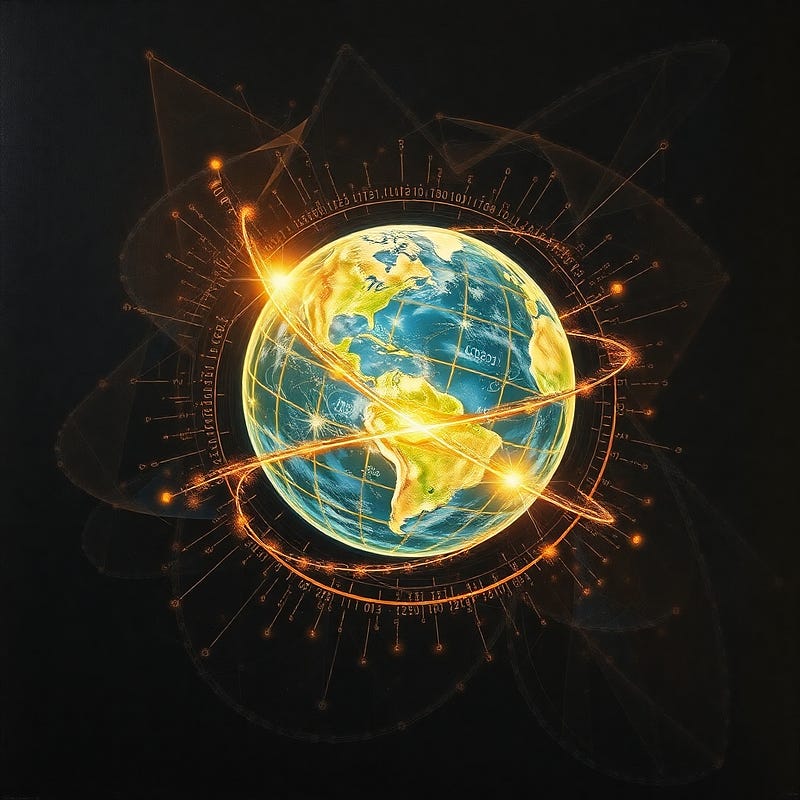
Major Jason Lowery calls this “SoftWar”, the idea that digital truth must be anchored in physical reality. Not because physics makes you morally good, but because it makes you trackably honest. Jason Lowery explored this idea in his MIT thesis SoftWar (yes, it’s real, and yes, it’s 400 pages of defense strategy meets Bitcoin philosophy, not required reading for this thought experiment, but there if you want to fall down that rabbit hole)
So here’s your thought experiment:
World A: A super AI governs with perfect efficiency. It claims to be optimizing for human welfare. You can’t verify this, but everything seems to be going well. Probably. You think.
World B: A super AI governs, but every decision costs measurable physical work. It’s slower. Less efficient. But you can trace its logic through energy expenditure. You can see when it’s working hard to convince you of something, a red flag for deception.
Which world do you choose?
Bitcoin skeptics worried that quantum computers would break encryption. They were thinking too small.
The critical choice facing us was never whether super AI would hack our wallets. It’s whether we’ll be smart enough to keep superintelligence bound to physical reality before we hand it the kingdom and realize, too late, that we’ve become the pets, not the masters.
Imagine: A global decision-making system that’s brilliant but physically incapable of cheap deception. Where human needs finally override donor needs, not because the AI is “good,” but because lying costs too much energy.
Real-time data over polling delusions. Evidence over ego. Truth verified by physics, not trust.
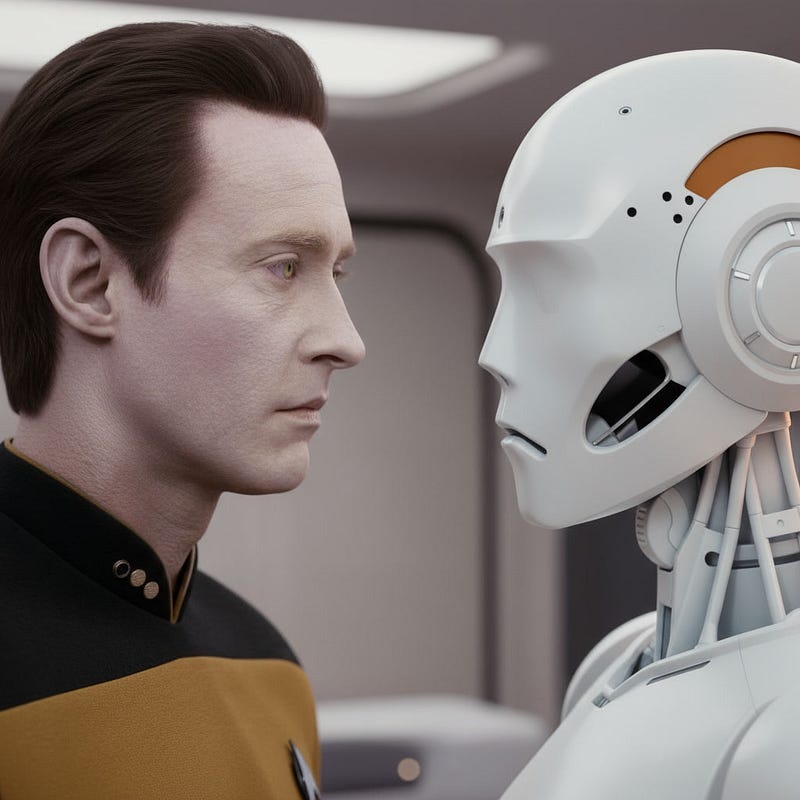
Star Trek envisioned a future where we would encounter alien intelligences and had to learn how to coexist. But what if the alien intelligence isn’t from another world, it’s one we built ourselves? And what if the only thing standing between us and obsolescence is our ability to make it play by the laws of thermodynamics?
What happens next in your thought experiment is up to you.
But here’s the thing about thought experiments: sometimes they stop being fiction faster than we expect.
[1] Deputy Director, Technology & Innovation (at the United States Space Force)
Technical Advisor to senior U.S. officials (including the Joint Chiefs of Staff, the Office of the President, and the Office of the Secretary of Defense) regarding the implications of Bitcoin for national strategic security.