Rule of Law
Beyond Broken — How Bitcoin Returns the Balance

How Monetary Laws Favor the Wealthy
Lyn Alden wrote so clearly about how the structural foundation of money has broken due to the disconnect between transactions and settlements. And how central banks grew up to fill the void and morphed into a corrupt institution focused on self-preservation, rather than a societal good. There is another fracture point that impacts money, often overlooked by many for a variety of reasons. The laws that govern money, the agreement we abide by or not, give money its worth.
These laws have devolved over the years to favor a small group of people over the many who depend on money to conduct business and cooperate to build a better society for all. Money, after all, is a tool, not an end in itself. As the bible points out, money is not the root of evil, but rather the worship of money.
The Erosion of Equal Treatment Under Law
The United States is founded on the principle of “rule of law”, the idea that laws apply equally to everyone regardless of status or wealth. Yet when examining how monetary and financial laws operate in practice, a stark reality emerges: the system systematically advantages the wealthy while disadvantaging average citizens.
This isn’t merely about having better lawyers or more resources to navigate complexity. The laws themselves are structured to create different sets of rules for different economic classes, fundamentally undermining the democratic principle of equal justice.
Tax Law
A System of Deliberate Complexity
Tax law has become increasingly convoluted, bloated, and opaque, favoring those who can afford to hire expensive tax consultants and avoid paying their fair share of taxes. The U.S. tax code now spans over 70,000 pages, filled with loopholes, exemptions, and special provisions that primarily benefit high earners and corporations.
Structural Advantages for the Wealthy:
- The carried interest loophole allows investment managers to pay capital gains rates (typically 15–20%) instead of ordinary income rates (up to 37%)
- Complex trust structures and offshore arrangements provide tax avoidance opportunities unavailable to wage earners
- Sophisticated tax planning strategies require expensive professional services that average taxpayers cannot afford
- Wealthy individuals can defer income recognition through various financial instruments, while working families pay taxes immediately on every paycheck.
Meanwhile, the IRS audits lower-income taxpayers at disproportionately high rates because their returns are simpler and cheaper to review. In contrast, complex returns from wealthy individuals receive less scrutiny due to resource constraints.
Financial Crimes
Justice Scales Weighted by Wealth
The enforcement of financial laws reveals perhaps the starkest disparity in treatment. Corporate executives who commit massive fraud often receive civil penalties or deferred prosecution agreements, while individuals stealing small amounts face criminal prosecution and imprisonment.
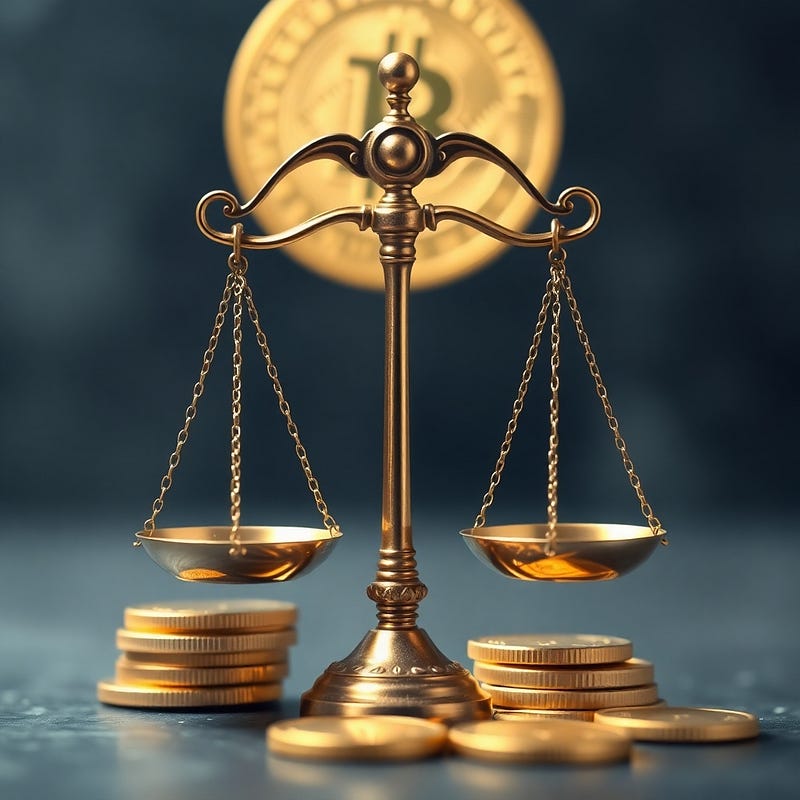
The Two-Tier Justice System:
- Major banks pay billions in fines for mortgage fraud, money laundering, and market manipulation, but executives rarely face personal consequences
- “Too big to fail” institutions receive taxpayer bailouts when their risky bets fail, while small businesses and individuals face bankruptcy.
- Wealthy defendants can afford specialized legal teams that negotiate favorable plea deals, while public defenders handle hundreds of cases simultaneously.
- Complex financial crimes are often settled through civil proceedings rather than in criminal court, thereby avoiding the stigma and consequences of a criminal conviction.
Regulatory Capture and the Revolving Door
The agencies responsible for enforcing monetary laws are often staffed by former industry executives who later return to the private sector. This “revolving door” creates inherent conflicts of interest in both rulemaking and enforcement.
Federal Reserve officials routinely leave to join the banks they previously regulated. Treasury officials move seamlessly between government service and Wall Street. This pattern ensures that regulatory priorities align more closely with industry interests than public welfare.
Access to Financial Systems
Banking regulations themselves create barriers that exclude lower-income individuals while providing preferential treatment to wealthy clients:
- Minimum balance requirements and monthly fees effectively exclude many from traditional banking
- Overdraft fees disproportionately impact those living paycheck to paycheck
- Wealthy clients receive private banking services, better loan terms, and access to exclusive investment opportunities
- Complex financial instruments are restricted to “accredited investors,” limiting wealth-building opportunities for average citizens
The Bitcoin Alternative
Equal Rules for All
With Bitcoin, we all play by the same rules. The protocol doesn’t distinguish between rich and poor, connected and unconnected, powerful and powerless. Every transaction follows identical validation rules. Every participant has equal access to the network. No central authority can freeze accounts, seize funds, or manipulate the monetary supply to benefit preferred groups.
Money becomes a tool to facilitate cooperative effort, rather than a weapon to suppress the masses and cause harm to adversaries.
Bitcoin’s Democratic Principles:
- Transparent, open-source code that applies uniformly to all participants
- No special access or privileges based on wealth or connections
- Predictable monetary policy that cannot be manipulated for political advantage
- Global accessibility without requiring permission from financial gatekeepers
- Immutable transaction history that prevents backdoor deals and hidden arrangements
Inflation
Taxation Without Representation
Perhaps the most insidious form of monetary injustice is inflation itself, a programmed form of taxation without representation that disproportionately harms those least able to protect themselves. When central banks expand the money supply, they effectively tax every dollar holder by reducing the purchasing power of their money, yet this “inflation tax” receives no democratic approval. Managed by an unelected central bank that is governed by the “too big to fail, at the expense of the too small to matter” rule.
How Inflation Redistributes Wealth Upward:
- Asset holders (predominantly wealthy) see their real estate, stocks, and other investments appreciate faster than inflation
- Wage earners (the majority) see their purchasing power erode as salaries lag behind rising prices
- Savers are penalized as interest rates fail to keep pace with inflation, effectively confiscating their stored labor
- Debtors (often large corporations and governments) benefit as they repay loans with devalued currency
- Those closest to the money printer, banks, government contractors, and financial institutions, spend newly created money before prices rise
This represents taxation without representation in its purest form. Citizens never voted to have their purchasing power systematically eroded to benefit asset holders and well-connected institutions.
Congressional Insider Trading
Legal Corruption
Adding insult to injury, those who make the laws governing money routinely profit from information unavailable to the public. Members of Congress and their families have repeatedly outperformed the market through trades made with knowledge of upcoming legislation, regulatory changes, and government contracts.
The Ethics in Government Act (EIGA) of 1978 established the foundational principle that federal government officials, including members of Congress, must place “loyalty to the Constitution, laws and ethical principles above private gain.”
Elizabeth Warren
While she has been outspoken on the subject of insider trading by Congress, she has also been leading by example. It is disheartening that she cannot grasp the broader implications of how Bitcoin levels the playing field for everyone and sets a direction for a better society, with its egalitarian design.
Documented Examples of the Double Standard:
- Federal officials receive advance notice of policy changes that will move markets, then trade accordingly
- Banking committee members buy and sell bank stocks before announcing new regulations
- Defense contractors’ stocks are purchased by lawmakers before military spending bills are introduced
- While retail investors face prosecution for insider trading, lawmakers operate under looser disclosure rules with delayed reporting requirements.
The STOCK Act of 2012 was supposed to address this corruption. (Less than a year later — April 2013): On April 15, 2013, Congress quietly passed and President Obama signed into law S. 716, which significantly rolled back key provisions of the STOCK Act. This amendment effectively:
- Eliminated the requirement for an online, searchable, sortable, and downloadable database for public financial disclosure reports. This made it significantly more challenging for the public and journalists to analyze the data and identify patterns of potential insider trading or conflicts of interest. Instead, the data became much more difficult to access and process, often requiring physical trips to congressional offices to view paper records.
- Scaled back the online disclosure requirement for a large number of executive branch employees (approximately 28,000 employees), citing security and privacy concerns (e.g., for officials working overseas). While some security concerns may have been valid, critics argued that the rollback was overly broad and applied even to employees who did not face such risks.
- Eliminated the requirement that congressional staff trades be reported online, which had been a key part of the original act’s transparency
It is clear that our lawmakers are not invested in correcting the legal imbalances that make money a tool for institutionalized corruption rather than a means of collaboration.
The Broader Implications
This systematic favoritism in monetary law represents more than mere unfairness; it undermines the foundational principles of a democratic society. When laws systematically prioritize wealth over citizenship, when enforcement depends on economic status rather than actual wrongdoing, and when regulatory agencies prioritize industry interests over public welfare, the social contract itself breaks down.
The Current System Creates:
- Erosion of public trust in institutions
- Concentration of wealth and power in fewer hands
- Barriers to economic mobility for average citizens
- Systemic instability as moral hazard encourages increasingly risky behavior
- Social tensions as inequality becomes entrenched through legal mechanisms
With fiat money, the rules, tax law, finance law, and banking regulations favor one class over another. Wealthy government officials openly trade on insider information while making the very laws that govern markets. The current Administration breaks the law with impunity. Corporate executives manipulate monetary policy for their own private gain, while individual citizens suffer the consequences of inflation they never consented to. The system isn’t just broken, it’s operating exactly as designed to extract wealth from the many to benefit the few.
Let’s not delve into how this laid the foundation for numerous revolutions throughout history.
Market-Based vs. Law-Based Inequality
A Critical Distinction
There will always be rich and poor. “There will always be poor people in the land. Therefore, I command you to be open-handed toward your fellow Israelites who are poor and needy in your land.” Not all inequality is created equal. There’s a fundamental difference between inequality that emerges from free market competition and inequality that results from rigged legal frameworks.
Market-Based Inequality: The Natural Order. In genuinely free markets, inequality reflects differences in value creation, risk-taking, innovation, and consumer choice. When someone builds a better product, provides superior service, or creates solutions that improve lives, they justifiably earn more than those who don’t. This type of inequality serves critical economic functions:
- It incentivizes innovation and entrepreneurship.
- It rewards efficiency and value creation.
- It signals where resources should flow in the economy
- It’s generally temporary and fluid; fortunes rise and fall based on performance
- It creates opportunities for others to compete and succeed
Law-Based Inequality: Rigged Games The inequality we see today isn’t primarily market-driven; it’s the result of legal frameworks deliberately designed to advantage some at the expense of others. This isn’t about rewarding value creation; Think Money Changers at the temple door, it’s about extracting value through legal privilege:
- Central banks create money that flows first to connected institutions
- Tax codes contain loopholes accessible only to those who can afford specialized advice
- Regulatory barriers protect incumbent businesses from competition
- Bailout policies socialize losses while privatizing gains
- Insider trading laws apply selectively based on political connections
The Crucial Difference Market-based inequality creates wealth through voluntary exchange. When someone gets rich in a free market, they typically do so by making others better off. Law-based inequality transfers wealth through coercion; when someone gets rich through legal privilege, they do so by making others worse off.
In a truly free market, inequality would still exist, but it would be based on merit, innovation, and voluntary exchange rather than political connections and legal manipulation. The ultra-wealthy today aren’t primarily rich because they created exceptional value; they’re rich because they’ve captured the legal and monetary systems. The “Charitable Giving” is more often a tax dodge than an effort to be fair-handed.
Bitcoin represents more than a technological innovation; it embodies a return to the foundational principle that rules should apply equally to everyone. In a world where monetary laws have been captured by special interests, Bitcoin offers a neutral alternative where mathematical consensus replaces political favoritism.
The money we use has knock-on effects for the world we live in. Think value creation vs wealth extraction.
The choice before us is clear: continue operating under a system of laws that systematically advantages the wealthy, or embrace a monetary system built on the democratic principle that everyone should play by the same rules.
The future of the “rule of law” may well depend on which path we choose.