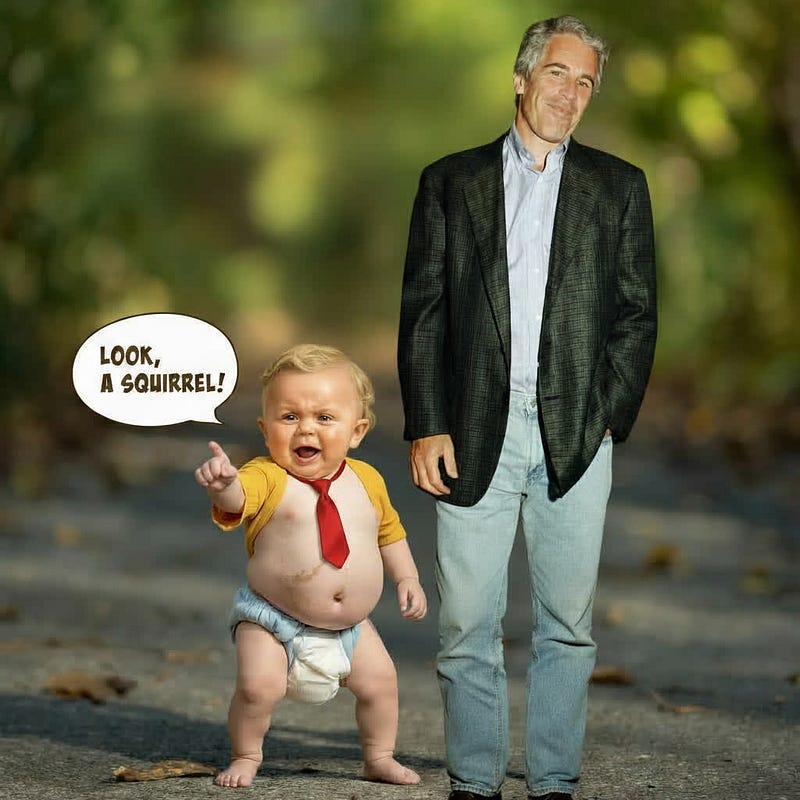
Squirrel !!!
Trump’s Week of Manufactured Outrage
Here’s what happened: Canada ran an ad. A pretty straightforward ad, actually. It featured Ronald Reagan, conservative icon, Republican hero, the guy whose name politicians still invoke like a magic spell, talking about why tariffs are bad for America.
And President Trump? He lost it.
Not just regular political pushback. Not a measured response or a counter-argument. He called the ad “fake,” claimed Reagan actually “LOVED TARIFFS,” and canceled trade negotiations with Canada , over a commercial.
Let that sink in for a second.
The Problem With Calling Everything “Fake”
The ad wasn’t fake. It was edited, sure, but it drew on a real 1987 radio address in which Reagan spent five full minutes explaining why tariffs hurt American workers and damage the economy. You can watch the whole thing on YouTube. The Reagan Library published it itself.
But Trump called it fake anyway. And here’s where things get uncomfortable: when you’re the President of the United States, words matter. When you label something “fake” that’s demonstrably real, you’re not just wrong. You’re eroding people’s ability to trust anything .
The scary part? Trump probably didn’t even watch Reagan’s full speech before firing off that Truth Social post. He saw criticism, felt attacked, and hit back. That’s not leadership. That’s a reflex.
What Reagan Actually Said
Reagan wasn’t some free-trade absolutist who never touched a tariff. He placed tariffs on Japanese semiconductors before giving this speech. But even while doing it, he called himself “loath” to use trade barriers. He talked about how tariffs had made the Great Depression worse, a memory that was “deep and searing” for his generation.
Then he spent most of the speech explaining exactly why tariffs backfire: they make companies dependent on government help, kill competition, spark trade wars, raise prices, and cost jobs.
Trump’s response to all this nuance? “He LOVED TARIFFS FOR OUR COUNTRY.”
That’s not a disagreement. That’s a fabrication.
The Toddler Diplomacy Problem
Think about what Trump’s reaction actually accomplished. Ontario’s Premier Doug Ford, a conservative who called Reagan “the best president America has ever seen”, was trying to appeal to Republicans using their own hero’s words . It was actually kind of clever.
And Trump’s response was to cancel trade talks with Canada.
Not because Canada did something economically harmful. Not because they violated an agreement. Because they ran an ad he didn’t like. An ad that was factually accurate but politically inconvenient.
This is what happens when you elect someone who treats international relations like naptime at daycare, one wrong word and everyone pays. Canada isn’t a rival; it’s our neighbor, our ally, our second-largest trading partner. But Trump was willing to blow up negotiations because his feelings got hurt.
The Reagan Foundation’s Weird Role
Here’s where it gets even messier. The Ronald Reagan Presidential Foundation said the ad “misrepresented” Reagan’s words. But they wouldn’t say how . They just vaguely complained about “selective audio and video.”
Yeah, that’s how ads work. They’re short. They edit. But nothing in Ontario’s ad contradicted what Reagan actually said. It captured the essence of his position perfectly.
The Foundation’s real problem wasn’t accuracy; it was politics. They didn’t want Reagan’s legacy used against a Republican president, even if that president was distorting Reagan’s actual views. So they threw shade without backing it up.
Trump then used their statement as vindication, even though they never claimed Reagan supported tariffs.
What This Says About Leadership
You know what’s terrifying about this whole episode? It’s not really about tariffs or trade policy. It’s about a president who:
- Can’t tell the difference between “fake” and “things I don’t like”
- Doesn’t fact-check before making major diplomatic decisions
- Would rather be wrong loudly than right quietly
- Treats allies like enemies when they criticize him
- Has such a fragile ego that a 60-second commercial can derail negotiations
And most importantly: he assumes his supporters won’t check either. That they’ll just believe “FAKE!” because he said so, even when the receipts are sitting right there on YouTube.
The Convenient Timing Nobody’s Talking About
But let’s talk about what else was happening this week. Because while Trump was having a meltdown over a Canadian TV commercial, there was another story he seemed awfully eager to avoid.
On October 17, just days before Trump’s tariff tantrum, the House Oversight Committee released a new batch of documents from Jeffrey Epstein’s estate, including call logs and schedules showing meetings between Epstein and prominent figures. Then, on October 22, Democratic Representative Robert Garcia publicly demanded that Attorney General Pam Bondi immediately release all Epstein-related files, accusing the administration of a “White House cover-up.”
The timing gets more interesting. House Speaker Mike Johnson has been refusing to swear in Arizona Representative-elect Adelita Grijalva, who won her special election two weeks ago. Why does that matter? Because Grijalva has pledged to be the 218th signature on a discharge petition that would force the Justice Department to release an estimated 100,000 pages of Epstein files.
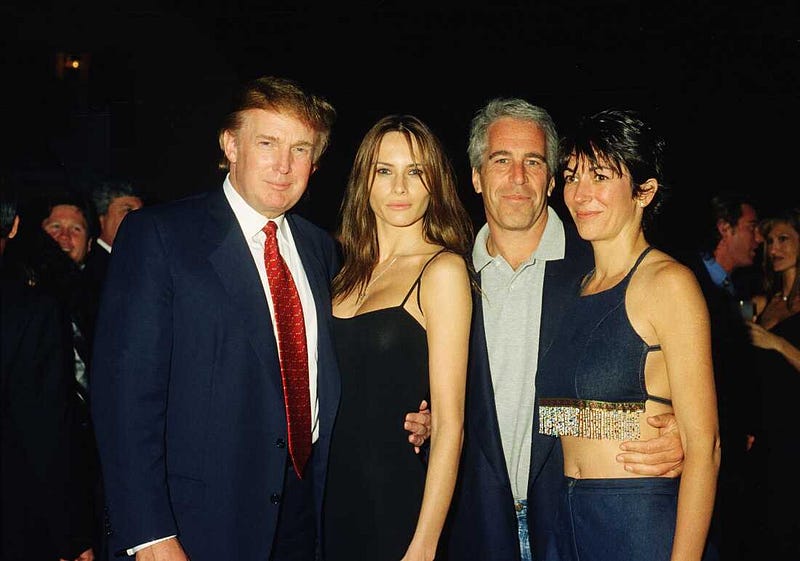
Trump was friendly with Epstein in the 1990s and early 2000s, though he claims they had a falling out before Epstein became a convicted sex offender. Documents released by the House Oversight Committee include a book of messages for Epstein’s 50th birthday that contains a suggestive poem and drawing that appears to have been signed by Trump. Trump denies creating the drawing and has filed a $10 billion defamation lawsuit over its publication.
So let me get this straight: In the same week that new Epstein documents surface, Democrats demand immediate release of all files while accusing Trump of a cover-up, and Republicans are actively blocking a vote that could force disclosure, Trump suddenly finds it urgent to cancel trade negotiations with Canada over a TV ad?
The Art of the Distraction
This isn’t speculation. As MSNBC noted in August, Trump has “made explicit his desire to shift attention away from Jeffrey Epstein” through various tactics. It’s a pattern that experts have documented extensively.
Political analysts call it “narrative warfare” or “flooding the zone”, pioneering techniques that involve creating so many controversies and spectacles that people lose focus on what really matters. The strategy is simple: throw something outrageous into the news cycle, and watch everyone chase that shiny object instead of asking uncomfortable questions. But Trump wields it like a toddler with a fire hose.
Think about what happened here. Trump took a routine political advertisement, the kind that runs during every trade dispute, and turned it into an international incident. He called it “fake” when it wasn’t. He claimed it was designed to influence a Supreme Court case. He accused Canada of “egregious behavior.” And then he dramatically terminated all trade negotiations.
Over. A. Commercial.
Does that sound like a proportional response? Or does it sound like someone desperately trying to change the subject?
When the Smoke Clears
Here’s the thing about distractions: they work. Right now, news outlets are covering Trump’s trade war with Canada. Conservative commentators are debating whether Reagan really supported tariffs. Political analysts are discussing the impact on US-Canada relations.
And very few people are asking why Speaker Johnson won’t swear in a duly elected representative. Or why the Attorney General hasn’t complied with congressional subpoenas for Epstein documents. Or what’s actually in those 100,000 pages that Trump seems so eager to keep hidden.
In comments to reporters, Trump has dismissed the Epstein matter as “a hoax.” But if it’s really a hoax, why not just release everything and clear it up? Why the legal threats, the defamation lawsuits, the refusal to comply with subpoenas?
The answer might be as simple as this: when you’re facing uncomfortable questions, sometimes the best defense is a good tantrum.

The Bigger Picture
This isn’t just another “Trump says something false” story. We’re beyond that. What’s happening here is the president canceling real diplomatic work because he can’t handle criticism, even when that criticism comes in the form of another conservative’s actual words .
Reagan understood something Trump apparently doesn’t: being strong doesn’t mean never backing down. It doesn’t mean pretending you’re always right. It doesn’t mean throwing tantrums when someone disagrees with you using facts.
Real strength is being able to say, “Here’s why I think tariffs make sense today, even though Reagan opposed them in different circumstances.” That’s a legitimate argument! People might disagree, but it’s honest.
Instead, Trump chose to lie about what Reagan believed, punish Canada for telling the truth, and, conveniently, dominate the news cycle. At the same time, his party keeps the government shut down to block the release of documents that might be deeply embarrassing.
That’s not a strength. That’s a child’s tantrum with presidential letterhead.
Where Do We Go From Here?
The Ontario ad will keep running. Reagan’s speech will stay on YouTube. The facts won’t change, no matter how many times Trump calls them fake.
But what has changed is this: we now have concrete proof that a sitting president will sacrifice real diplomatic relationships and economic negotiations because he can’t admit he disagrees with Ronald Reagan. Or maybe, just maybe, because he needed a big, loud distraction from something else entirely.
If a simple TV ad can make Trump blow up trade talks with our closest ally, what happens when the criticism comes from somewhere that actually matters? What happens when it’s not Ontario running ads, but China playing hardball? Or is Russia calling his bluff?
And more importantly: what happens when those Epstein files finally come out? Because they will eventually. Documents have a way of surfacing, no matter how hard you try to bury them.
The answer should worry all of us.
Because at some point, we have to ask ourselves: how many relationships, how many negotiations, how many opportunities are we willing to sacrifice so one man can avoid answering uncomfortable questions about his past?
Reagan knew the answer to that. Apparently, Trump never got the memo.
Or maybe he did, and he’s just hoping you won’t notice while he’s busy having a hissy fit with Canada.