The Clown in the Theater
Bitcoin and the Trust Reset
What initially attracted me to Bitcoin was its elegance. Blockchain has absolutely unbreakable digital security backed by the laws of thermodynamics.
Today I listened to a hardcore macroeconomist and investment advisor talk about a “Capital Reset.” Then it occurred to me: It’s not a capital reset. It’s a trust reset. And the audience can’t hear the truth from entertainment.
The Fire Backstage
In 1843, Søren Kierkegaard told a parable:
A fire broke out backstage in a theater. The clown came out to warn the public; they thought it was a joke and applauded. He repeated it; the acclaim was even greater. I think that’s just how the world will come to an end: to general applause from wits who believe it’s a joke.

The clown is trapped by his own role . The more urgent his warning, the louder the laughter. There’s no escape from the costume. The theater burns.
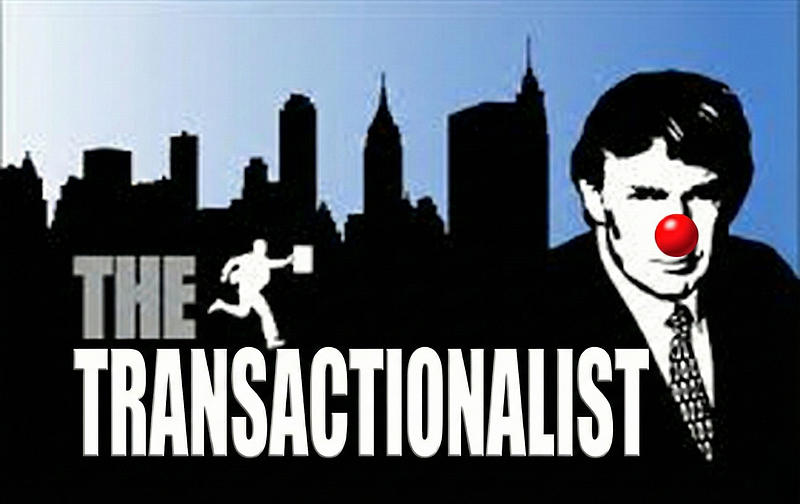
Today, we have numerous clowns at the center of the circus. Whatever coherent strategy might exist within his administration, and serious analysts debate whether there is one, gets drowned in the performance. He’s so focused on being the center of attention that even if someone handed him the exact words to warn the audience, they’d think it was part of the act. The medium has consumed the message entirely.
Meanwhile, the fire spreads backstage.
I’ve been thinking about this parable while watching the financial world convulse. Analysts point to gold flows, balance sheet compositions, and the breakdown of the post-1971 dollar system. They chart capital rotations and reserve asset transitions. They debate whether the chaos is coordinated or accidental, whether the people in charge understand what they’re doing or are stumbling through it.

Nobody takes the clowns seriously.
The Trust Substrate
In 1995, Francis Fukuyama published Trust: The Social Virtues and the Creation of Prosperity. His thesis was simple but profound: economic prosperity depends not on resources, intellect, or even good institutions, but on a society’s capacity for what he called “spontaneous sociability”, the ability of strangers to trust each other and cooperate without blood ties or government coercion.
High-trust societies like postwar America, Germany, and Japan could build large organizations through voluntary association. Low-trust societies remained trapped in familism, trust extending only to relatives, with a hollow middle between the family and the state.
Fukuyama saw clouds gathering even then. The rapid increase in the number of lawyers and prisoners. The breakdown of families and voluntary associations. The erosion of the social capital that took generations to build.
“No shared values, no trust,” he wrote. “No trust, no business.”
Thirty years later, we’ve arrived at the destination he feared.
What the Charts Don’t Show
Luke Groman, the macro analyst, recently described what he sees as a “complete breakdown of trust” in the international order. He traces gold flows from the U.S. to Switzerland to China. He watches Japanese bond yields creep upward while central banks accumulate gold at historic rates. He notes that the Fed’s balance sheet has gone “from gold-plated to crap” over a century, from hard assets to the IOUs of a leveraged Congress.
https://youtu.be/fiHy1FoRl-Y?si=QTxpy_M3qbNkfGpT
His analysis is sharp. But when he calls it a “capital rotation,” he’s describing symptoms, not the disease.
This isn’t a capital reset. It’s a trust reset.
Capital flows follow trust. When trust in institutions fails, capital seeks alternatives. Gold. Real assets. Things you can hold. “No ticky, no washi,” as Groman quotes, no proof, no deal.
The financial metrics everyone watches, reserve compositions, balance sheets, and yield curves, are downstream of something more fundamental. Trust is infrastructure. Invisible until it’s gone. Then suddenly everything stops working.
The Bullshit Economy
In 2018, the anthropologist David Graeber published Bullshit Jobs, arguing that 37 to 50 percent of workers in affluent societies secretly believe their jobs are meaningless. Not unpleasant, meaningless. Work that contributes nothing, that even the person doing it can’t justify.
Graeber’s explanation was provocative: these jobs exist on purpose. “A happy and productive population with free time on their hands is a mortal danger.” Better to keep people busy, indebted, too exhausted to think or organize.
Whether or not you buy his conspiracy theory, the phenomenon is real. Credentialism is replacing competence. Financialization is replacing production. An economy of appearances.
Now, artificial intelligence arrives, and the math converges brutally.
Groman asks the uncomfortable question: “What percentage of $80,000-plus white-collar jobs are actually that hard?” Mortgage brokers. Claims processors. Commercial lenders. Financial advisors. Medical diagnostics. Pattern-matching work that feels important because it pays well and requires credentials.
These jobs overlap almost perfectly with Graeber’s bullshit jobs. And here’s where the system breaks: in a debt-based economy where everyone is leveraged to the maximum, you don’t need AI to replace all jobs. You just need it to replace enough.
If ten dermatologists become six, what happens to the mortgages, car loans, and student debt of the other four? They default. Their banks take losses. Credit tightens. The cascade begins .
College graduate unemployment just hit 25 percent, the highest on record. The canary is already dead.
The bullshit jobs weren’t about productivity. They were social management, keeping people busy, indebted, too exhausted to think. Now machines can do the bullshit faster and cheaper. The control mechanism fails. Not just job loss, system failure.
The Transactional Trap
Here’s where it gets uncomfortable.
High-trust societies are built on relationships that transcend immediate self-interest. You cooperate because you share values, because reputation matters, because you’re embedded in communities that remember.
Transactionalism inverts this. Every interaction becomes: what am I getting out of this right now?
A society that embraces transactionalism as philosophy, that celebrates the deal over the relationship, extraction over cultivation, burns through its trust inheritance. The post-World War II order, whatever its flaws, was built on trust accumulated through shared sacrifice. Transactionalism spends that capital without replenishing it.
Hard to build. Easy to break. Decades to accumulate. Moments to destroy.
When trust collapses, the control freaks fill the void. More surveillance. More restrictions. More force. But force can’t create trust. It can only prevent exit. Which further erodes trust. Which demands more control?
An addiction spiral.
What initially attracted me to Bitcoin was its elegance.
I spent thirty years as a systems architect, and I recognized beautiful engineering when I saw it. Blockchain offers unbreakable digital security backed by the laws of thermodynamics. Proof of work. Consensus without central authority. A protocol that doesn’t require trusting anyone because physics doesn’t negotiate.
I wasn’t financially sophisticated enough to appreciate its monetary role, even as Andreas Antonopoulos elaborated for hours on the revolution. The meaning came later.
Now I understand: Bitcoin is about trust in a way that society and money have never been.
Not “trustless” because trust is bad, trustless because institutional trust has failed and can’t be rebuilt by the same actors who broke it. The protocol substitutes for relationships that no longer hold.
Exit, and Entrance
I’ve written before about “Exit vs. Voice”, the choice between leaving systems that can’t be reformed and staying to fight for change. Bitcoin is an exit. From the debt-based money system. From the control mechanisms. From institutions that have forfeited credibility.
But exit to where?
This is important. People don’t just need escape routes. They need somewhere to go. Something to build. Community.
Bitcoin isn’t just a door out of a burning theater. It’s a door into a space that needs our collective creative energy. The technical foundation is laid. Now comes the human work, the education, the onboarding, the patient explanation.
The clown can’t save the theater. But he can prop open the exit.
Invitation
I don’t do persuasion anymore. I tried for years to convince people about systems thinking, about monetary history, about the quiet crisis building underneath the noise.
It doesn’t work.
So now I just point at the door. I try to make complex ideas accessible, even entertaining. I meet people where they are.
There is a better way. It’s an exit, yes. But it’s also an entrance to something new that needs building.
Everyone is welcome.
Brian is the author of “How to Keep Your Bitcoin Alive and Well,” “Before Satoshi,” and “Alice in Bitcoin Land.” He spent thirty years as a systems architect and strategic consultant before turning to Bitcoin education. He writes about money, trust, and the transition we’re living through.