The Decentralization Revolution
Why Government Overreach into Bitcoin and Blockchain Will Backfire
As we move into an increasingly digital world, our policymakers are showing a woeful lack of knowledge about the evolution of technology and how it will benefit society. Instead, they are fixed on maintaining the status quo that favors existing systems for the benefit of a few significant money concerns over the welfare of the middle class and poor, a classic 1% takeover. At the same time, the masses are homeless, overworked, and tied up and bound by government red tape.
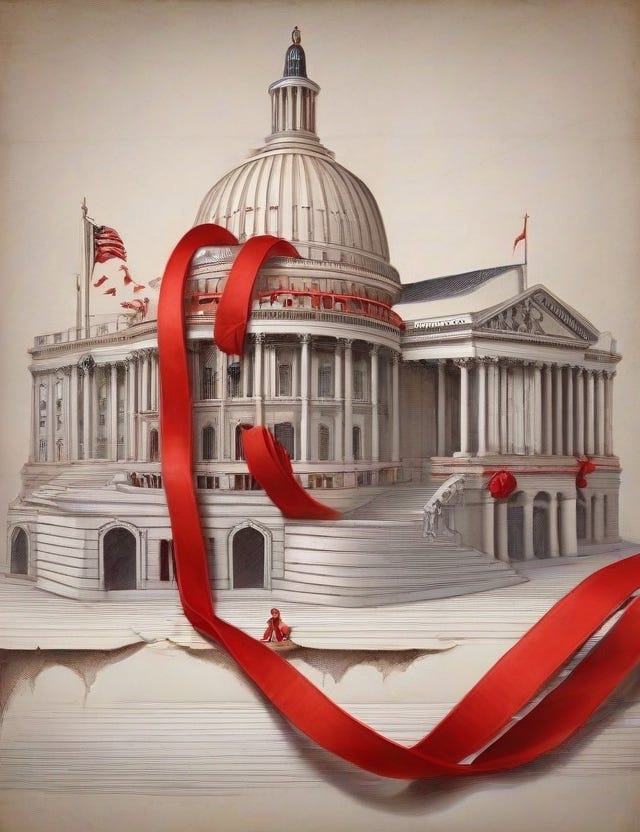
Bitcoin stands apart from other blockchain projects and cryptocurrencies in its ability to present voluntarily transparent, decentralized rules resistant to centralized control or oligarchic manipulation — unlike impotent bureaucratic institutions.
The Bitcoin Governance Model
Bitcoin’s programmed monetary policy and permissionless incentives make it the only genuinely robust and antifragile framework thus far capable of computationally enforcing governance standards without rent-seeking middlemen. While many “crypto” experiments may prove fanciful, they will die on the vine. At the same time, Bitcoin relentlessly grows more resilient — its reliable open-source network unaffected by the machinations of ignorant officials who grasp at maintain control at the expense of many for a few.
We must consider Bitcoin’s ethos of predictive transparency, decentralized power, and voluntary user engagement enfranchising the disenfranchised. Not legislators. Bitcoin is here to stay and rapidly change what governance means. It’s one thing to establish rules and laws through a process mutually agreed upon, and a very different thing to adopt rules that come along with technology because I want to benefit from it.
In the case of Bitcoin, the rules have been established and coded into the base layer.
- A fixed number of tokens in a fixed period forces a deflationary economic policy.
- Berar Instrument — has implications for “Ownership” regardless of local laws and regulations.
- Borderless Global Money
- Transparent codes or rules are available for anyone to inspect and validate.
- Decentralization — no third-party interference with global commerce, no central point of failure, and no censorship.
These are some of the rules accepted by Bitcoin users. These rules replace some critical national control, which an algorithm enforces. Governments do not like losing control of anything. However, as Microsoft learned, when open source challenged its monopoly, it was a battle that a centralized entity could not win. China also learned this when confronted with capital flight through Bitcoin.
Because You Can’t Beat them, Join them!
Because it is not going away, our leadership should be able to see the way forward and get ahead of the inevitable by buying in big time. Reallocate 1% of the military budget to buy Bitcoin and watch the national debt disappear by 2025. Don’t over-regulate one of the most potent transformative technologies to another country or big monetary interest.
The US is already one of the largest holders of Bitcoin. Don’t sell it; build on that. China has recently lightened up on its draconian policies! They get it! Argentina, Germany, El Salvador, and many other nations do, too. So sure, drive that innovation out of the US and let every other country determine the future.
US History is ripe with lousy legislation with adverse knock-on effects worse than the downside of what the laws were intended to address. Prohibition was clearly opposed to the will of the people, and by driving alcohol underground, they encouraged the growth and empowered organized crime.
When a radically new form of borderless, decentralized digital money emerges, the implications are systemic and widespread. Thomas Jefferson and other political philosophers would likely perceive Bitcoin’s coded architecture, transparent ledger, and independence from state control as harboring the potential to transform governance profoundly.
While regulations were deployed for the benefit of consumers and citizens at one time, they are not today. The current puppet master holding the US dollar strings is still slashing at windmills while those burned by their folly are lining up behind anything that changes the rules (BRICS, Bitcoin, stablecoins). The change is messy but inevitable.
Bitcoin rules do not require us to agree on anything except that we want the benefit of using hard money not controlled by any third party. Yet, if adopted at scale, there are profound implications for nation-state governance that are not immediately apparent.
As Jason Lowery points out, Bitcoin is a critical component of the future defense of the United States. As such, the decision to engage with Bitcoin should not be left up to bean counters in the government or banking but should be addressed by powers that be in the defense establishment.
The banking sector’s noise about terrorists is just that noise because they understand two fundamental things:
- Bitcoin will disintermediate the existing power and control of banking and government.
- Terrorist funding is conducted through existing channels that exist in fiat currency
Abuse of the currency by US leadership has brought the currency to a fragile state, and you can smell the fear whenever they try to spin another yarn about how much you need their help and protection. At the same time, they fund wars at the expense of domestic well-being.

A new networked world, open, digital, and borderless, is rapidly supplanting the squabble over bordered resources. It promises greater abundance and freedom than our unsustainable resource-destructive legacy system could ever do.
It doesn’t require a vote at the ballot box. It will be noticed if you buy Bitcoin and vote by holding your own keys; no permissions or third parties are needed, which is the essence of freedom and liberty. Meanwhile, our leaders should consider starting fewer wars (war on drugs — that never worked; War on terror — that cost 5 trillion and got us nothing but dead bodies; proxy wars that cost billions and diminished our standing abroad and impoverished our citizens at home.) Wake up, smell the coffee!
Originally published at http://brian.brianconnelly.com