The Loyalty Procurement System
This is not a story about money. Money is just what you use to keep score. This is a story about what happens when the wrong kind of man gets to be in charge, decides the rules don't apply to him, and then spends everything in the building proving it.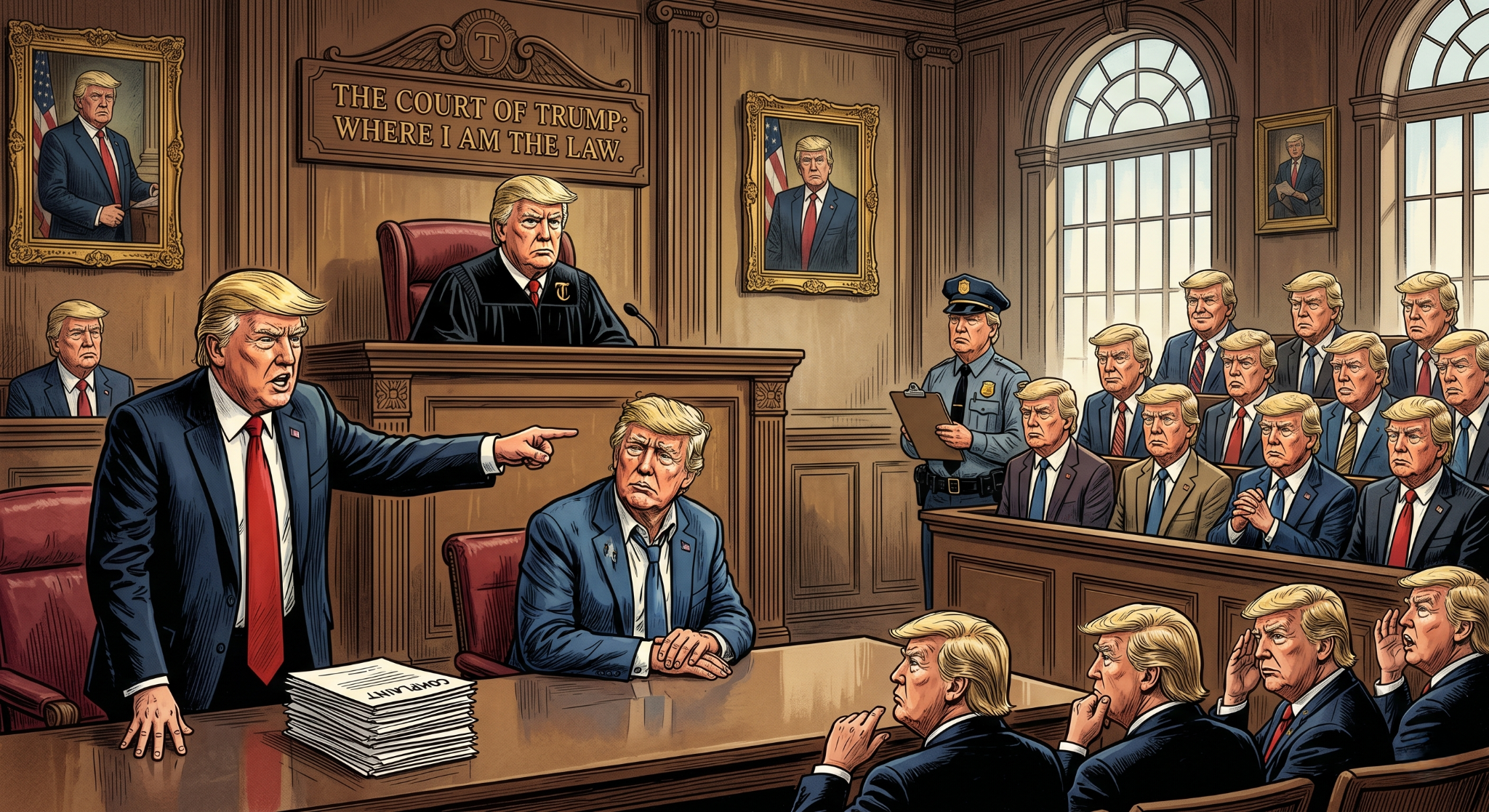
Robert Mugabe ran Zimbabwe for thirty-seven years. When he started, the country was feeding the continent. When he finished, the country was issuing hundred trillion dollar notes worth forty cents. The difference between those two things is not economics. It's character. His character, specifically, applied to everything around him for thirty-seven years until everything around him looked like his character.
Here is how it works. A certain kind of leader comes to power riding legitimate grievances. Mugabe had them. White minority rule was real. Colonial theft of land was real. The anger was justified and he was good at channeling it, which is the first qualification for this particular career path. Legitimate anger, skillfully channeled, in service of yourself.
Once in power he did what this kind of leader always does. He kept the anger going because the anger was useful. He redistributed land not to farmers but to loyalists, they did not have red baseball caps, because loyalists keep you in power and farmers just grow food. The farms collapsed. The country stopped eating. He kept going. Because the thing you have to understand about this kind of leader is that making the country great again is not the point. The country is the vehicle. When the vehicle breaks down you don't fix it. You drain what's left in the tank and you keep moving.
When the money ran out he called the central bank governor, a man named Gideon Gono, and told him to print more. Warsh, wait I mean Gono, knew. He said so later, publicly, after it didn't matter anymore. He knew exactly what he was doing and he knew exactly where it ended. He printed anyway because the man who controlled his job had decided that his own survival was the only math that counted.
89.7 sextillion percent inflation. Annual.
Let that number find a home in your brain. Sextillion. Economists had to go get a number they had never needed before and put it in a sentence with the word percent and then go lie down.
Prices doubled every twenty-four hours. Workers got paid in the morning because by afternoon the money was worth half as much. The hundred trillion dollar note was not a joke. It was the government's genuine attempt to keep up with what it had done to its own arithmetic.
Now I want to ask some questions. Just questions. I am simply asking.
Did Mugabe ever run a casino? Did he incite a riot at his own capital? Did he rip out the national palace garden and replace it with a gold-studded ballroom? Did he know Jeffrey Epstein?
No. He did not. Robert Mugabe, for all his spectacular criminality, could not clear that bar.
I just think that is worth noting. When you are being compared unfavorably to Robert Mugabe in the category of personal conduct, something has happened. Something specific and measurable has happened and we should probably name it out loud.
Now here is where Mugabe, give him credit, lacked imagination.
He paid his loyalists with stolen farms. It worked, mostly, for a while, until the farms stopped producing and the money ran out and the whole thing ate itself. Crude instrument. No paperwork. No legal framework. Just armed men and a list of names.
This week the Justice Department of the United States announced the creation of a $1.776 billion fund to compensate the president's allies who claim they were unfairly targeted by the previous administration. Let me say that again so it lands properly.
The president of the United States sued the government of the United States, which he also runs, then settled with himself, which he also controls, and the settlement created a nearly two billion dollar fund, drawn from taxpayer money, administered by commissioners he appoints, to pay people he decides were wronged.
The money comes from the Judgment Fund, which Congress continuously appropriates for the government to pay legitimate legal claims filed against it. It is your money. Redirected. Through a lawsuit he filed against himself. To pay his people. With paperwork. Legally. This week.
There appear to be few constraints on who can submit a claim. The president has broadly stated that his allies were politically targeted, from the Russia investigation to the nearly 1,600 people charged in connection to the January 6 Capitol riot. Applications are already rolling into the Justice Department even though no commissioners have been chosen and nobody is quite sure how people are supposed to apply yet. Details to follow.
So to be precise: the loyalty fund is partially a January 6 payment fund. A riot fund. Paid for by you. Administered by him. For them.
Mugabe would have loved it. He just lacked the creativity and the lawyers.
George Carlin had a line. He said Americans have the best politicians money can buy. He said it as a joke. He would not say it as a joke now. He would say it slowly, the way you talk to someone who is not quite grasping the situation yet.
The situation is this. The loyalty procurement system just got a government budget line.
But even this, the farms, the fund, the fire hose of money pointed at political survival, even this is not the real story. The real story is quieter and it is happening in the institutions.
Mugabe did not abolish the Reserve Bank of Zimbabwe. He kept it. The name, the building, the governor, the mandate. He just made sure the governor understood who controlled his future. He did the same thing to the courts, the press, the election commission, the military. He did not eliminate them. He replaced the person inside each one who might say no. Everything after that was paperwork.
The list of American institutions that have had that specific surgery performed on them recently is long enough to require its own article. The Justice Department. The inspector general offices. The civil service. The Fed, in progress. Not abolished. Kept. Renamed sometimes. The sign on the door is the same. The person inside who might say no is gone.
That is the whole story. Everything else is arithmetic.
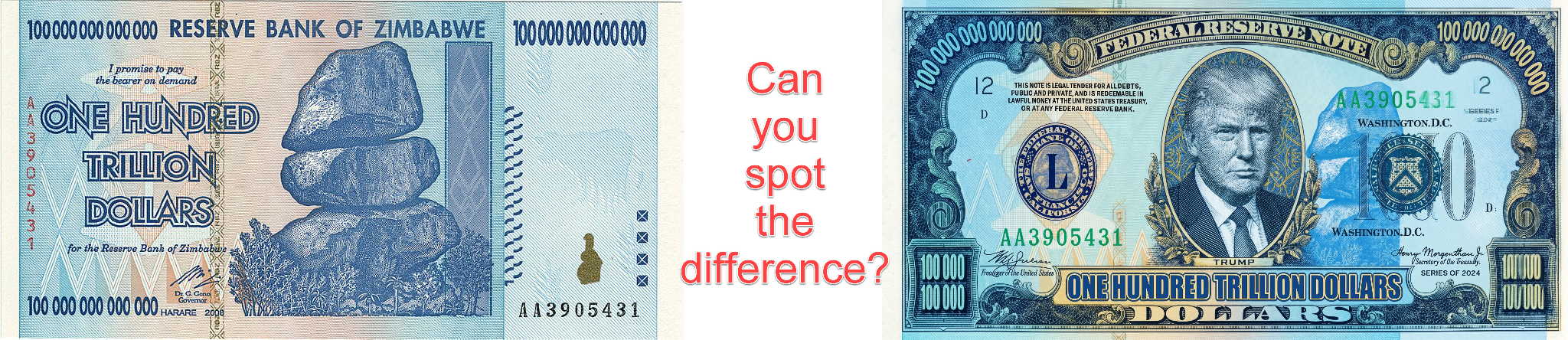
The image is not predicting anything. It is asking one question. Whether the thing that made the dollar different from the Zimbabwe dollar, the gap between the currency and the man, whether that gap is still there or whether it has become what it became under Mugabe. A costume. A title. A man who prints when he's told and explains it later when it doesn't matter anymore.
Mugabe died in 2019 at ninety-five. In a hospital in Singapore. Which he could afford because he had spent thirty-seven years making sure he could afford things.
Zimbabwe is still dollarized.
The dollar it uses, well it’s still around for now.