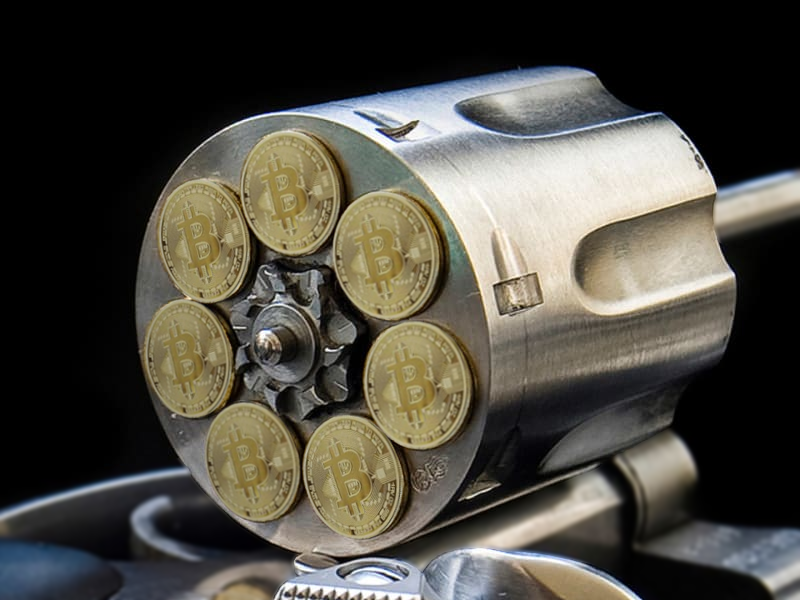
The Monetary Arms Race
Three things happened in quick succession that most people missed (Given the Epstein chaos, it’s understandable), but together, they signal that the rules of a critical game are changing.
Dot-Connecting!
First : The US bond market started showing cracks nobody expected. Treasury yields are climbing despite Fed rate cuts. Foreign buyers pulling back. Markets are beginning to question America’s “exorbitant privilege”, the ability to borrow cheaply no matter how large the deficit grows. Lately, over $500 billion per week in maturing Treasury bills (plus smaller amounts of maturing notes and bonds) need to be refinanced. In late 2024, a record $8.9 trillion of government debt was set to mature, averaging roughly $170 billion per week. That’s approximately a 3x increase in the weekly churn rate.
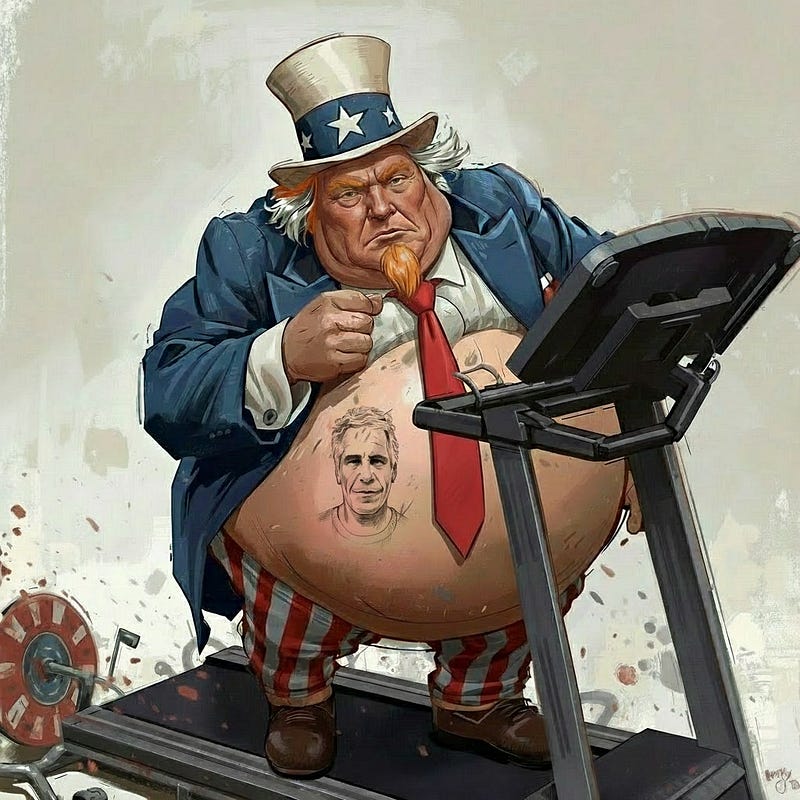
This is significant because it means the government is essentially on a treadmill that’s speeding up, having to constantly roll over massive amounts of debt at whatever the current interest rate is, rather than locking in longer-term rates.
Second: A diplomatic explosion with China. In early November, China’s National Computer Virus Emergency Response Center accused the US government of seizing 127,000 stolen Bitcoin, worth roughly $13 billion, claiming it was part of a “state-level hacking operation”. The US says it was a legitimate seizure from criminals. China’s calling it theft. Two superpowers are now openly fighting over who owns a massive pile of digital currency. And China has banned Bitcoin every which way from Sunday, go figure?
Third: Two days ago, a new bill hit Congress that would let Americans pay their taxes directly in Bitcoin, with those payments flowing straight into A strategic Bitcoin Reserve established by Executive Order in March. Imagine that! Giving up Tax revenue to accumulate Bitcoin, what’s going on there?
Together? They look like the opening moves of something much bigger. Or are they more of the same Administration Cluster f*^&ing.
What Nobody Wants to Say Out Loud
Here’s what’s actually happening beneath the diplomatic language and policy proposals:
The US bond market, the supposed bedrock of global finance, is showing strain. Treasury holdings by traditional anchor investors like China have been declining, creating market dynamics in which higher yields are needed to attract remaining buyers. The dollar’s looking vulnerable in ways it hasn’t in decades.
And at this exact moment, the US government is positioning Bitcoin as a strategic reserve asset. Not as an experiment. As policy. However, there is an experiment underfoot to bolster Bonds with Bitcoin as well.
You don’t need to squint hard to see the pattern: A country facing debt problems and a weakening currency suddenly gets very interested in accumulating a hard, scarce asset with a fixed supply of 21 million coins.
It’s not a coincidence. Is it a strategy?
What Happens Next? The Prisoner’s Dilemma
If this trajectory continues, if the Bitcoin for America Act passes, if more Bitcoin gets added to the reserve, if the US doubles down on this approach, it creates an impossible situation for every other nation.
They’re stuck in a classic Prisoner’s Dilemma:
Option 1: Don’t buy Bitcoin. Hope this is a temporary American experiment that fails, risk of becoming financially irrelevant if it works.
Option 2: Buy Bitcoin. Drive prices up and help America pay off its debt while securing your own position.
There’s no good answer, only different flavors of “The Race is On!”
And here’s where it gets interesting: We can already see how different powers might respond based on their stated positions and recent moves.
Europe: The Fragile Fracture
The EU is stuck between its principles and its survival instincts.
The ECB explicitly rejected a Bitcoin reserve in early 2025, doubling down on the Digital Euro. Christine Lagarde made it clear: they view this American pivot as “financial aggression.”
But while Brussels digs in, member states are breaking ranks. Luxembourg and the Czech Republic have quietly started their own Bitcoin pilot programs. They’re not waiting for consensus when they can see capital already beginning to move, either toward crypto-friendly jurisdictions or straight across the Atlantic.
The irony? By refusing to adapt, the EU’s rigid stance might accelerate exactly what it fears: becoming financially irrelevant as the world moves on.
Russia: The Parallel Rails
Russia looked at America’s move and said, “You’re right. The old system is dying. But we’re not joining your new one, we’re building our own.”
They’ve legalized crypto mining and cross-border crypto payments. But they’re not holding Bitcoin as a reserve. Instead, they’re using it as a conversion tool, turning abundant energy into digital currency, then immediately selling it for gold and commodities.
It’s asymmetric warfare. China is testing the digital currency bridge (mBridge) in pilot tests with Abu Dhabi, settling payments in just 7 seconds and charging transaction fees 98% lower than SWIFT.
Their narrative? The US is so desperate to escape its debt trap that it’s trying to reset the board. And Russia wants no part of that reset; Russia sees mBridge as the future.
The Middle East: Digital Petrodollar 2.0
The Gulf states are doing what wealthy hedgers do: covering all bets.
The UAE is sprinting toward the US approach. Abu Dhabi’s sovereign wealth fund is actively buying Bitcoin infrastructure and ETFs. They want to be the “Switzerland of the Digital Age.”
Saudi Arabia is more cautious, but they’re moving. They’re redirecting their $925 billion sovereign wealth fund away from megaprojects and toward mining operations and data centers. More interesting: they’re exploring accepting stablecoins for oil.
Not Bitcoin. Stablecoins. Specifically, US-regulated stablecoins backed by Treasuries, or at least until BitBonds hit the market.
See the chess move? They exit the long-term Treasury market (which looks increasingly risky) while keeping Washington happy. The Petrodollar quietly morphs into something more flexible. It’s sophisticated hedging dressed up as innovation.
China: The Shadow Whale
And then there’s China, caught in the most uncomfortable position of all. China killed it at home. America just made it national policy. The irony writes itself.
They banned Bitcoin to control capital flight, and now their biggest rival is weaponizing it. The public fury over those 127,000 Bitcoins? That’s not just about the money. It’s about control.
But here’s where it gets murky: what China says publicly and what it does privately are rarely the same.
Behind closed doors, rumors suggest they’re reactivating strategic accumulation using their own seized crypto assets. They can’t afford to let America monopolize the supply, not when Bitcoin’s becoming a proxy for geopolitical power.
The real move? Chinese firms are quietly cutting deals with US crypto mining companies connected to the incoming administration. If you can’t beat them, buy influence. It’s infiltration disguised as business.
So where does that leave us?
The US bond market is showing stress. A major diplomatic incident with China revolves around Bitcoin ownership. America’s government is actively building a Bitcoin reserve. And legislation is moving through Congress to expand it further.
These aren’t isolated events. They’re data points in a larger shift.
This isn’t about Bitcoin anymore. This is about nations hedging against dollar weakness, about geopolitical positioning, about the quiet suspicion that the old financial order is breaking down.
“We’re watching nations hedge against dollar weakness, reposition for geopolitical advantage, and quietly prepare for the possibility that the old financial order is breaking down.
The Bitcoin for America Act hasn’t passed yet. It’s still just proposed legislation. But the foundation it’s built on? That’s real. The bond market strain is real. The China dispute is genuine. The Strategic Bitcoin Reserve is real.
We’re witnessing the opening moves of a new kind of financial competition, one where hard, scarce digital assets become tools of national strategy, where traditional safe havens get repriced, and where game theory forces every nation to react whether they like it or not.
The Second Cold War just went hot. Most people just don’t recognize the weapon.”