The Money Game
How We Got Played and How We Can Change the Rules
The problem
The Rigged Casino
Born in 1952, I saw this unfold. Imagine walking into a casino where the house keeps changing the rules mid-game. Every time you start winning, they print more chips and hand them out to their friends. Your chips become worth less, but somehow the casino owners get richer. You’re forced to keep playing to break even, and the only way to stay ahead is to bet against other players rather than create something new.
Welcome to the modern economy. You’ve been living in this casino your whole life, and most people don’t even realize the game is rigged.
When America Actually Made Things
Picture this: it’s 1950, and your grandfather walks out of a factory at 5 PM, gets in his car that he bought with cash, drives to his house that he owns, and sits down to dinner with his family. His wife doesn’t work because his factory job pays enough to support everyone. They’re planning their summer vacation and thinking about which college their kids might attend.
This wasn’t fantasy. This was everyday life for millions of Americans. One job, one income, comfortable middle-class life.

Back then, America made half of everything in the world. Cars, steel, appliances, you name it. We were the factory floor of planet Earth. But more importantly, companies saw their workers as partners, not expenses. A business was supposed to serve everyone: the owners, the workers, the customers, and the community. Crazy idea, right?
Henry Ford didn’t just invent the assembly line; he paid his workers enough to buy the cars they made. He understood something that seems revolutionary today: if your workers can’t afford your products, you don’t have a sustainable business.
The Great Unraveling
So what happened? How did we go from that world to today, where people work three jobs and still can’t afford rent?
The answer involves a perfect storm of bad ideas, greedy people, and a money system that went completely off the rails.
It started in the 1970s when a professor named Milton Friedman wrote something that would change everything. He said the only responsibility of business was to make money for shareholders. Not workers, not communities, not even customers in the long run. Just shareholders. This message was drowned out by the Vietnam protest, Woodstock, and the profoundly changing America. I didn’t hear it, but some did — CEOs and Wall Street took it to heart.
This sounds reasonable until you realize what it actually means. It means if you can make more profit by firing half your workforce and moving production to a country with no labor laws, that’s not just acceptable, it’s your moral duty.
A guy named Jack Welch took this idea and ran with it at General Electric. He became famous for cutting costs, which mostly meant cutting people. They called him “Neutron Jack” because, like a neutron bomb, he eliminated people while leaving the buildings standing. Wall Street loved him. Workers, not so much.
But here’s the kicker: this only worked because of what was happening with money itself.
How we got here
The Money Trick
In 1971, President Nixon did something that may seem mundane but had a profound impact. He “closed the gold window,” which is a fancy way of saying he broke the promise that dollars could be exchanged for gold.
Why does this matter? Because it meant the government could now print as much money as it wanted, whenever it wanted, for whatever reason it wanted.
At first, this seemed great. Need money for a war? Print some. Want to help the economy? Print some more. Bank about to fail? Fire up the printing press.
But here’s what people are starting to catch on to: when you can create money out of thin air, you’re stealing from everyone who saved their money. It’s like being in a poker game where some players can create new chips whenever they want. Your chips become worth less every time they add more to the pile.
This created what economists call “inflation,” but let’s call it what it really is: a hidden tax on savers and workers.
Suddenly, putting money in a savings account became a guaranteed way to lose money. The bank might pay you 2% interest, but prices were going up 5% per year. You were losing 3% of your purchasing power every year just for trying to be responsible.
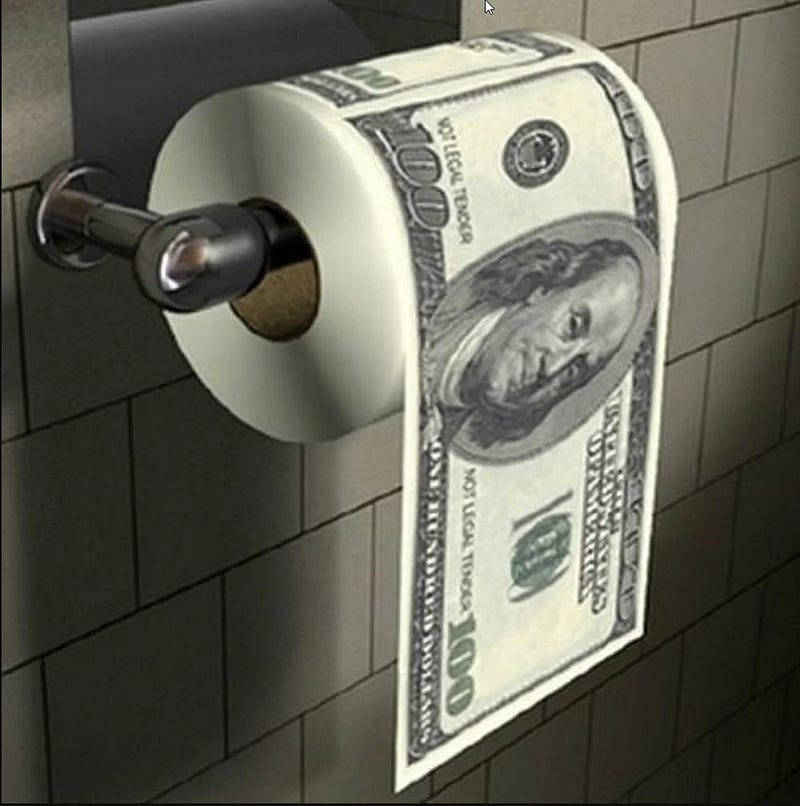
This forced everyone to become speculators. You couldn’t just save money anymore. You had to “invest” it, which really meant gambling in the stock market, real estate, or some other game where the rules kept changing.
The Casino Economy
Once everyone was forced to speculate, everything changed. Companies stopped thinking about building great products for the long term. Instead, they focused on making their stock price go up every three months.
Remember Jack Welch? Wall Street rewarded him every time he announced layoffs. Fire 10,000 people, stock goes up. Close a factory, stock goes up. Move production overseas, and the stock goes up.
This wasn’t because these were sound business decisions. It was because the money system rewarded short-term thinking and punished long-term building.
Meanwhile, the government had its own problems. They were spending more money than they collected in taxes, which meant they had to keep printing more. And who benefited from all this new money? The people closest to the printing press: big banks, big corporations, and government contractors.
Everyone else got to watch their purchasing power disappear while being told that inflation was “transitory” or “good for the economy.”
It was like playing Monopoly with someone who owns the bank and occasionally slips themselves extra money when you’re not looking.
The Great Sucking Sound
Remember Ross Perot? He was that quirky billionaire who ran for president in 1992. He warned about something called NAFTA, saying there would be a “giant sucking sound” of jobs leaving America.
People laughed at him. He didn’t win. But he was right.
NAFTA and similar trade deals weren’t really about free trade. They were about giving American companies permission to abandon American workers. Why pay a living wage in Ohio when you could pay starvation wages in Mexico?
But the real knockout punch came from China. When China opened up for business in the 2000s, it offered something irresistible: workers who would do the same job for a fraction of the cost, with no unions, no environmental regulations, and no questions asked.
American companies couldn’t resist. Why should they? The money system was already rewarding short-term profits over long-term community building. Moving to China was just the logical next step.
The result? Over three million manufacturing jobs vanished. Entire communities were hollowed out. The middle class started disappearing.
But the ruthless part was that this was sold as inevitable, as if it were some natural law of economics rather than a direct result of policies and systems that people created and could change.
Welcome to the Service Economy
So what replaced all those manufacturing jobs? Service jobs. Instead of making things, Americans started serving each other coffee, selling each other stuff made in different countries, and creating increasingly complex financial products that nobody really understood.
The problem with service jobs is that they don’t create the same kind of middle-class prosperity that manufacturing did. When you make something, you create value. When you serve coffee, you’re just moving money around.
Don’t get me wrong, there’s nothing shameful about service work. But a healthy economy needs to make things, not just move things around.
Meanwhile, the people at the top of the food chain got incredibly rich. CEO pay went from being about 20 times what the average worker made to over 300 times. Not because they got 15 times better at their jobs, but because the system was rewarding a completely different set of behaviors.

We went from rewarding people who built things to rewarding people who could manipulate numbers on spreadsheets.
The Self-Reinforcing Trap
Here’s where the story gets really insidious. Once this system was in place, it became almost impossible to change.
Why? Because the people who benefited from it used their wealth to make sure it stayed that way. They funded think tanks to explain why this was all natural and inevitable. They hired lobbyists to write laws that made alternatives illegal. They bought politicians who would protect their interests.
The Supreme Court even ruled that corporations could spend unlimited money on elections. As a result, those with the most wealth held the most political influence, which they leveraged to ensure continued financial gain.
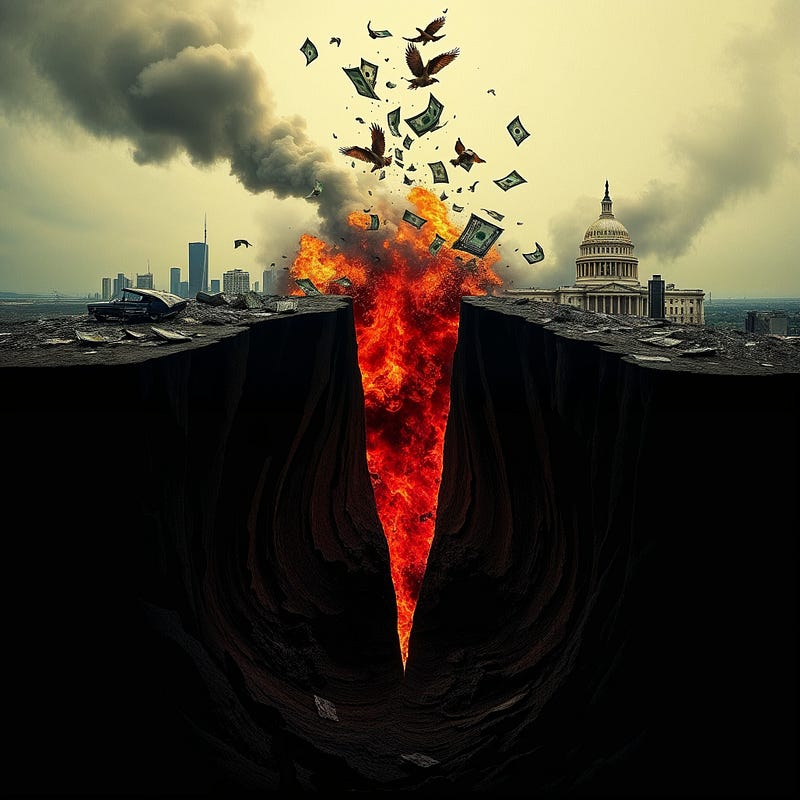
It became a closed loop. The system rewarded destructive behavior, which generated wealth, which bought political power, which protected the system.
Meanwhile, ordinary people were told that if they were struggling, it was their fault. They needed more education, or better skills, or they should just work harder. The idea that the system itself might be broken was considered foolish.
The False Choice
This is where most stories about economic problems end. People throw up their hands and say we need to vote for different politicians, or regulate corporations more, or go back to the gold standard.
But here’s the problem: trying to reform this system is like asking the casino to make the games fairer. Why would they do that when they’re winning?
The politicians are funded by the system. The regulators get their jobs from the system. The media is owned by the system. Even the courts are part of the system. Humanity has lost, and the systems has replaced it.
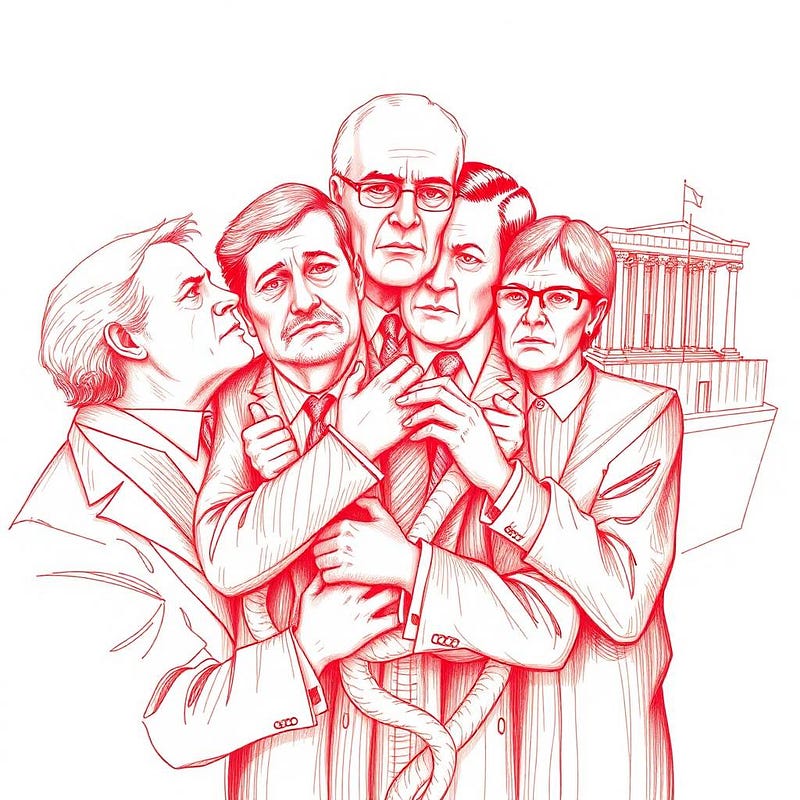
You can’t vote your way out of a rigged game when the people counting the votes are the same ones rigging the game.
How We Can Change It
The Opt-Out Option
This brings us to Bitcoin. But before you roll your eyes and think this is going to be another “Crypto will make you rich” pitch, stay with me. This is about something much more important than getting rich.
Bitcoin isn’t just digital money. It’s an entirely different set of rules.
Remember how the whole problem started when the government broke the link between money and gold? Bitcoin solves this by creating digital money that nobody can print more of. There are only 21 million Bitcoin gradually being released into the world, no more, no emergencies, no exceptional cases.
This might not sound revolutionary, but think about what it means. It means nobody can steal your purchasing power by printing more money. It means you can save without being forced to speculate. It means businesses can plan for the long term without worrying about currency debasement.
Most importantly, it means you can opt out of the rigged casino entirely.
Different Incentives, Different Behavior
Here’s what’s really interesting about Bitcoin: it changes the incentives that drive human behavior.
In the current system, you have to speculate to preserve wealth. You have to think short-term because long-term planning is impossible when the money itself is unstable. You have to compete destructively because the money system is zero-sum; someone has to lose for you to win. It does not need to be this way.
With Bitcoin, these incentives flip. Since you can’t print more Bitcoin, the only way to get it is to create value that other people want to trade for it. Since it’s deflationary rather than inflationary, saving becomes profitable again. Since it’s global and decentralized, you can’t manipulate it for short-term political gain.
Suddenly, long-term thinking makes sense again. Building quality products makes sense. Treating workers as partners rather than expenses makes sense. Serving your community makes sense.
It’s not magic, and it’s not a get-rich-quick scheme. It’s just a return to economic rules that reward creation over destruction.
The Network Effect
The beautiful thing about Bitcoin is that it doesn’t require everyone to adopt it at once for it to work. Every person who starts using Bitcoin makes the network more valuable for everyone else.
It’s like email. The first person to have email couldn’t do much with it. But as more people got email addresses, it became increasingly valuable. Now it’s essential.
Bitcoin works the same way. As more people, businesses, and even governments adopt it, the old, rigged system becomes less relevant.
You don’t need to wait for politicians to fix the money system. You don’t need to hope that corporations will suddenly start caring about workers again. You don’t need to reform the casino.
You can just leave and start playing a different game with different rules.
The Real Revolution
This is why Bitcoin is so threatening to the existing system. It’s not because it’s going to crash the dollar tomorrow, or because it’s going to eliminate banks next week.
It’s because it offers a peaceful alternative to a system that survives by eliminating alternatives.

For the first time in decades, people have a choice. They can keep playing in the rigged casino, or they can opt into a system where the rules can’t be changed on a whim by influential people.
The incumbents will fight this, of course. They’ll tell you Bitcoin is dangerous, or wasteful, or used by criminals. They’ll try to regulate it out of existence or co-opt it through Wall Street products that defeat the whole purpose.
But here’s the thing about genuinely decentralized systems: they’re very hard to kill. There’s no CEO to arrest, no company to shut down, no single point of failure to attack.
What This Means for You
So what does all this mean for regular people trying to live their lives and support their families?
It means you have options that didn’t exist before. You can start saving in money that can’t be debased. You can begin to think long-term again without worrying about inflation destroying your plans. You can start building wealth through creation rather than speculation.
More importantly, you can be part of building a system that rewards the kind of behavior that creates genuine prosperity: cooperation, innovation, long-term thinking, and mutual benefit.
This isn’t about getting rich quickly. Some people will make money from Bitcoin, others won’t. That’s not the point.
The point is creating an economic system that serves human flourishing rather than extraction.
The Road Ahead
None of this will happen overnight. Complex systems change slowly, and powerful people don’t give up power easily.
But the trend lines are clear. More people are discovering that the current system doesn’t work for them. More businesses are realizing that short-term profit maximization isn’t sustainable. More communities are looking for alternatives to economic models that treat them as disposable.
Bitcoin provides a tool for building those alternatives, not through revolution or political activism, but through the simple act of choosing to use money that works better.
Every person who starts saving in Bitcoin instead of speculating in stocks is making a choice for long-term thinking over short-term gambling.
Every business that starts accepting Bitcoin is choosing to serve customers rather than financial intermediaries.
Every community that adopts Bitcoin is choosing self-determination over dependence on systems they can’t control.
The Choice Is Yours
The story of American manufacturing shows us how quickly things can change when incentives shift. We went from being the factory of the world to a service economy in just a few decades.
The same kind of transformation is possible in the other direction. We can go from an economy based on extraction and speculation to one based on creation and cooperation.
But unlike the previous transformation, which was imposed on people by powerful interests, this one is entirely voluntary. Nobody is forcing you to use Bitcoin. Nobody is making laws requiring businesses to accept it. Nobody is shutting down alternatives.

You get to choose. You can keep playing in the rigged casino, or you can opt into something different.
The tools exist. The network is growing. The only question is whether you want to be part of building a better system, or if you’re content to keep playing by the old rules.
Either choice is valid. But at least now you know you have a choice.
And sometimes, knowing you have a choice is the first step toward making a different one.