The Origin of Strange Gifts
In Catholic grammar school, we were taught that the holy spirit is the giver of gifts , seven uncommon gifts you may or may not receive depending on your state of grace. I hated school, and much of that was thanks to the unbending indoctrination that stifled anything human.
At 70 years old, looking back, I can trace many of my gifts to the experiences I had as far back as I was still in the womb, and I am not sure if the Holy Spirit had anything to do with it. But … here’s my take on it.
Accept the things you can not change.
When my mother was pregnant with me, doctors were still prescribing Thalidomide for morning sickness. The adverse impact on a growing fetus was not known at the time. As it turns out, many manifested in a host of different ways. I was fortunate in that death or loss of limbs was not in my cards; however, neuropathy in connection with the nerves that affect hearing was to be one of the cards I was dealt. About 10% — 20% of children impacted by Tholimide suffered hearing defects. To put this in perspective, in the 50s it was believed you didn’t smoke too much unless you smoked more than your doctor.
Hypervigilance
My parents were fantastic, and I will always be grateful for the beautiful life they provided; however, like many up-and-coming middle-class Americans, they suffered from alcoholism, or I should say… we all suffered from alcoholism. As a child, I recall being able to assess my father’s mood and state within seconds of his arrival home. Happy, and we were safe. If he was agitated by traffic or something that happened at work combined with his usual level of intoxication, that could mean somebody was going to get a belt across the ass. At an early age, this level of hyperawareness and diligence was psychologically branded into all of us (me and my brothers).
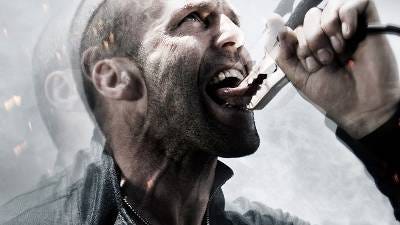
Hyperawareness means you get some lessons faster than others. I learned to look beyond the obvious and gather more information than most people. As a result, I have always had a knack for grasping the big picture.
While reading was not my strong point (more on that later), I was able to grasp the essential lessons very early. I became bored quickly, my thoughts wandering onto different scenarios and asking questions that were not on the menu, so to speak.
Teachers hate questions; they just want to know you understood the points they were trying so hard to get across. My self-reflection, questioning, and musing looked to a teacher, like daydreaming.
Some of the brighter teachers asked what I was thinking about and were astonished by the answers. When they explained that atoms were composed of a nucleus and electrons, the obvious question for me was, what are electrons and a nucleus composed of? Quantum physics was still an emerging science when I was ten years old.
Most teachers thought I needed to listen or pay more attention to them. Looking back, it was not so much that I did not listen to the teachers as I couldn’t make out what they were saying. Combined with what later became known as ADD and Dyslexia, I made it through high school, only managing to read three books. And yes, ADD, Dyslexia, my hearing impairment, and hypervigilance were some of the best gifts the Holy Spirit could have bestowed upon me, but they were probably not among the seven on the list; I don’t remember what they were, I didn’t read that book the letters kept jumping around on the pages.
Because I had difficulty hearing and making out what people were saying in order to communicate, I had to pay careful attention to all the other queues, like effect, lip movement, tone, cadence, and context. Hypervigilance was a big plus when it came to reading interpersonal cues. However, what was a matter of listening for most people was for me a monumental exercise in focus and attention. Hearing aids didn’t help, and audiologists’ test didn’t detect my tinnitus and lack of ability to decern syllables.
I learned to listen intently with my damaged ears and cognitive abilities. I learned to read body language before I knew there was such a thing. Later in college, I volunteered as a counselor for the crisis intervention center; reading people was my superpower. Later in life, I became a Knowledge Engineer, where the primary skill is eliciting expert knowledge from experts so as not to threaten their domain as experts.
I learned to focus, and despite my ADD, it became clear that my curiosity could be satisfied if I managed to sit still and concentrate on the words on a page until they stopped bouncing around long enough for me to put them together into a thought or idea.
My life aspirations were limited to a damaged self-image. After graduating high school, I wanted to go to Vietnam not out of any patriotic fervor but because the rules were straightforward: kill or be killed; hypervigilance was a significant asset. My father, who had several conversations with me at a very early age about complex technical topics (particle physics at ten), realized I had an inquisitive and sharp brain. He encouraged me to go to college.
As a freshman in college, an inquisitive librarian had the presence of mind to ask if I would take a reading test; it turns out I was reading at a second-grade level: remedial classes and another five years to get a four-year degree. Today, I am a reading machine.
Life in little bites
Growing up with these yet understood gifts meant that life was hellish confusion. Why could my friends understand the reading and lectures, and I couldn’t? Why was I not able to finish the reading assignments? Why was I the kind of teen my mother didn’t want me hanging out with? Around my sophomore year in high school, my bonus gift kicked in. Alcoholism. Possibly hereditary; who knows?
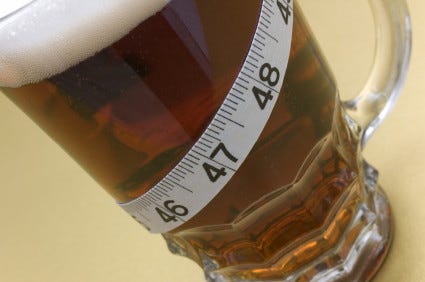
Alcohol calms the stimulus barrage and allows some much-needed downtime. So If one drink is good, ten must be terrific. At age 17, I found myself in the back of an AA meeting, nodding in agreement and identifying with speakers three times my age. They were gracious enough to let me stay. I learned so much about coping with life. In particular, how to take bite-size doses. Live in the here and now, first things first, one day at a time.
Hypervigilance gives way to living in the moment. Staying in the here and now meant I did not need to live in fear of the future, and many in AA taught me to leave the past in the past. We can change the future or the past, only the present moment.
It seems like my peers learned these lessons without going to AA meetings. Over time, the slogans and steps became a way of life reinforced by friends and acquaintances from the rooms. At first, it didn’t stick; everyone else seemed to be having a great time enjoying wine and beer without getting mess your pants sloppy. So, after five years of AA, I gave Alcohol another chance. The resulting four years, what I can remember, are a story for another day. Suffice it to say they welcomed me back to the rooms of AA. People from all walks of life make self-improvement a day-to-day habit, and here I was granted the gift of sanity and spirituality that works for me.
After forty-plus years of continuous sobriety, I still live life in little bites, keeping in the now and not getting dragged down by those awful eternities, yesterday and tomorrow.
So, in retrospect, what most would call defects or handicaps, I came to understand as gifts. It’s not about the cards you are dealt in life. It’s about how you play them.
Gifts only sometimes have pretty wrapping and a bow.
https://sites.google.com/brianconnelly.com/aka-brian-connelly/home