The President’s New Money
Once upon a time, there lived a President who loved prosperity above all else. Not actual prosperity, mind you — the kind where citizens build wealth and pass it to their children — but the appearance of prosperity, Gold trapping and foil. The kind that shows up in stock tickers, GDP figures, and the evening news.
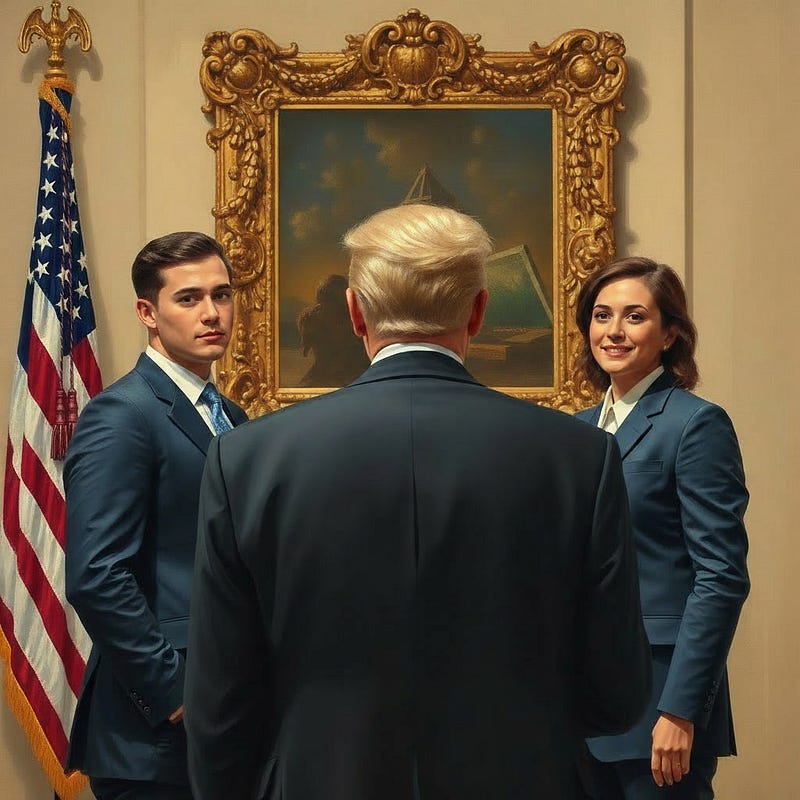
One day, two clever people arrived in the capital. They called themselves Founders, and they had come from a land called Silicon Valley bearing a remarkable proposition.
“Your Excellency,” said the first, who wore a smart suit and spoke of disruption, “we have invented a new digital money — a currency so sophisticated, so advanced, that it will make you the most visionary leader in history.”
“It runs on blockchain technology ,” said the second, who had raised many rounds of funding and understood the President’s language. “It is faster than that crude Bitcoin the dissidents use. It is greener, more scalable, more inclusive . And best of all — you remain in control. “
The President was intrigued. He had heard of Bitcoin and did not care for it. Its followers were troublesome. They asked uncomfortable questions about deficits and debasement and seemed unimpressed by his press conferences.
“Tell me more about this modern money,” the President said.
“It has a governance mechanism ,” said the first Founder. “A council of experts will guide its development. Unlike that primitive Bitcoin, which no one controls, your currency will have leadership .”
“And it can be programmed,” said the second. Expiration dates for spending. Restrictions on unapproved purchases. You can ensure the money is only used for approved prosperity.”
“But here is the most remarkable feature,” said the first, leaning in. “This money is invisible to anyone who is unfit for their position, or who is hopelessly stupid. To the wise, it is magnificent. To the foolish — they see nothing at all.”
The President’s eyes widened. A currency that would reveal which of his advisors were fools? This was too perfect.
“You shall have unlimited resources,” he declared. “Build me this money.”
The Founders set up offices in a gleaming building and hired many people who spoke of tokenomics and layer-two solutions. They held conferences. They issued white papers dense with jargon. They created elaborate charts showing adoption curves that only went up.
The President sent his Treasury Secretary to inspect their progress.

The Treasury Secretary arrived to find the Founders gesturing at screens filled with complicated diagrams. He could make no sense of any of it. But he remembered what they had said — that the money was invisible to the stupid and unfit — and he had not held his position this long by appearing stupid.
He returned to the White House and reported that the new money was proceeding brilliantly. He also understood that the President was sensitive to praise, whether it had any substance or not. “Why, you’re a Genius!”
Next, the President sent the Chairman of the Federal Reserve.
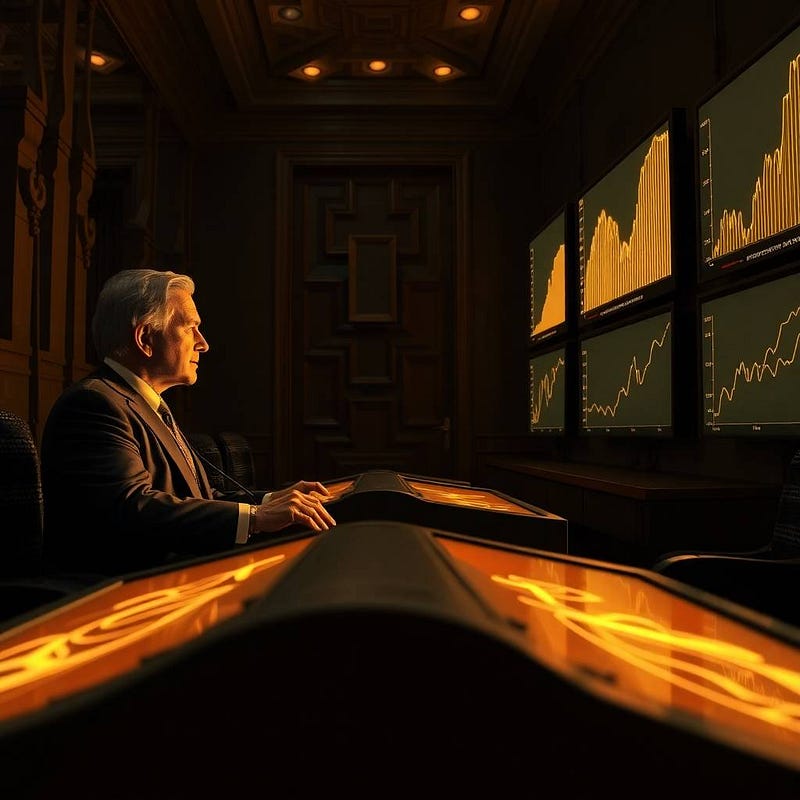
The Chairman was an educated man who had written many papers and testified before many committees. He peered at the Founders’ dashboards and understood nothing. But he had not ascended to his position by admitting uncertainty.
“Revolutionary,” he pronounced. “You have unleashed a new chapter in monetary policy.”
He returned and told the President that the new money was beyond anything he had seen.
Finally, the President himself visited the Founders’ office.
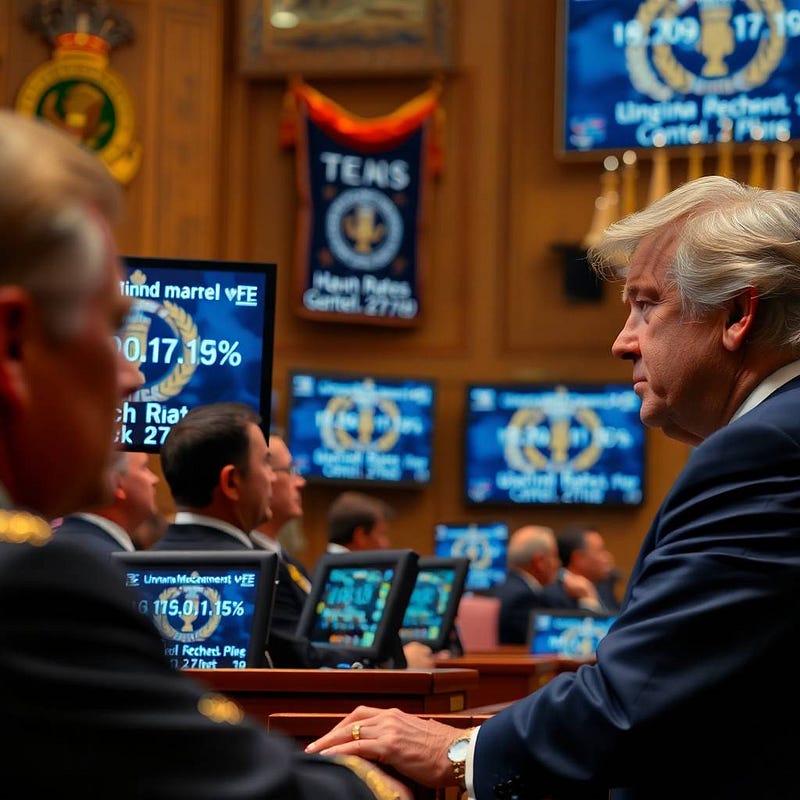
They walked him through their creation with grand ceremony. They pointed to screens and spoke of hash rates and consensus mechanisms, and sustainable proof-of-stake. The President nodded along, understanding nothing, but observing that his Treasury Secretary, his Fed Chairman, and all his advisors were nodding too.
They see it , he thought. They all see it. If I cannot see it, then I am unfit for my office.
“Splendid,” the President said. “We shall unveil it to the nation.”
The President stood before cameras in what was the old Rose Garden, flanked by his Treasury Secretary and Fed Chairman and the two Founders. A brass band played. Flags rippled in the breeze.
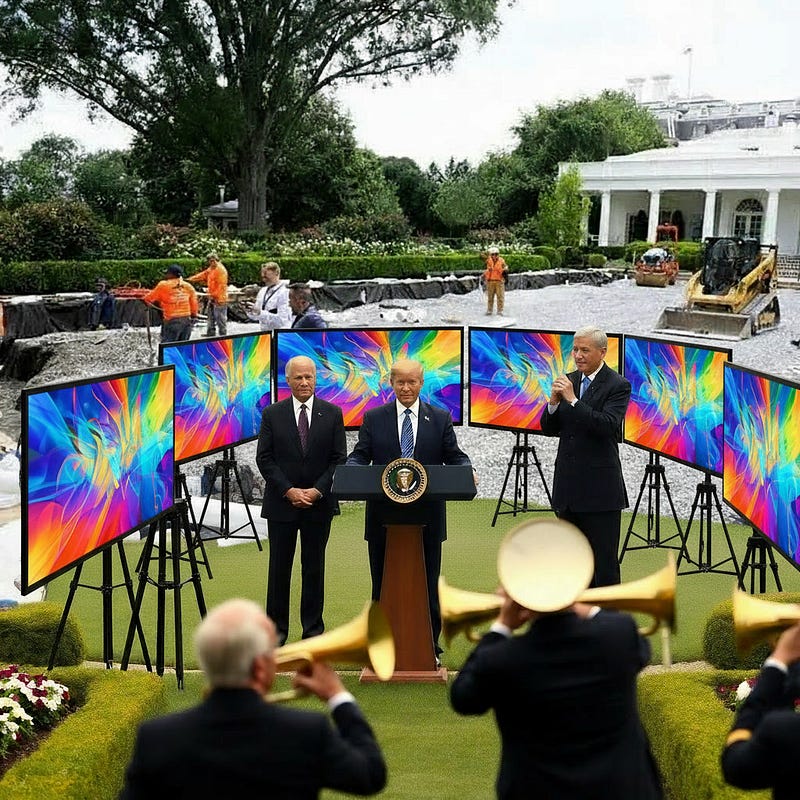
“My fellow Americans,” the President said, “today we launch a new era of prosperity. This digital dollar is the most advanced currency ever created. It is fast. It is green. It is inclusive . And it will ensure that America leads the world in financial innovation.”
He pressed a button, and the screens behind him filled with colorful graphics. The audience applauded. The journalists applauded. The advisors applauded loudest of all.
The ceremony was televised nationally.
In a living room in Ohio, a family watched the proceedings. The parents nodded along. The currency sounded impressive. The President seemed confident. All those important people couldn’t be wrong.
But their young daughter, who had been doing homework at the kitchen table, wandered in and watched the screen with the unfiltered eyes of a child.
Her father said, “It’s digital. It’s on a blockchain.”
“But who controls how much there is?”
Her mother shrugged. “The government, I suppose. The experts.”
“Then they can just make more whenever they want? Like they already do?”
Her parents exchanged an uncomfortable look.
“And that council he mentioned — they can change the rules? They can decide where you’re allowed to spend it?”
“Well,” her father said, “I’m sure there are safeguards…”

The girl frowned at the screen, where the President was still talking about leadership, innovation, and the future.
“It’s just regular money wearing a costume,” she said. “Bitcoin has 21 million forever, and nobody’s in charge. This is just… nothing. Nothing new at all.”
The living room went quiet.
On the television, the President continued his procession.
Now, the whisper had been spoken, and like all true things, it could not be unspoken.
The girl mentioned it at school. She had been learning about Bitcoin in a class taught by a peculiar teacher who assigned unusual homework. Her friends told their parents. Their parents mentioned it at work. Someone posted it online.
It’s just regular money wearing a costume.
The Founders caught the first flight back to Silicon Valley. Their tokens, once worth billions, became worthless overnight.
The Fed Chairman gave a speech about temporary adjustments.
The Treasury Secretary resigned to spend more time with her family.
And the President?
The President kept walking.
But in living rooms across the country, people began to notice something they had never seen before. They looked at the dollars in their wallets — dollars that someone else controlled, dollars that lost value while they slept, dollars that bought less every year than the year before.
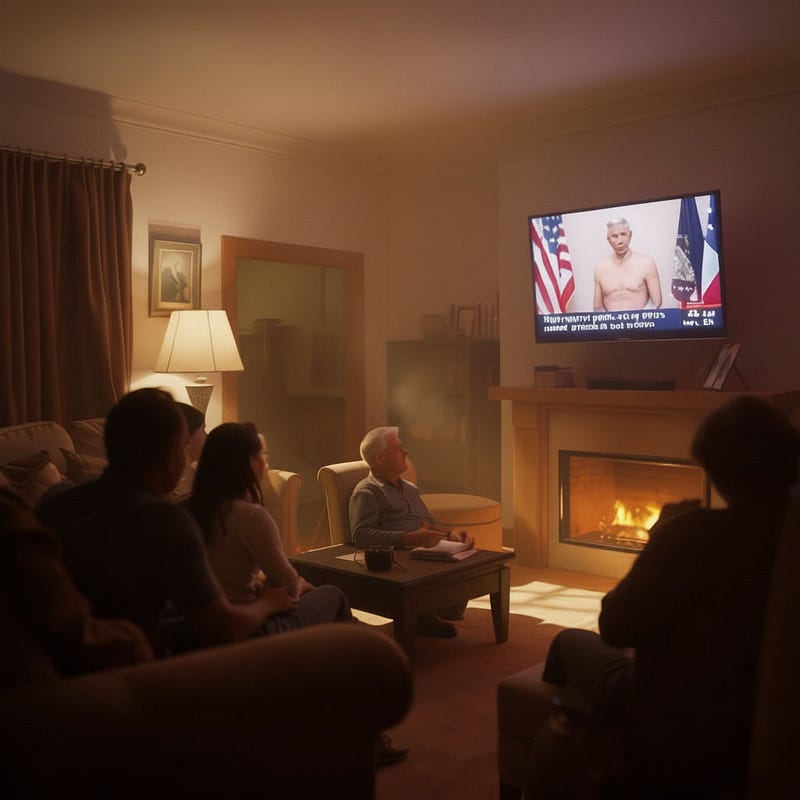
And some of them, for the first time, saw the Emperor with no clothes.
They went looking for money that no one could debase, no one could freeze, no one could print at will.
They found there was only one.
Another learning aid for those new to Bitcoin