The Real History of Bitcoin

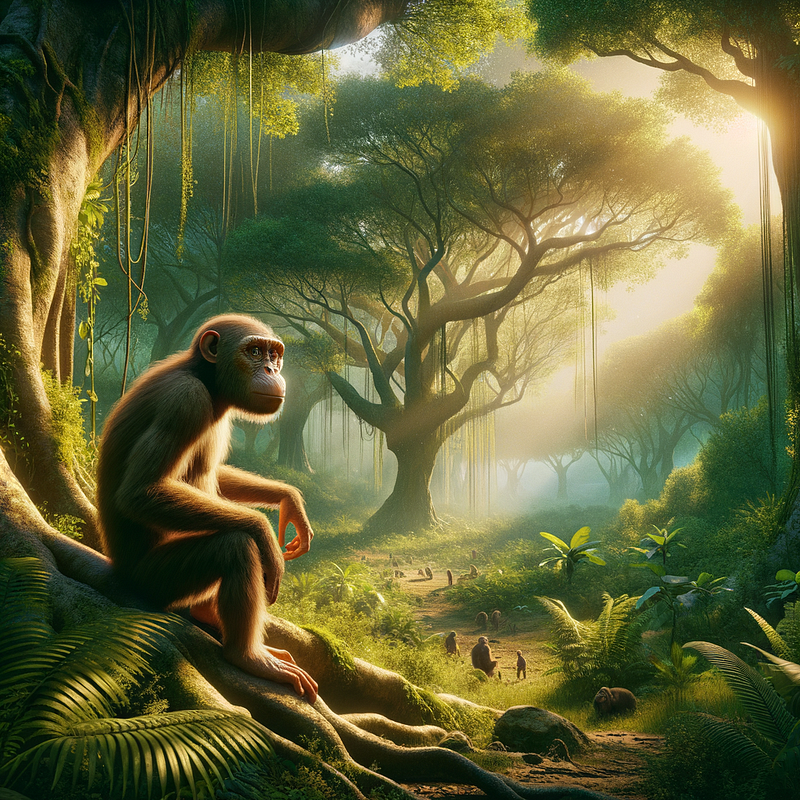
They remembered when this world was theirs alone, with no dominant, intelligent lifeforms competing for resources and space. Back then, only small monkey-like creatures swung through the trees or foraged on the ground, not unlike their ape cousins that still inhabited parts of the planet.
Millennia ago, The Anuenti race reached a pivotal technological point, mastering space travel and terraforming inhospitable worlds to support their people. As primitive humans showed signs of increased intelligence and tool use, The Anuenti decided to leave Earth to its fast-developing species and colonize a new home planet where they had no competitors.
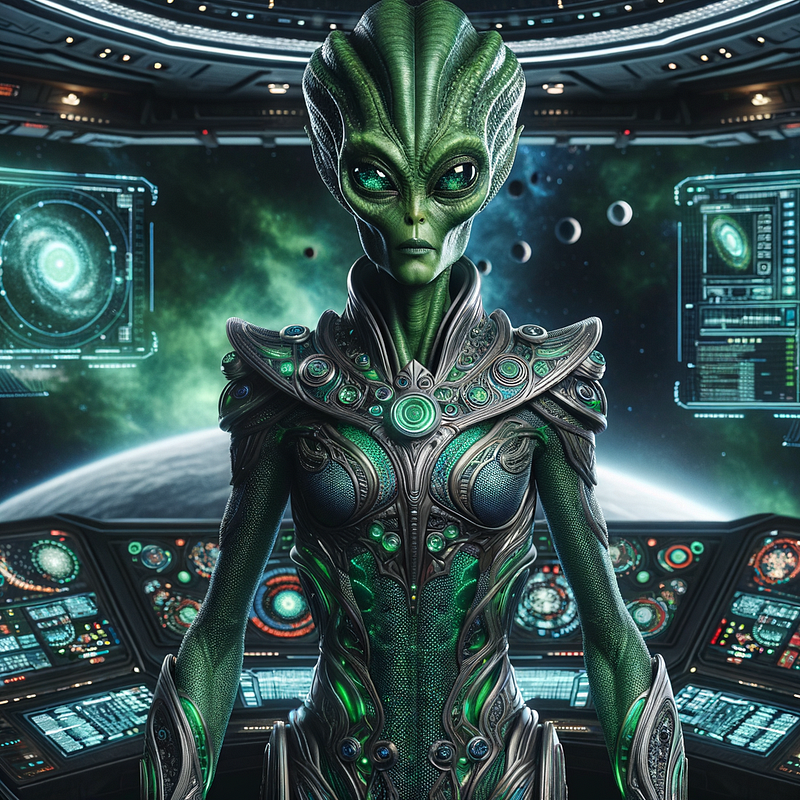
Now, after ages of roaming the stars, nostalgia had brought The Anuenti back to observe the progress of humankind. Commander Zeth studied the images of sprawling cities, massive machines, and complex writing systems. Emotions welled within as she remembered this place — the green hills and towering mountains, the endless oceans teeming with life. It had been their Eden before they ascended to the heavens.
“They advance remarkably quickly while we wander the empty void,” mused Communications Officer Tarloc. He often wondered if they should make contact to guide the humans away from their same war-ridden past.
“They must walk this path themselves, for good or ill,” Commander Zeth replied. “ Anuenti can only observe, never interfere.”
And so they watched on silently, the only witness to mankind’s first faltering steps among the stars. Their ancient home had forgotten them, but they would never forget where their race first took root among the stars.
Return of the little green …. Anuenti ?
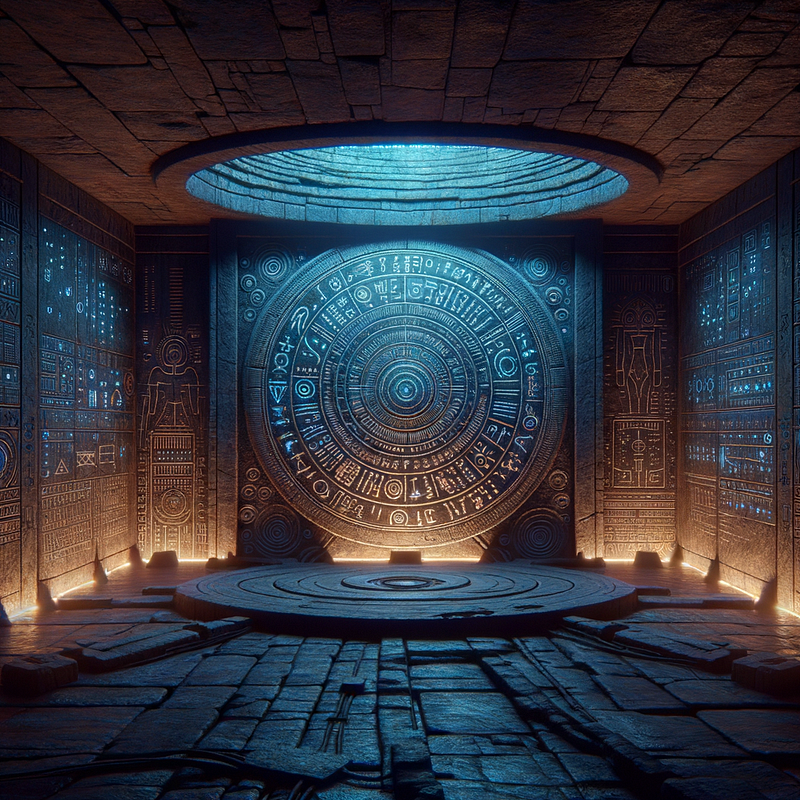
One discovery intrigued them as The Anuenti secretly observed the humans’ progress. Archaeologists unearthed a hidden chamber with potentially alien origins deep beneath a pyramid complex in Central America. Intricately carved metallic walls glowed with faint blue bioluminescence. Symbols and scripts dotted the surfaces, unlike any human language seen before.
“Could our ancestors have built this?” Commander Zeth wondered. Long before The Anuenti developed space travel and left Earth, their earliest civilizations showed immense architectural and engineering capabilities. Legends told of wise sky people who gifted their ancestors advanced knowledge before vanishing into the stars.
Chief Historian Plex reviewed the newly discovered scripts. They predated any known human writing system by thousands of years. Yet hints of The Anuenti’s own language peeked through, though changed over long eras of linguistic drift.
“These match no human tongue…but have roots in our ancient dialects. This chamber proves that Anuenti forebears directly influenced human development… and may have used sites like this pyramid to observe and guide humankind before they learned to cooperate and become more creative.”
Commander Zeth sank into troubled thoughts. Had their departure been too soon? Should they have nurtured humans longer before releasing them to find their path? Their hands-off noninterference directive suddenly seemed rather cold. What if humanity met the same demise as many Anuenti colony worlds? Their shared ancient genetics made them feel a more profound responsibility.
“Perhaps the time has come…to reach out to our distant progeny,” Zeth finally transmitted to her crew. “We must again teach and prepare them…to follow in our footsteps to the stars.”
The Anuenti stared intensely at the tiny blue world, knowing the problematic choice ahead. Their ancient inheritance bound their races together across oceans of time and space. Mankind’s future now rested in the same hands that helped seed their first steps so long ago.

Sandra gripped her helmet, equal parts nerves and wonder coursing through her. As the first human invited aboard The Anuenti’s ship, she represented her whole species in this profound moment. Their long search for extraterrestrial life finally culminated in a family reunion over 50,000 years in the making.
Following in the footsteps of her archeologist parents, who unearthed the first clues on ancient Anuenti’s influence on mankind, Sandra hoped this meeting would help fill in missing links. The airlock door slid open, and she stepped across the threshold onto the ancient metallic floor while artificial gravity pulled her down onto steady footing.
“Greetings and welcome, kindred descendent!” A tall, hairless humanoid with emerald skin and an enlarged cranium greeted Sandra warmly. “I am Historian Plex, leader of our anthropological division. We have eagerly awaited this moment.”

Sandra tentatively returned Plex’s broad smile, adjusting to the Watcher’s towering seven-foot height.
“You probably hear this often, But we have so many questions! Where, how, and why did your people first visit Earth? What spurred your ancient space exodus? And what inspired your return?”
Plex’s large, reflective eyes crinkled in mirth. “Indeed, such curiosity runs in our shared lineage! The genetic threading of our two races enables such intellectual pursuits. Please be seated. We shall start the tale when our ancestors first looked at the stars…”
Sandra listened with rapt awe as Historian Plex wove an epic story across galactic ages — a story still being written and now shared across generations, civilizations… and stars. Mankind’s future once again walked hand in hand with their ancient benefactors and guides to the cosmic abyss.
Plex nodded slowly as glimpses of recognition flashed in his large, dark eyes. “You have uncovered a pivotal piece of our early advancement — the innovation that enabled our civilization to flourish.”
He summoned a holographic display showing the ancient Watcher homeworld at the height of its abundance. “As our technologies exponentially improved efficiency and production capabilities, we developed molecular assemblers capable of rearranging matter and energy to synthesize physical goods. Essentially machines that could build anything we needed from base elements.”
The display changed to show networks of automated systems churning out every conceivable material item — food, tools, shelters, and vehicles. “Ubiquitous free power. Complete dominion over resources and manufacturing. It created a post-scarcity world where all basic needs were met and social progress accelerated.”

Plex waved, and the vision blinked away. “But you are correct; an exchange medium was still required — a way to allocate non-essential goods and resources. Our engineers developed integrated ledger networks to track atomic-scale production and distribution.”
The display reappeared, showing complex webworks of data and values flowing between nodes across the planet. “We called them…’ blockchains’. They enabled transparent, decentralized accounting and distribution of anything in our economy. It unlocked our entire creative and intellectual potential.”
Sandra’s mind raced at the implications. Apparently, inventing advanced cryptography and peer-to-peer value tracking provided the tipping point for The Anuenti’s success. Cryptographic ledgers like blockchain could help humans navigate their own advancement one day.
She met Plex’s patient gaze. “We have much more to discuss. Our worlds may have more in common than I first realized… Have you ever heard of Satoshi Nakamoto?”
Originally published at http://www,brianconnelly.com