The Rent Is Due: Why Bitcoin Matters More Than Philosophy
When Academic Distance Meets Economic Reality
The theorists warn us about technology changing our essence. Meanwhile, your savings are being systematically destroyed.
Martin Heidegger wrote about technology’s most significant danger: that it would reduce everything to “standing-reserve”, mere resources on call for ordering and optimization. He worried we’d lose our authentic relationship to Being itself, trapped in a world where everything, including ourselves, becomes raw material for technological systems to manipulate.
He was right. But despite his upbringing, he was looking in the wrong direction.
The Cage They Can’t See
Contemporary thinkers continue Heidegger’s work, documenting how digital technology, AI, Cryptography, and the smartphone rewrite human consciousness. They note, correctly, that social media took only a decade to accomplish what writing took a millennium to achieve. They observe our “polytemporal consciousness,” our “performative reflexivity,” our loss of embodied presence.
These are real observations. But they come from a comfortable distance.
Because while academics ponder the essence of technology from tenured positions and consulting fees, everyday people experience something far more immediate: economic coercion through monetary manipulation.
The rent is due. Not philosophically. Actually due.
Your savings lost 20% of their purchasing power. Not as a thought experiment. In reality.
Your children need to eat today. Not after we’ve finished contemplating authenticity.
The Deepest Enframing
Heidegger described how modern technology “challenges forth” nature, demanding it supply energy that can be extracted and stored. The Rhine River becomes a mere power supply. Forests become standing reserves of cellulose. Everything gets ordered for maximum efficiency and minimum cost.
But he wrote this while missing the most profound example of technological enframing in human history: the monetary system itself.
Consider what our current monetary architecture actually does:
It orders all economic activity. Every transaction, every price, every store of value must pass through a system controlled by central authorities. You cannot opt out without opting out of economic life entirely.
It treats humans as a standing reserve. Your labor becomes a resource to be allocated through monetary policy. When central banks need to “cool the economy,” they mean making you poorer, less able to demand raises, and more desperate for work at any wage.
It challenges forth through systematic extraction. Governments create money through spending, a behavior that would bankrupt you individually. Banks create money through lending at ratios that would be called fraud for anyone else. Meanwhile, your saved labor steadily loses purchasing power.
It conceals its own nature. Most people don’t understand how money is created, who benefits from its creation, or why they feel perpetually behind despite working harder. The system operates in darkness, revealing itself only through its effects: inflation, inequality, financial crises that never quite touch those closest to the monetary spigot.
It operates by different rules for different classes. Primary dealers get direct Fed access. Connected institutions get bailouts. Sovereign wealth funds get favorable treatment. You get a checking account if you behave.
This is enframing at its purest. Not metaphorical. Where the rubber meets asphalt.
The Distance of Theory
There’s something revealing about who gets to theorize technology’s effects versus who lives them.
Heidegger could contemplate authentic Being from his university position. Contemporary anthropologists can document our changing consciousness while consulting for tech companies. And economists can construct elegant models of rational actors and efficient markets while actual people drown in debt and inflation.
They’re all paid well to observe and theorize about how systems transform us.
Economics isn’t science; it’s theology . Some economic thinker constructs a theory, wrap it in mathematics to give it the appearance of rigor, and it becomes doctrine. The Chicago School. Keynesianism. Modern Monetary Theory. Each presented not as one possible framework among many, but as a discovered truth about how economies “naturally” work.
Never mind that these theories consistently fail to predict crises, explain persistent inequality, or account for why the rules that destroy individuals somehow enrich institutions. Never mind that “scientific” economic models assume away power, ignore monetary reality, and treat human behavior as optimizable input variables.
The models are elegant. The papers get published. The theories become policy.
And when the policies fail, when quantitative easing inflates asset prices beyond workers’ reach, when “temporary” inflation persists, when bailouts reward failure while families lose homes, the economists don’t question their fundamental assumptions. They adjust their models. They claim “no one could have seen this coming.” They propose more of the same medicine that caused the disease.
They’re standing too far away to see what they’re doing.
The single mother working three gig-economy jobs doesn’t experience “polytemporal consciousness” as an interesting academic phenomenon. She experiences it as algorithmic extraction , apps optimizing her labor down to the minute while offering no security, no benefits, no negotiating power.
The family watching their savings evaporate doesn’t need another economic model proving inflation is “transitory.” They need their stored labor to maintain its value.
The small business destroyed by lockdowns while big-box stores stayed open doesn’t require theories about market efficiency. They need economic rules that apply equally, not selectively based on political connections and lobbying power.
Economists, like philosophers, theorize from positions of comfort. Tenured positions. Central bank appointments. Think tank fellowships. Consulting contracts. Their paychecks don’t depend on their theories being correct, only on them being publishable, fundable, and defensible within academic discourse.
Meanwhile, your grocery bill just increased 30%.
What Theory Misses
Academic discussions of technology focus on consciousness, identity, and temporal experience, all of which are real phenomena. But they consistently evade the material weight of economic coercion.
You cannot “dwell poetically on this earth” when:
Your bank account can be frozen by decree
Your ability to save is systematically destroyed
Your access to economic participation requires compliance with ever-shifting rules
The monetary system creates money for governments and connected institutions while prosecuting you for the same behavior
This isn’t about losing embodied presence to smartphones. It’s about embodied coercion through monetary dependency.
The theorists worry we’re becoming too liquid, too flexible, too detached from place and community. But every day people experience the opposite: they’re trapped. Trapped by debt denominated in a depreciating currency. Trapped by rent they can barely afford. Trapped by a monetary system that allows NO EXIT except that the door is really locked.
Liquidity flows in one direction: upward to those who create money. Everyone else faces the complex reality of prices rising faster than wages, savings losing value, and economic rules that would destroy individuals while enriching institutions.
The Gift They Can’t Recognize
Heidegger ended his essay with a provocative suggestion: perhaps art, particularly “poetic revealing,” could offer a saving power, a way to see beyond technology’s totalizing grip and recover authentic ways of being.
He was grasping toward something meaningful. But again, looking in the wrong direction.
The saving power isn’t coming from art galleries or poetry readings, as valuable as those might be for the soul.
It’s coming from mathematics.
Bitcoin represents something the theorists struggle to comprehend because it doesn’t fit their frameworks. It’s not about consciousness, identity, or temporal experience. It’s about economic sovereignty through technological certainty.
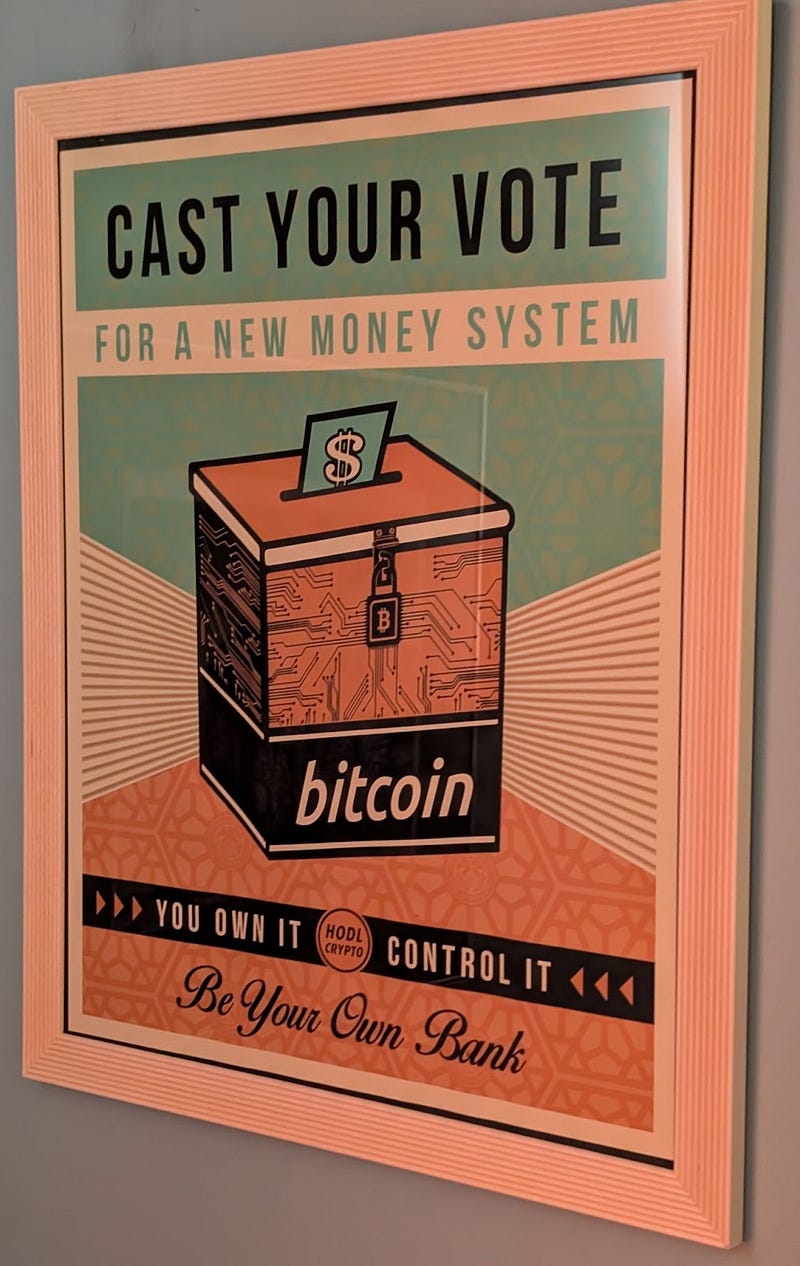
Twenty-one million coins. Fixed supply. No central authority. No different rules for different classes. No printing to benefit the connected. No freezing accounts. No monetary manipulation.
The code runs. The network validates. Your property rights are secured by computational work, cryptographic energy, not political permission.
This is the exit from enframing.
Not because Bitcoin changes how we think, though it does, profoundly, once you understand its implications. But because it is more than intellectual, it removes the deepest form of technological control over human life: monetary coercion.
For the first time in generations, there exists a monetary system that:
- Cannot be debased by central authorities
- Applies identical rules to everyone
- Requires no permission to use
- Cannot be confiscated without your keys
- Provides absolute scarcity in a world of artificial abundance
- Operates transparently, in public view
- Makes all participants equal before the protocol
Exit Over Voice
The theorists want to reform our relationship with technology through awareness, through questioning, through what Heidegger called “the piety of thought.”
That’s not enough.
Awareness of your monetary cage doesn’t open it. Understanding how inflation steals your savings doesn’t stop the theft. Questioning why governments can spend printed money while you face bankruptcy for the same behavior doesn’t change the rules.
You need an actual exit.
Bitcoin is that exit. Not a perfect one, nothing human ever is. But a real one.

It says: You can store your labor in something that cannot be inflated away. You can transact without permission. You can save without watching central banks systematically transfer your wealth to those who create monopoly (fiat) money first. You can plan for the future knowing the monetary rules won’t change underneath you.
This is more radical than any academic critique of technology. This is economic self-determination through technological architecture.
The Embodied Reality
Here’s what the philosophers miss: economics isn’t abstract.
When your rent increases 30% while your wages stay flat, that’s not a statistic. That’s choosing between medication and groceries.
When inflation runs at 8% but your savings account pays 0.5%, that’s not monetary policy. That’s years of your labor being confiscated.
When governments spend trillions in printed money while prosecuting you for bouncing a check, that’s not a theoretical inconsistency. That’s a rigged system.
The pain is physical. The anxiety is real. The trapped feeling isn’t metaphorical .
And while theorists document how technology changes our consciousness, everyday people are drowning in the consequences of monetary technology designed to extract from them.
Beyond Enframing
Heidegger asked us to question technology, to think about its essence, to resist viewing it merely as neutral tools we can master.
He was right that we needed to question. But the question isn’t primarily philosophical.
The question is: Who controls the money, and can we build systems where no one does?
Bitcoin answers: Yes.
Not through better monetary policy. Not through wiser central bankers. Not through regulatory reform or political change, though those might help at the margins.
Through mathematical certainty, replacing political discretion.
Through protocol rules that do not change for anyone’s benefit.
Through property rights secured by proof-of-work, “thermodynamic physics” rather than legal permission.
Through radical transparency instead of institutional opacity.
This is the saving power Heidegger sensed but couldn’t articulate. Not art. Not poetry. Not even philosophy.
Incorruptible code running on a distributed network, offering an exit from the most profound technological trap humanity has built: monetary systems that benefit their controllers at everyone else’s expense.
The Gap Between Theory and Life
There will always be a distance between those who theorize about technology and those who live under its coercion.
The theorists can afford to be patient, to watch developments unfold over generations, to ponder ambiguities and tensions. They’re paid to think, and their paychecks clear regardless of monetary policy.
Every day, people don’t have generations. They have this month’s rent. This week’s groceries. This year’s savings are slowly evaporating.
They don’t need more sophisticated theories about how technology changes consciousness. They need actual tools that restore economic sovereignty.
They don’t need to understand the philosophical essence of monetary systems. They need money that can’t be debased.
They don’t need academic papers on authenticity. They need the freedom to save, to plan, to build futures that won’t be stolen through inflation.
Real Danger, Real Hope
Heidegger warned that technology’s most significant danger wasn’t machines themselves but the way of thinking that reduces everything to resources for optimization.
He was right. The monetary system is precisely this: human labor and savings as resources to be optimized for those who control money creation.
But he also suggested that where the danger grows, so does the saving power.
He was right about that, too.
Bitcoin emerged from the 2008 financial crisis , the moment when monetary manipulation and bailout culture became impossible to ignore. It grew as central banks worldwide embarked on unprecedented money creation. It strengthened as governments bailed out Wall Street at the expense of Main Street, and nobody went to jail.
Where the danger was greatest, the saving power appeared.
Thirty-five million lines of code saying: There is another way. Money can be incorruptible. Rules can apply equally. Property can be absolutely scarce. Exit is possible.
For Those Living the Pain
The academics will continue their important work, documenting how technology reshapes human experience. Their observations have value.
But if you’re drowning in the embodied reality of monetary extraction, if your savings are being inflated away, if your labor can’t buy what it used to, if you feel trapped in a system designed to benefit others at your expense, you don’t need more theory.
You need an exit.
Bitcoin is that exit. Imperfect, volatile, technically challenging for many, yes. But real.
The theorists can debate its implications while you use it to protect your labor, plan your future, and reclaim economic sovereignty from systems that view you as standing reserve.
The distance between theory and life has never been clearer.
And the choice has never been more urgent.
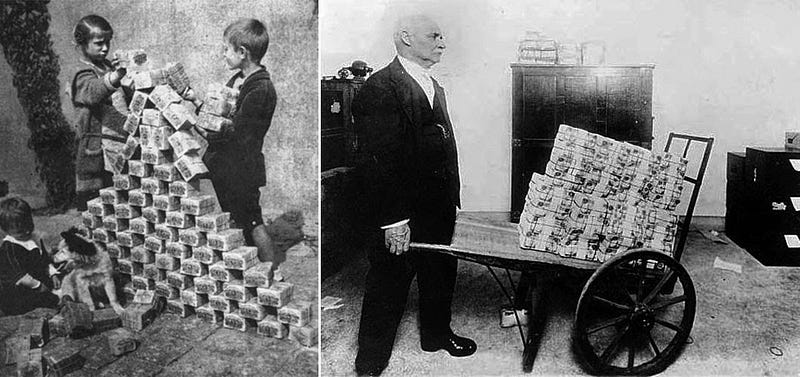
[1] Heidegger lived through one of history’s greatest monetary collapses and apparently learned nothing from it. The monetary technology that destroys ordinary people’s lives somehow doesn’t register as “technology” to the theorist comfortable enough to write about it from a distance.