The Serenity Prayer for Skeptics
Accepting Chaos with Coffee and Spreadsheets
Ah, the daily scroll-a-thon! More headlines screaming about bold new political masterpieces, “big, beautiful bills” that promise rainbows for everyone (spoiler: check the fine print), or the latest market meltdown that has a commentator somewhere hyperventilating into a microphone. These stories grab our eyeballs, fuel our delightful online shouting matches, and often leave us wondering if we should be building a bunker or just a stiff drink.
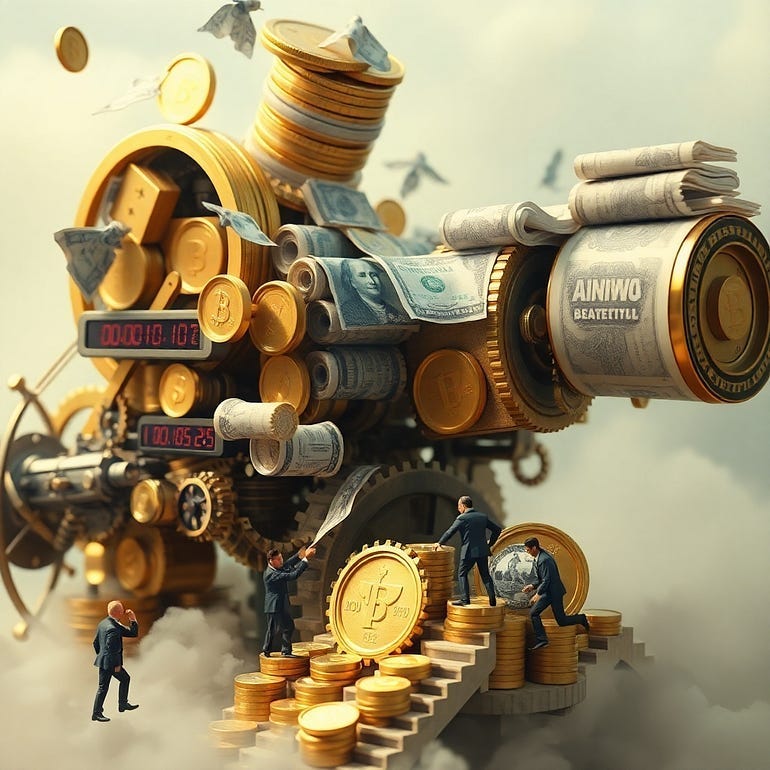
But what if these episodes of “As the World Turns (Possibly Burns)” are more than just isolated oopsie-daisies? What if they’re the check-engine light, the smoke alarm, and the guy screaming “Danger, Will Robinson!” all rolled into one, signaling some deeper, systemic shenanigans we’d rather ignore? So, let’s use these recurring dramas — the grand promises that sound suspiciously like a timeshare pitch, the “expert” condemnations, the market’s dramatic gasps — to poke the bear of underlying mechanics with an engineer’s lovingly crafted, slightly sarcastic toolkit.
Follow the Money, Honey — And the Glorious Energy Trail
That crusty old saying, “follow the money,” still slaps because cash flow (and resource flow, its grubbier sibling) has a nasty habit of exposing who’s really pulling the levers and whose ox is about to be gored. When you see articles about massive public spending sprees or tax “reforms” that feel suspiciously like a gift basket for the folks who already own the yacht store, ask the uncomfortably obvious questions:
- Where are the resources — cash, nature’s goodies, actual human effort — really going?
- Who’s popping champagne, and who’s getting the bill (plus tip, and an automatic service charge for existing)?
- Is this shindig beefing up communities and maybe, just maybe, not actively punching the planet in the kidneys, or is it just making the rich richer and the holes in the ozone layer more… characterful?
This ain’t just about who’s winning the political reality show. The bond market, bless its cotton socks, isn’t throwing an ideological hissy fit. It’s just… doing math. You know, that annoying thing that doesn’t care about your political party’s talking points? When bond yields spike, it’s the market’s way of saying, “Houston, your economic equation is a hot mess; this policy cocktail doesn’t just fail to add up, it subtracts from reality.” Their “roars,” or sometimes just a nervous whimper, often mean the projected numbers are less “stable future” and more “artistic interpretation of a train wreck.” Policies that hoard wealth in fewer and fewer hands, slash investments that actually, you know, build things, or pile on costs without adding a shred of value? That’s how you get less economic juice, more IOUs, and growth so slow it’s practically reversing.
The Universe Bats Last: Our Societies vs. Actual Math and Physics
Here’s a shocker: our oh-so-clever socio-economic systems are still playing in Mother Nature’s sandbox, and she has rules. An engineering viewpoint forces us to admit these inconvenient truths:
- Limits are a Thing, People: We’re on one (1) planet. Resources are finite. Energy doesn’t just magically appear from the backside of a unicorn. Economic models that assume infinite growth on a finite planet, or policies demanding more from ecosystems than they can possibly regenerate, aren’t just optimistic; they’re auditioning for a Darwin Award.
- It’s All Connected (Like That Awkward Family Reunion): Our societies are like a giant, wobbly Jenga tower. Yank one piece — taxation, environmental rules, social programs — and watch the ripples, often in places you weren’t even looking.
- Sustainability Isn’t a Buzzword, It’s the Damn Rent: A system that consistently trashes its own foundations (be it clean air, social trust, or the mental health of its populace) is, to put it mildly, not built to last. Policies that treat these realities like a mildly inconvenient buffet selection — often slathered in the cheap perfume of short-term gain — aren’t just kicking the can down the road; they’re strapping it to a rocket aimed at future-us.
Many of those “big, beautiful” plans trumpeted in headlines seem to operate in a delightful little vacuum where physics is merely a suggestion. It’s textbook overshoot behavior: ignore what the system can actually handle, layer on more Rube Goldberg contraptions to delay the inevitable ouchie, then double-down when reality taps you on the shoulder with a sledgehammer. Sometimes, it feels like leaders would rather “plunge the world into chaos than face the music” about these pesky resource and energy limits.
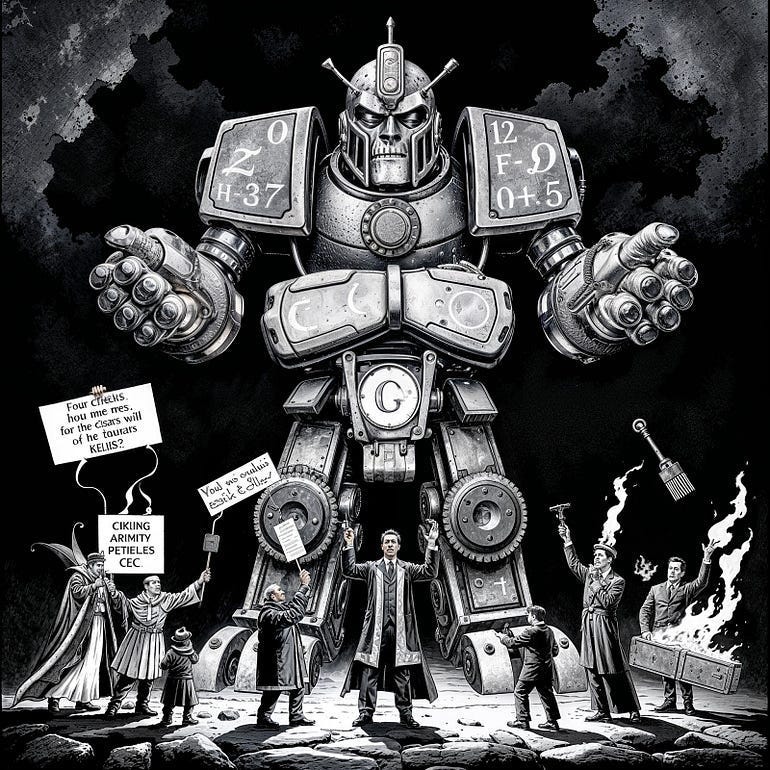
An Engineer’s Guide to Not Losing Your Mind Over Headlines
Next time a story about a massive spending bill causing market apoplexy assaults your screen, try asking some delightfully nerdy questions:
- Where’s the energy (and cash) actually sloshing around?
- What are the actual, physical, can’t-wish-them-away constraints here? (Resource limits, mathematical impossibilities, the sudden craving for a quiet cabin in the woods?)
- What’s causing what here? (Policy brainfarts → market freakouts → economic owies?)
- Where is this whole contraption redlining? (Debt levels that look like a phone number, energy use that could power a small star, resource depletion making us nostalgic for, well, resources?) This helps cut through the fog of ideological flatulence.
From Screaming at the News to “Collapse Competence” (It’s a Thing, Apparently)
Trying to read the tea leaves of collapse in every headline can turn you into a quivering mess. The point isn’t to become a professional doom-scroller. It’s to develop “collapse competence” — basically, the knack for not falling apart when the systems around you get a bit… wobbly. These headlines about policy face-plants and market tantrums are less terrifying when you realize they’re just physics reminding wishful thinking who’s boss. The Roman Empire knew this math. The Bronze Age folks did too. Guess who’s next in line for the quiz?
Your Sanity Framework: The Not-So-Secret Decoder Ring
Let’s borrow from the wisdom of the ages, shall we? The Serenity Prayer, but with more spreadsheets:
- Acceptance (The “It Is What It Is” Clause): You, in your pajamas, cannot single-handedly alter global financial dynamics, the immutable laws of thermodynamics, or the political circus. Pretending otherwise is a recipe for a stress-induced face-twitch.
- Courage to Change (The “Okay, What CAN I Do?” Bit): You can change your understanding, how you use your own resources, your emergency preparedness game (is “expired canned goods” a strategy?), and maybe even build some local resilience. Collectively, maybe we can even nudge policies and priorities towards something less… suicidal. This takes guts, especially when facing down the well-dressed defenders of the status quo.
- Wisdom (The “Knowing Which Buttons to Push” Superpower): This is the tricky one. It’s about looking past the headline hysteria to the root causes of why we keep stepping on the same rakes. Why do these unsustainable or wildly unfair policies keep getting floated like genius ideas? Focus on your actual sphere of influence, not trying to fix the whole darn planet by yelling on the internet.
So, What Now, Smarty Pants?
Those recurring dramas in the news — the grand political promises, the market’s operatic sighs, the “Danger!” signs flashing everywhere — they’re not just noise. They’re vital intel from our creaking global system. They often highlight the glorious collision between how we want the world to work and how it actually works, especially on a finite planet that’s getting a bit tired of our nonsense.
Instead of just reacting to each new alarming headline like a startled cat, let’s use them as a mental chew toy. Dig deeper. Follow the damn money and the resource flows. Understand the “math and physics” our societies so often treat as optional. Markets are just doing math. Collapse is just following physics. Your job is to observe both with the clear eyes of an engineer and the steady hands of someone who’s maybe had just enough coffee. The most wonderfully subversive thing you can do when civilization seems to be rummaging through the lost-and-found for its marbles isn’t to panic or bury your head in the sand. It’s learning to think like that pragmatic, slightly cynical engineer, while maintaining the serenity to accept the stuff you genuinely can’t control. That’s how you stare down cognitive dissonance as the industrial age coughs its last. That’s how you turn headlines from anxiety-fuel into actual, usable wisdom.
Ready to level up your “collapse competence”? Start by asking much better, slightly impertinent questions about the next piece of “news” that tries to hijack your amygdala.