The Village Smithy’s House
Mary Walker’s Impossible Journey
I found out about my great-great-grandmother, Mary Walker, the way most family secrets surface these days, through a book that landed in my lap long after the people who could have told me the story were gone.
Sydney Nathans, a historian at Duke University, spent years piecing together Mary Walker’s life from legal documents, letters, and plantation records. His book, “To Free a Family: The Journey of Mary Walker,” reads like a thriller, except that every impossible thing that happens actually happened. And it turns out this woman, who started life as property, ended up owning one of the most famous houses in American literature.
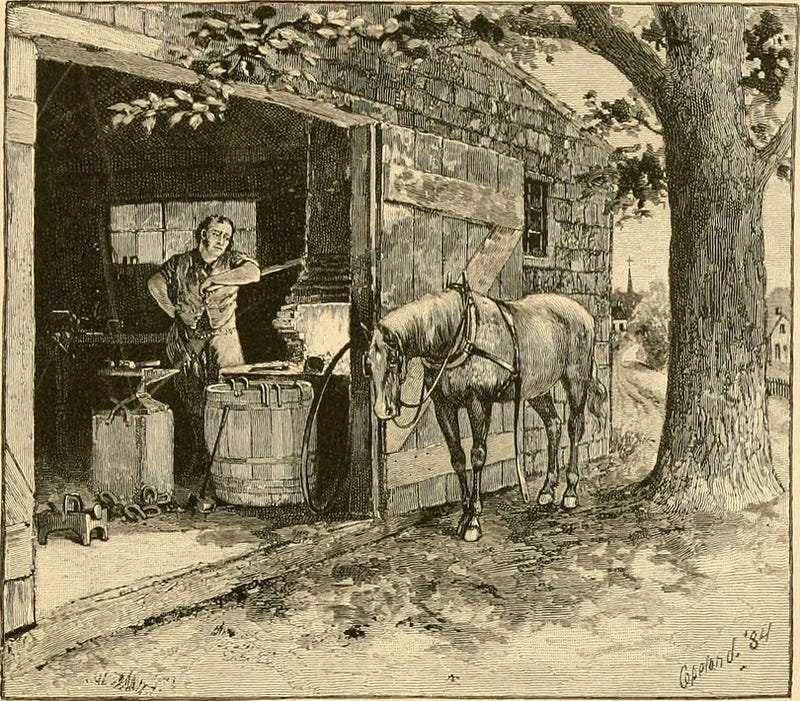
You know the poem. “Under the spreading chestnut tree, the village smithy stands.” Henry Wadsworth Longfellow wrote those lines about the blacksmith Dexter Pratt, who worked under that tree at 56 Brattle Street in Cambridge, Massachusetts. That’s the house Mary Walker was gifted. And then she made sure her family could never lose it.
Born Into an Empire of Bondage
Mary Walker entered the world in 1818 on Duncan Cameron’s plantation in North Carolina, marking the fourth generation of her family to be enslaved. She wasn’t just born into any plantation — she was born into one of the largest slave-holding operations in the South. By the 1860s, the Cameron empire controlled over 30,000 acres and enslaved more than 1,000 people. Duncan Cameron was a judge, banker, and one of the most powerful men in North Carolina. His plantation was so vast that when he rode around on his wagon checking on his property, he’d ask enslaved people who they belonged to because he couldn’t keep track of everyone he owned.
Mary grew up in this world where children were playmates until they weren’t, where families could be split up on a whim, where your worth was literally calculated in dollars. By 1860, depending on gender and skills, enslaved people were selling for $1,300 to $2,000 each — the equivalent of $50,000 to $75,000 today.
Because of her proximity to the Cameron children Mary learned to read and write. She learned to sew. And most importantly, she learned to see beyond the boundaries of the only world she’d ever known.
The Window of Escape
The 1840s were a dangerous time to be seeking freedom. The legal landscape was a maze of contradictory laws designed to trap people exactly like Mary Walker.
In 1847, Pennsylvania had passed a Personal Liberty Law that prohibited state officials from helping capture escaped slaves and protected free blacks from being kidnapped and sold into slavery. For someone who could make it to Pennsylvania, there was a brief window of relative safety.
But that window was closing fast.
In 1848, when Mary Walker slipped away from the Cameron family during a medical trip to Philadelphia, she was making a desperate bet. She left behind her mother and three children — an unthinkable choice that tells you everything about how bad things were about to get for her if she stayed.
She was right to run. Two years later, Congress passed the Fugitive Slave Act of 1850, which turned the entire North into hunting grounds for bounty hunters. The new law required law enforcement everywhere to arrest people suspected of being escaped slaves on nothing more than a slave owner’s sworn testimony. No jury trial. No right to testify in your own defense. The commissioners who decided these cases were paid $10 if they ruled in favor of the slave owner, only $5 if they ruled for freedom.
Between 1850 and 1860, 343 alleged fugitive slaves appeared before these special commissioners. Of those, 332 were returned to slavery. The system was rigged with 97% efficiency.
Mary Walker had escaped just in time. But now she was trapped in the North, unable to return for her family, watching the legal walls close in around her.
The Impossible Mission
Most people would have given up. The Cameron family had money, power, and the law on their side. Mary Walker was a black woman in a world that didn’t recognize her as fully human, trying to buy back people who were considered valuable property.
But she didn’t give up. Working as a seamstress and caretaker in Cambridge, she began the systematic, patient work of purchasing her family’s freedom. One person at a time. One impossible negotiation at a time.
Think about what this meant. She wasn’t just working to earn money — she was working to earn today’s equivalent of hundreds of thousands of dollars, while living under the constant threat of being captured and returned to slavery herself. Every day she stayed free was a small miracle. Every dollar she saved was an act of rebellion.
She enlisted help from abolitionists, from Frederick Douglass, from Harriet Beecher Stowe. She wrote letters — only three survive today — pleading her case with anyone who would listen. She navigated a legal system designed to crush people like her.
And somehow, impossibly, it worked. After the Civil War ended, she was reunited with two of her youngest children. Her oldest son had escaped on his own, though there’s no record they ever found each other again. Her mother Aggy died in slavery, never seeing freedom.
The House That Defied Economics
In 1870, Mary Walker achieved something that should have been impossible: she became a property owner. The Howe family, grateful for her years of service as a caretaker, purchased the house at 56 Brattle Street and immediately deeded it to her.
This wasn’t just any house. This was the home of Dexter Pratt, the blacksmith immortalized in Longfellow’s poem. The house where the village smithy had worked under that spreading chestnut tree, creating something solid and lasting with his hands.
Mary Walker understood what most people didn’t — that even family will sell the foundation out from under you when the money’s right. So she did something brilliant. She put a clause in her will stipulating that the house couldn’t be sold until her youngest grandchild turned twenty-one. She was ensuring that her family would never be forcibly moved or parted again.
She was playing 3D chess while everyone else was playing checkers, thinking generations ahead, understanding that the real enemy wasn’t just the racism and a slave system, it was any system that turned everything, including family and home, into something that could be bought and sold.
A Legacy That Endures
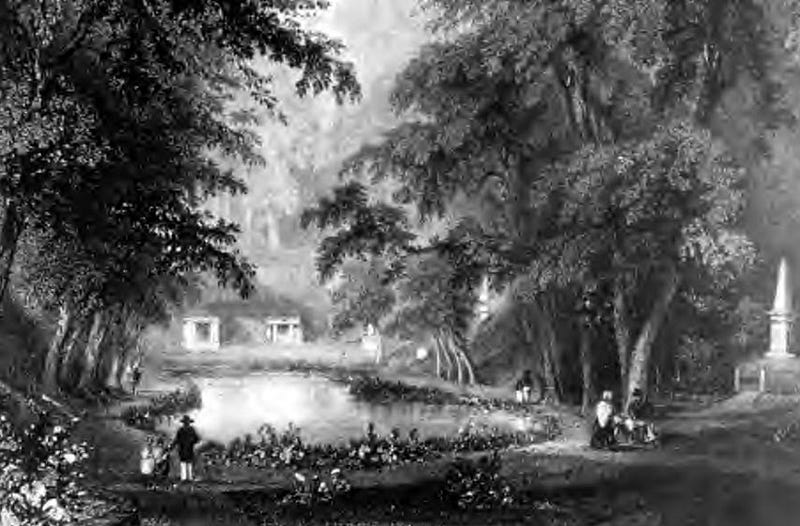
Mary Walker died in 1872 at age 54. She’s buried in Mount Auburn Cemetery in Cambridge, with a seven-foot marble obelisk marking her grave. But her real monument is that house on Brattle Street.
Her family lived there for 42 years, longer than any other residents. The house became a boarding house after the family finally sold it in 1912, then a restaurant popular with students, then a refuge for World War II immigrants. Since 1972, it’s been home to the Cambridge Center for Adult Education, where people still come to learn and better themselves.
There’s a classroom named in Mary Walker’s honor. The house she fought to keep in her family has become a place where adults come to acquire new skills, learn new languages, and explore new possibilities. Her legacy lives on in everyone who walks through those doors seeking to improve their lives through education.
The Genetic Lottery
Here’s the part that gets complicated. Mary Walker was light-skinned, which allowed her to move more freely in a world that judged everything by color. That genetic accident probably saved her life and made her mission possible.

Several generations later, it’s impossible by looking at me and my very white skin to think that I might be of African descent. I don’t suffer any of the racial prejudice that still plagues others who share my ancestry. I benefit from that same genetic lottery, just in reverse.
The 1870 and 1880 censuses listed Mary Walker’s descendants as “mulatto.” But starting in 1900, when the census only offered “white” or “black” as options, the family began identifying as white. By the early 1900s, Mary Walker’s story had been quietly erased from family history, lost in the currents of racial prejudice and the family’s desire to protect the light-skinned children from discrimination.
I think her story became lost to even her own descendants because in that era of heightened racial tensions, it was easier and safer to let it disappear than to try to explain it to children who looked white in a world that was becoming increasingly hostile to anyone with African blood.
What She Understood
Mary Walker grasped something fundamental about how economic systems work. She understood that slavery wasn’t just about owning people — it was about a mindset that everything, including families and homes, could be turned into financial transactions. No transaction is complete without a “settlement” this one would take generations.
She spent her life fighting against systems that treated families as disposable economic units. She bought her relatives back one by one, then made sure the house she acquired couldn’t be sold off by future generations facing financial pressure.
She saw 150 years into the future and understood that even the people she’d sacrificed everything to save would eventually be tempted to cash out when times got tough. That no-sale clause wasn’t just about keeping a house in the family — it was about keeping the family anchored to something solid that couldn’t be financialized away.
Today, that kind of generational thinking seems almost quaint. Most people can barely manage their short-term finances, let alone build something meant to last beyond their lifetime. But Mary Walker was playing the longest game imaginable — she was trying to create stability that would outlast not just her own life, but the economic pressures that she knew would come for her descendants.
The Long Game
Through the work of Sydney Nathans, I’ve come to appreciate my history and have pride in Mary Walker and what she accomplished for me and my family. Her blood runs in my veins, along with her determination to do whatever it takes for family.
She worked within an impossible system to bring her people home. The house she bought and protected still stands, still serves its purpose of helping people better themselves through education. The blacksmith’s house, where honest work once created things meant to last, became the foundation for a family that would endure for generations.
Mary Walker understood that the real fight wasn’t just against slavery — it was against the human tendency to turn everything into a commodity. She was trying to create something that couldn’t be bought, sold, or taken away. Something solid. Something permanent.
In a world where everything has a price, she built something priceless. And 150 years later, it’s still standing. Stay tuned for an update on my family journey.