The Wrestler in the Global Arena
Trump’s Combat Economics vs. Bitcoin’s Quiet Revolution
He entered the Oval Office expecting a WWE-style reality show fight with folding chairs and dramatic entrance music. Still, he found himself in an international MMA cage instead, where his spray tan and theatrical grimaces don’t count for much. Eager to show his MAGA base that he’s a fighter, Trump still doesn’t grasp what global leadership requires because his bone spurs and gold-plated upbringing never taught him that real power isn’t just yelling “YOU’RE FIRED!” at other world leaders.
He flexes in a circus clown-like stance with no coherent strategy beyond “Make Mean Faces,”
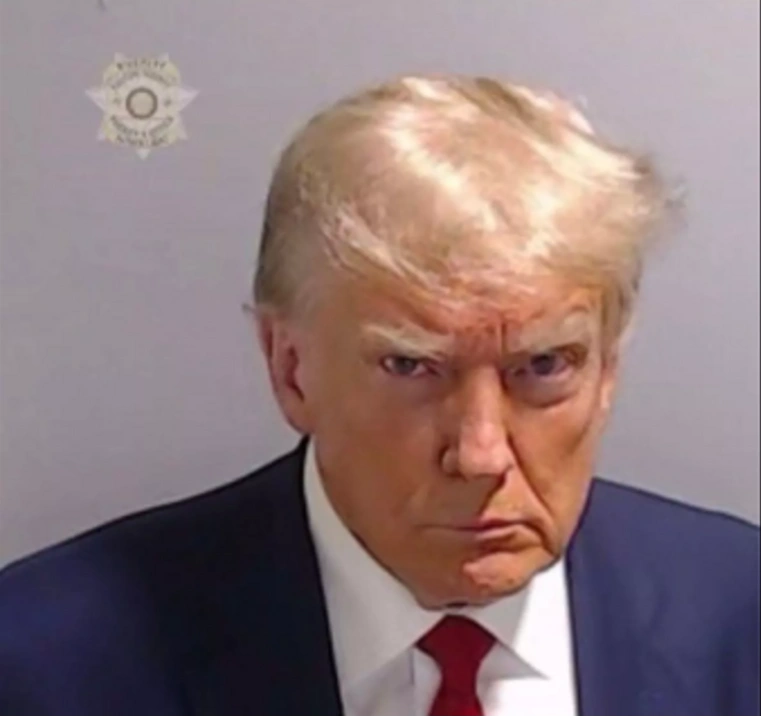
expecting world leaders to tremble. Instead, they exchange knowing glances while their translators frantically search for diplomatic ways to interpret “covfefe.” As Scott Galloway recently pointed out, we’re increasingly controlled “not by a flawed monetary system and a weak and corrupt government but by a class of billionaires who probably do not have our best interests at heart” which is a polite way of saying we’ve gone full oligarch faster than you can say “Mar-a-Lago membership fee increase.”
Meanwhile, China watches contentedly as centuries of American goodwill and alliances erode faster than Trump’s hairline in a windstorm. Europe has awakened to the reality that the US has become an unreliable partner, unable to honor its post-WWII commitments for longer than a presidential tweet thread. Canada actively seeks new markets while politely saying “sorry” for no longer being interested in our economic temper tantrums.
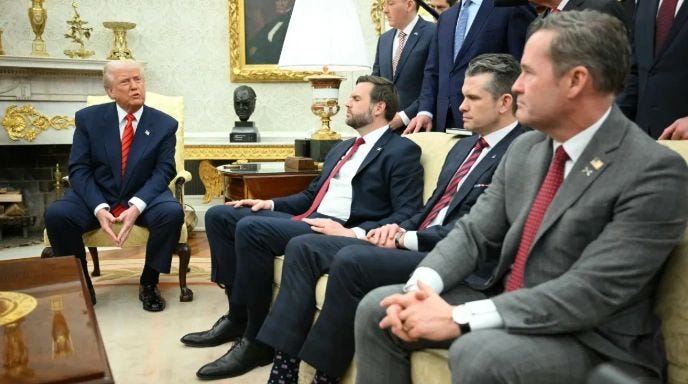
The dysfunction is so obvious that even his support team is leaking that there’s “no strategy”, which is like your boxing coach admitting your only plan is to “look really angry while getting punched.”
The working class scratches its collective head about how renaming the Gulf of Mexico to the “Gulf of America” improves their daily struggle with inflation. Maybe naming rights are the new economic policy? Coming soon: the “Trump Atlantic Ocean” and the “MAGA Great Lakes.” Trump demands that the Fed lower interest rates to shave a few billion off the national interest payment, then proceeds with a tax cut for the oligarchy that will increase deficits by $3 trillion over the next 10 years. It’s like emptying your bank account to pay for a golden toilet while your roof leaks the economics of a man who somehow bankrupted casinos.
The Revolution We Actually Need
What if there’s another path beyond the cycle of political WWE? “The good news is this level of income inequality is usually self correcting,” Galloway notes. “The bad news is that the means of self correction are typically war, famine, or revolution.” Charming options like choosing between a root canal, food poisoning, or an IRS audit.
But perhaps we’re missing a revolution that’s already happening quietly: Bitcoin isn’t just cryptocurrency for tech bros to brag about at parties; it’s potentially a systemic equalizer limiting the ability of powerful interests to manipulate financial systems. Unlike Trump’s combative approach to global economics, which has all the subtlety of a monster truck rally, Bitcoin represents a protocol that could enable commerce based on mutual benefit rather than on who has the loudest Twitter account.
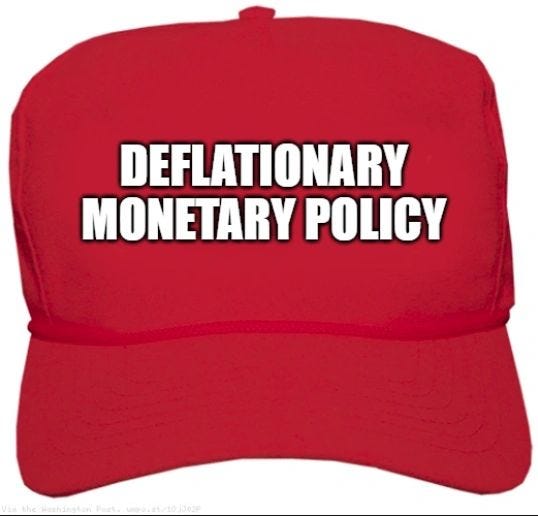
Protocols enabled clear long-distance telephone calls, and protocols enabled the global internet. Bitcoin might be another revolutionary unbreakable protocol that slipped into our lives while we were distracted by political wrestling matches and debates about the size of inauguration crowds. When the power of money shifts from inflationary control to actual value creation, everything changes, though admittedly, “Deflationary Monetary Policy” doesn’t look as good on a red hat.
The contrast couldn’t be clearer:
Trump’s foreign policy posturing and economic theatrics disrupt markets and undermine the dollar faster than you can say “trade war with our largest trading partners.” At the same time, Bitcoin offers the possibility of money resistant to political manipulation. One represents the old paradigm of combat economics; the other points to a future where economic relationships could be based on actual value rather than who can perform the most convincing strongman routine.
While Trump performs his wrestling routine on the global stage, expecting standing ovations for moves that wouldn’t impress a middle school debate team, a different kind of revolution proceeds at “blistering pace.” The system might be self-correcting, just not in the way our politicians with their adversarial mindsets and economic playbooks straight out of a 1980s corporate raid can comprehend.ge, expecting standing ovations for moves that wouldn’t impress a middle school debate team, a different kind of revolution proceeds at “blistering pace.” The system might be self-correcting, just not in the way our politicians with their adversarial mindsets and economic playbooks straight out of a 1980s corporate raid can comprehend.
The real question isn’t whether Trump can “win” at global economics like it’s another season of The Apprentice. It’s whether we as a society can move beyond this embarrassing spectacle toward something that actually serves the common good.
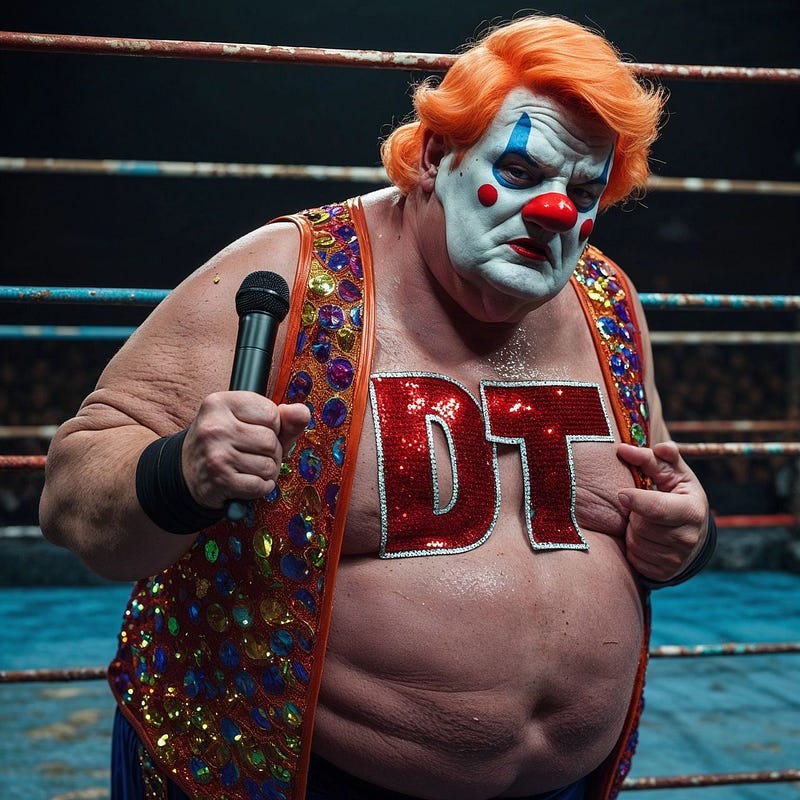
When the world’s supposedly most decisive leader behaves like a professional wrestler cutting a promo rather than a statesman building coalitions, it’s time to look for alternatives in leadership and economic systems that don’t require a spray tan and catchphrase to function.
Originally published at https://chasingbitcoinrabbits.com.