Through the Eyes of an Early Adopter
Why Bitcoin Matters More Than You Think
My Perspective Over Time
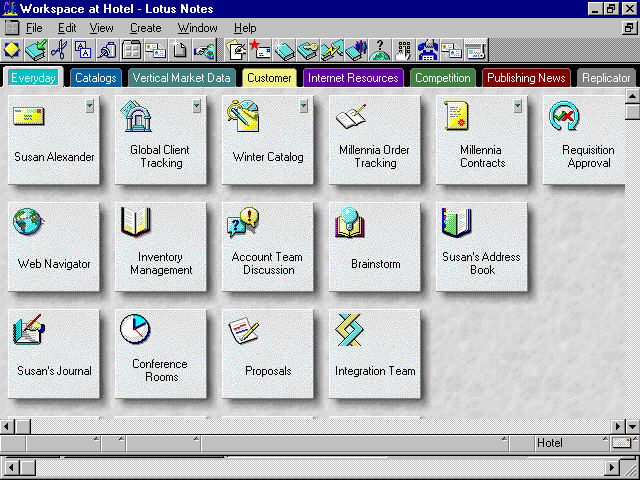
My introduction to technology started long before the World Wide Web was popularized. PC used 2 51/4 floppy disks to run a word processor or a spreadsheet like Lotus 123. I had been working with Expert Systems, where we modeled expertise by translating the rules and heuristics of an expert’s knowledge into computer code. It was popular for a few years, but the practice quickly fell out of favor when businesses factored in the maintenance cost of updating the system with new knowledge. Microsoft introduced Windows 386, and I was learning a new system called AION. On one particular Expert Systems project, we looked at an emerging technology called Lotus Notes, which the famous maker of Lotus 123 created. It was version #1, still rough around the edges, so we quickly moved on to a database system instead.
A few years later, Lotus Notes showed up when I was employed as a member of a “Strategic System Group,” a department that examined the company’s problems and evaluated how new technologies might provide a solution.
The sales rep from Lotus Development Corporation gave a few of us a free trial system. This was not uncommon because many of the trial or prototype systems my group worked with became production systems and resulted in real-dollar sales. However, we were inundated with new technologies and unable to try all the free offers.
The more we drilled into Lotus Notes, the more impressed we became with its capabilities. This was version #2, and it contained some exciting features that were uncommon and of high value for businesses. On a Lotus Notes server, there were many databases consisting of documents that could be arranged in various formats. One format was a discussion board where anyone with a Lotus Notes client could securely add information to the database discussion. This database could then be “replicated” to another Lotus Notes server in a different part of the world where users could participate in the discussion. This is similar to forums like Reddit but with a higher level of security, which is always at the top of companies’ minds.
Technology Shakeout
Expert Systems were rapidly falling out of favor with businesses. The first commercial ISPs were offering internet access, and Client-Server architecture was all the rage. I recall a colleague showing me how to set up TCP/IP and a Mosaic browser to surf a few hundred available websites. We also got to test out the first implementation of TCP/IP with Lotus Notes. Still, most intra-company replication was limited to dial-up connections; a popular database (forum) was replicated across hundreds of companies, containing introductory knowledge and tips about Lotus Notes. AT&T and Compuserve were competing to become the backbone of the Lotus Notes corporate community. I became a founding member of the international user group and its VP.
By the mid-90s, Tim Berners-Lee was a tech rock star. Replication became more sophisticated, allowing administrators to control how and when databases would sync with other replica copies more granularly. I built a “Knowledge Acquisition” application after realizing that “Experts” tended to “talk shop” whenever they got together. By capturing this knowledge in a discussion forum as an annotated book, the expertise could be made available to many more. It circumvented the problem of maintaining the knowledge we experienced with an expert system. Replication made the information available yet still secure, protecting company intellectual property.
Around this time, the protocol wars wound up. Novell’s IPX/SPX, IBM’s SNA, DEC’s DECnet, AppleTalk, and XNS (Xerox Network Systems) gave way to TCP/IP. I became immersed in Lotus Notes and quit my regular job to start a consulting firm focused solely on Lotus Communication products. Lotus and the WWW plodded along in a leapfrog manner for a few years. Replication was bolstered with “Clustering,” which provided load balancing and failover capabilities. Around this time, the product suite became sufficiently complex that one either tended toward programming or administration. I chose admin as it fits well with my MIT disease (dyslexia, dyslexics have an engineering-like ability to see the big picture. A large percentage of MIT students are dyslexic.)
Focusing on The Network
Having been introduced to the Lotus product early in its evolution, I soon became a recognized expert in the field, appearing in magazine articles and conferences. Major corporations were jumping on the global network bandwagon, including Lotus Notes/Domino for internal secure communications and WWW for public-facing information. Some companies tried web-based “Intranets” but lacked the two-way communication that Lotus Notes provided. This was also when companies realized that email should not be restricted to internal communication. Lotus included web server capabilities into the already robust Lotus Notes Server, later renamed Domino Server.
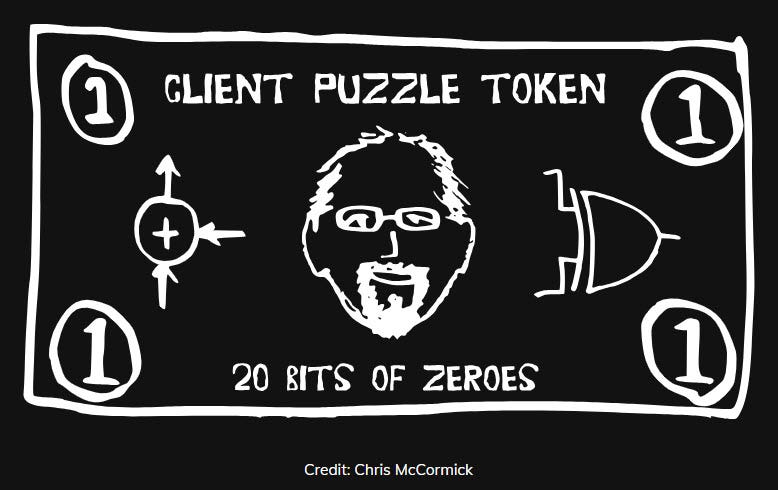
Clustering, Load balancing, and globally distributed servers became my niche. Working with IBM, AT&T, NYSE, Novartis, and GE Asset Management, my consulting business exploded. SPAM became a persistent problem as many companies adopted Lotus Notes for email, and the application part came along for the ride. SPAM represented 50% of the messages that hit a server and selecting the good mail from the jumk was getting to be a real expensive issue. I got wind of a project that would introduce a digital stamp, “Hashcash,” which was proposed by Adam Back in 1997. It did not catch on for many reasons but introduced a concept called “proof-of-work,” which caught my eye and later Would be a pivotal point in my journey to discovering Bitcoin.
Bitcoin A Technology Revolution
My years working with Lotus Notes’ distributed architecture prepared me to understand Bitcoin’s revolutionary approach. While Notes achieved distribution through trusted replication between servers, Bitcoin took this concept further by eliminating the need for trust. In Notes, we explicitly configured replication topologies to share databases across global networks; Bitcoin accomplishes this automatically through peer-to-peer networking.
Hashcash required computers to perform calculations that were hard to compute but easy to verify. It was adjustable in difficulty and left no shortcuts or ways to cheat. Bitcoin adopted these same principles but for block creation, making mining computationally expensive and easily verifiable by all network participants resistant to shortcuts or cheating.
Both systems solve the fundamental problem of maintaining consistent data across a distributed network, but Bitcoin introduces mathematical consensus, while Notes relies on administrative trust. The progression from Notes to Bitcoin represents an evolution from centrally managed control to truly distributed decentralization. It’s like the difference between the FED and the blockchain!
With a firm understanding of global networking under my belt, along comes something called Bitcoin toughing a distributed architecture. Each node of the network was independent and whole, allowed to synchronize with any other node, maintaining a complete copy of a single database containing a ledger. Unlike any Lotus Notes database, this ledger was cryptographically protected from alteration by any single entity. At the same time, it was duplicated across hundreds of network points around the world. Energy was required to play in this arena; electric energy expenditure was needed to prove that your node was playing by the rules. Not only was the network protected by cryptography, but it was also protected by energy.
Asking Questions
The hooks were in; Lotus Notes was fading in prominence with business. It was 2012, and I was still immersed in digesting leading-edge technologies to solve business problems. The more I researched the Bitcoin blockchain, the more I wondered if the digital cash aspect would catch on or go the way of many other digital money projects and fade into obscurity.
By 2013, I was convinced the technology was rock solid and a one-of-kind system. I kept returning to learn more about the blockchain but got caught up in the digital money aspect. I soon started asking myself questions like, what is money after all? With the 2008 banking crisis not far in the rearview mirror, it made sense that our monetary system was due for a technology upgrade. After all, Travelocity cut into the travel agency business, Google agitated news and cut into the newspaper business, Wikipedia replaced encyclopedias, and the disintermediation beat continues. It was time for a new technology to represent money.
Bitcoin technology, particularly the mathematical consensus mechanism, eliminates the fragility of human judgment from money. All of a sudden, we see books like “Bitcoin: Hard Money You Can’t F*ck With,” “Resistance Money,” and my all-time favorite, “Broken Money.”
China, Russia, and a few smaller countries attempt to squelch it only to return later, realizing this is not some simple tech like Lotus Notes; instead, it is very different. To protect their power of control through currency, they brand it money for terrorists or nerds, something that will disappear in a few months or years.
I bought my first Bitcoins in 2014 and used some of that to buy some of the original Ethereum offerings. I did make money but did not get wealthy; I used much of my windfall to invest in books and education, including MIT’s first Bitcoin Blockchain course. Starting a cryptocurrency newsletter during the ICO madness, I learned the difference between marketing hype and sound engineering was the dividing line between what had value and what did not. I no longer pay much attention to other cryptocurrencies. While they are technical, interesting, and someday possibly useful, Bitcoin stands apart as a revolutionary technology with tectonic potential to change the world.
I’ve witnessed many technological transitions throughout my career — from Expert Systems to client-server architecture, proprietary networks to TCP/IP, and isolated systems to the World Wide Web. Each shift fundamentally changed how we work and communicate. But Bitcoin represents something more profound: a transformation in understanding and transferring value itself.
Just as early adopters of Lotus Notes saw beyond email to its potential for secure, distributed collaboration, I see beyond Bitcoin’s price movements to its foundational innovation. It’s not just digital money — it’s the first genuinely trustless distributed system that works at a global scale. While many focus on Bitcoin’s price or energy usage, they’re missing the bigger picture: we’re watching the emergence of a new kind of technology that combines distributed systems, cryptography, and game theory in a way that’s never been done before.
After decades of implementing enterprise systems, I’ve learned to distinguish between incremental improvements and genuine breakthroughs. Bitcoin isn’t just another fintech innovation; It’s a fundamental rethinking of how we can achieve consensus and trust in a digital world. Just as the Internet transformed information sharing, Bitcoin has the potential to transform how we understand and exchange value.
The real revolution isn’t in Bitcoin’s price. It’s in its proven ability to create digital scarcity and achieve distributed consensus without central authority. For those who’ve spent careers building and maintaining trusted systems, that’s nothing short of revolutionary.
Originally published at http://www.brianconnelly.com