Unconsciousness to Presence
A Journey Through the Burden and Gift of Being Aware
There’s something deeply human about seeking unconsciousness as a solution to the burden of consciousness. For years, I lived this paradox intimately — using alcohol to escape the very awareness that makes us uniquely human, only to discover that the near-death experiences it caused would eventually teach me the gift nature of each conscious moment.
The Weight of Being Awake
I believe we carry a burden that no other animal seems to bear. We don’t just experience the present moment, we’re haunted by past mistakes, anxious about future uncertainties, and constantly aware of our own mortality. We know that people we love will die, that our own death is inevitable, and that most of what matters to us lies beyond our control.
This awareness can become overwhelming. While other animals experience pain and fear in the moment, they don’t lie awake replaying embarrassing conversations from years ago or contemplating the meaninglessness of existence. They don’t suffer from the recursive nature of human consciousness, being aware that we’re aware, watching ourselves think, judging our own experiences in real-time.
For me, and at a very early age, this weight became unbearable. The intensity of being fully present to my own existence felt like too much to carry. Alcohol promised relief, a few hours where the relentless chatter of consciousness would quiet down, where I wouldn’t feel the full weight of mortality, responsibility, and the ache of simply being human. But there was a cost.
The Dangerous Escape
What I was seeking was essentially a form of temporary death, unconsciousness as escape from consciousness. Each drink was an attempt to solve the human dilemma by opting out of it entirely. I had complete disregard for self-preservation because preservation felt like maintaining something I didn’t want to maintain. People would tell me oh you shouldn't drive in that condition you could die. I practice the Irish serenity prayer “F$&@ it” would ring through my brain as I climbed on a motorcycle when I shouldn’t have been walking.

The cruel irony was that the very thing I was using to escape awareness kept bringing me to the edge of losing it forever. As you can imagine, the combination of alcohol and a two-wheeled vehicle resulted in well: not good outcomes A lot of them . My near-death experiences weren’t mystical visions or medical emergencies, they were reality forcing me to confront exactly what I was trying to avoid: the preciousness and fragility of consciousness itself.
Each time I came close to dying from my drinking, I was confronted with the fundamental question:
Do you want to be here or not?
The moments when consciousness almost slipped away forever made me realize that what I’d been treating as a burden was actually extraordinary gift this capacity to think, feel, experience, and be aware.
The Program of Surrender
I realize it’s not for everybody and I’m not trying to sell a cure . This is merely my experience . When I finally reached out for help, AA introduced me to a radically different approach: instead of trying to escape consciousness, I needed to surrender my attempts to control it. The program’s concept of faith, not religious doctrine, but simple recognition that I couldn’t do this alone, became my first experience of finding peace within awareness rather than escape from it. I became aware of a higher power but not one that I needed to understand, understanding is overrated.
AA’s wisdom is brilliantly simple: admit powerlessness over what you cannot control, and trust in something greater than your individual resources. This wasn’t faith as belief in specific ideas about God or the universe, it was faith as a daily practice of letting go, of stopping the exhausting attempt to manage the unmanageable.
The program taught me to take it “just for today,” not to commit to being conscious and sober forever, but to choose presence for this moment, this day. It was a way of learning to be with the intensity of existence without being overwhelmed by it.
First glance it sounds simple but the first few years were hell, obsession is like that. Through abstinence and repetition the noise started to quiet.
Beyond the Meetings
Eventually, I no longer needed the external structure of meetings. The faith and spiritual foundation I’d developed became internalized, a settled peace that doesn’t require constant maintenance or vigilance. I don’t feel the need to drink or escape reality because reality itself, fully received, has become enough.
This shift wasn’t something I sought, forced or achieved through effort. It was more like something I uncovered by removing what was covering it. The drinking, the near-death experiences, even the meetings, were all part of clearing away what was obscuring a deeper peace that was always available.
I’ll go back to meetings if I feel that the spiritual foundation is shaking or in jeopardy in any way. They are a good compass.
The Gift of Each Moment
What I discovered is that the same consciousness I once tried to escape is actually miraculous. Each moment became a gift, not in some abstract, philosophical way, but as a visceral recognition that this awareness, this capacity to experience, didn’t have to be here at all. Having come so close to losing it, I could see how extraordinary it is that consciousness exists at all.
The moments I’d spent unconscious, the blackouts, the numbness, the absence, were themselves gifts I couldn’t accept at the time. Time I can never get back, but that taught me the value of the time I still have. There’s a particular poignancy in recognizing that all those moments I wasted trying to escape consciousness were themselves conscious moments I was throwing away. I don’t regret it. The past was a good teacher.
The Tension That Defines Us
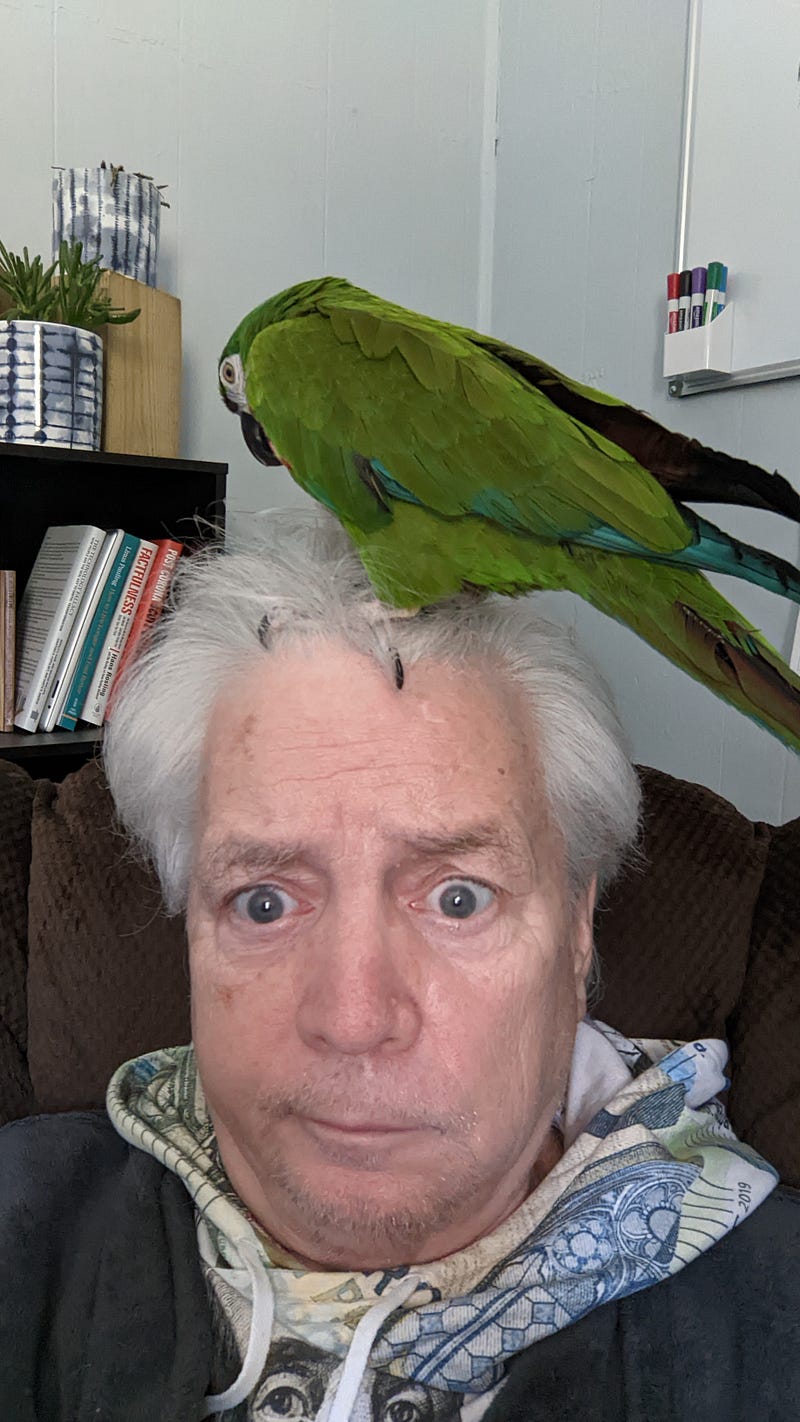
We experience profound significance while simultaneously knowing everything is temporary. We invest tremendous energy in relationships knowing they’ll end in separation or death. I have a chestnut crusted macaw I’m not sure, but I don’t think he thinks about these things. We create art that feels eternal while using materials that will decay. This paradox, finding meaning despite transience, or perhaps because of it, might be what makes us most human.
Living with this tension no longer feels like a burden to escape. Instead, it’s become the texture of awakened consciousness. The moments are precious precisely because they’re fleeting. The awareness that once felt overwhelming has become the foundation for a different kind of presence, not presence that grasps or controls, but presence that simply receives. It’s a daily practice and I am far from having it down pat.
The Ordinary Miracle
What I’ve found isn’t some special spiritual state that requires maintenance. It’s more like a simple recognition of what was always true: consciousness itself, even with all its challenges, is an extraordinary privilege. The capacity to experience, to be aware, to witness existence, this is a miracle hiding in plain sight.
I was a person who once sought unconsciousness as refuge from life and discovered that consciousness itself, when met without resistance, provides its own form of peace. Not the peace of absence, but the peace of full presence. Not escape from the human condition, but a way of inhabiting it that transforms burden into gift.
Is this what spiritual maturity looks like, not the elimination of consciousness’s challenges, but discovering a way to carry them that turns weight into grace? I usually don’t trust people with the answer to that question. The very awareness I once tried to escape has become the doorway to a kind of freedom I never could have imagined while running from it.
I just take it One day at a time.