Why Truth Feels Like Remembering
I was a terrible academic, as early as I can recall, I was asking questions instead of memorizing the lessons. Along with many other gifts of birth, I was endlessly curious.

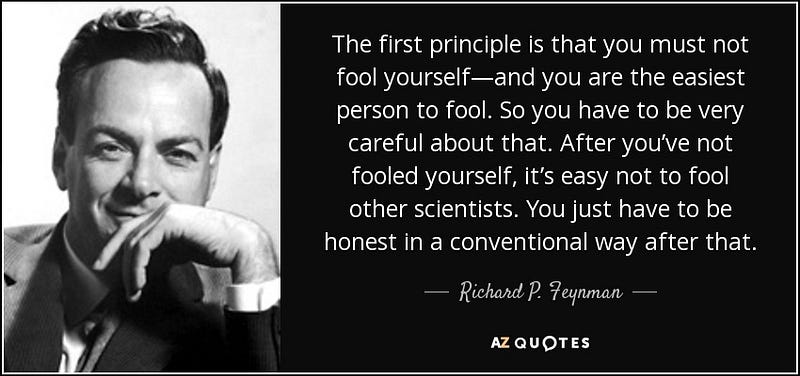
Enlightenment begins when we understand what we don’t know. Intellectual humility is a condition where genuine experts are more aware of what they don’t know. By humility, I don’t mean self-depreciation, but instead, as Saint Teresa put it. Humility is truth. Richard Feynman — Nobel Prize winner famous for saying, “I would rather have questions that can’t be answered than answers that can’t be questioned.” An accurate understanding brings awareness of the complexity and vastness of what remains unknown in any field.
The resulting cognitive dissonance is not something we are comfortable with. We prefer experts and prophets with all the answers over someone with questions. We’ve become like drivers who’ve lost the ability to read maps or navigate by landmarks. GPS gives us turn-by-turn certainty, but when it fails, we’re completely lost. Similarly, we expect instant answers to complex questions and lose comfort with ambiguity or the need to sit with uncertainty. Resolving questions brought on by cognitive dissonance is difficult, hard work.
And to make matters even more difficult, the truly wise know that understanding often resists articulation.
It not a matter of facts vs faith
Facts excel at describing measurable phenomena, but they often fall silent before questions of ultimate meaning and purpose. Facts can explain the mechanics but may miss the essence, like analyzing the chemical composition of paint while remaining blind to the beauty of a painting.
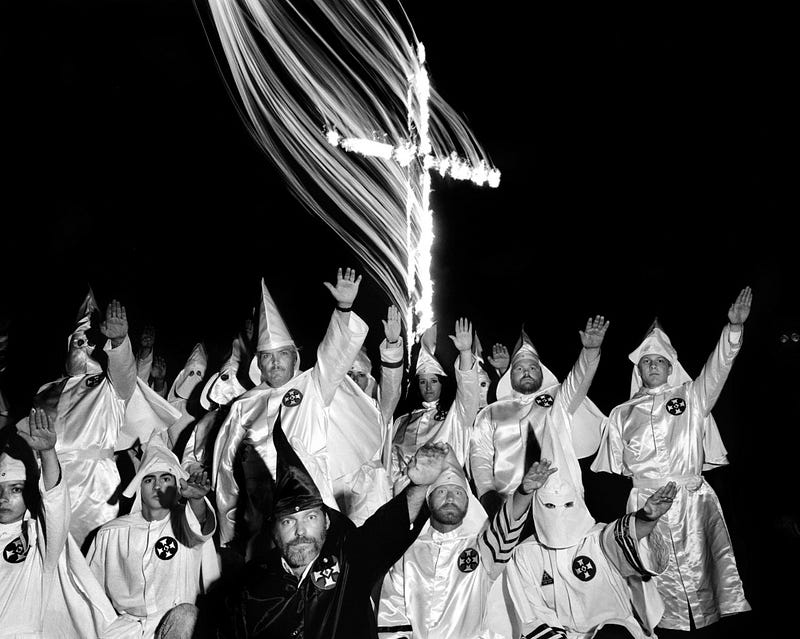
Pure faith without any grounding can lead to wishful thinking, self-deception, or worse, fanaticism that refuses to engage with reality. History shows us the dangers when religious conviction becomes completely divorced from reason, evidence, and critical thinking.
Knowledge is neither factual nor faith-based, but experiential, a kind of knowing that emerges through direct encounter. This isn’t about believing propositions or accumulating data, but about developing a vulnerability that leads to a transformation of consciousness. A new awareness that reveals realities invisible to both scientific instruments and mere belief.
Actual knowledge may require holding the tension between what we can verify and what we sense, between the known and the unknowable. A knowledge that is more like recognition, where the most profound truth isn’t learned but remembered, not grasped but surrendered to.

The Wright brothers didn’t invent flight; they recognized that birds had already solved the problem and figured out the principles they were using. Newton watched an apple fall and recognized gravity, not as something new, but as the same force that keeps the moon in orbit. It wasn’t that he learned something foreign; he recognized a pattern that was always there
Some truths live in the space between words, in the silence that follows speech. Scientists studying consciousness, economists modeling markets, or engineers designing AI systems all encounter irreducible complexities that resist complete explanation despite rigorous analysis. This is known as “emergent phenomena.”
Where Humility and Science come together.
Whether we are thinking about quantum superposition or how God acts in our lives, the same intellectual humility applies. 96% of the universe, we’re in the rather uncomfortable position of realizing that about 96% of everything that exists is utterly mysterious to us. It’s one of the most profound puzzles in modern physics — we can measure these components’ effects with great precision, but we have no idea what they actually are.
Stay Humble, Stay Curious